- ~ Home
- Walking Pilgrimage Travel Planning
Walking Pilgrimage Travel Planning ~ International Tips & Essentials
For centuries, walking pilgrimage travel planning involved little more than a sturdy pair of shoes, a humble pack, and the willingness to step out your door and walk into the unknown. But while the spiritual essence of a historical pilgrimage is timeless, the reality of getting to the trailhead in the 21st century is a bit more complicated!
"As you start to walk out on the way, the way appears." ~ Rumi
🙋♀️ Why Trust Us at the Pilgrimage Traveler?
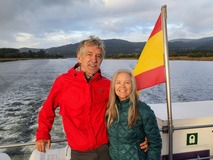
We’re not a travel agency ~ we’re fellow pilgrims! (See About Us)
We've trekked Pilgrimage Routes Across Europe since 2014!
💬 We’ve:
- Gotten lost so you don’t have to. 😉
- Followed waymarks in the glowing sunlight, the pouring rain and by moonlight. ☀️🌧️🌙
- Slept in albergues, hostels & casa rurals. Ate and drank in cafés along the way. 🛌 😴
- Created comprehensive and downloadable GPS maps and eBook Guides, full of must-have information based on real pilgrimage travels. 🧭 🗺️
- Shared our complete journeys, step by step to help YOU plan your ultimate pilgrimage and walk with your own Heart and Soul. 💙✨
Every detail is from our own experiences. Just fellow pilgrims sharing the Way. We have added a touch of spirituality, heartfelt insights and practical guidance from the road ~ offering a genuine connection to the spirit of pilgrimage. Tap into the wisdom of seasoned pilgrims!
Ultreia and Safe Pilgrimage Travels, Caminante! 💫 💚 🤍
📜 The Modern Pilgrim’s Dilemma
I know exactly how it feels ~ it’s hard to focus on the "dry" logistics when you just want to have an amazing, soul-stirring experience. There is that voice inside every pilgrim's head that wants to simply set out trusting that "the Camino will provide," without overthinking the planning.
But I've learned through years of my own trial and error, across multiple countries and thousands of kilometers, that a little bit of smart preparation actually protects that care-free spirit of freedom that you can find each day on the trail itself.
This article is built on our own personal experience navigating the travel planning vs. spontaneity dilemma. We want to share our best tips in this article to help you think about more than just the minutiae of day-to-day trail survival and look at mastering the big-picture logistics. We will look at what is required to start your journey long before you even reach the trail.
It’s important to remember that these insights are specifically for the walking pilgrim. Planning an entire pilgrimage on foot is a completely different thing than booking a tour bus or a cruise.
When you're a self-guided pilgrimage traveler, you are the planner, the navigator and the athlete all at once. You need specialized travel planning that respects the unique needs of a long-distance walk and your most important tool may be the peace of mind you build before leaving home.
Let’s bridge the gap between ancient tradition and modern technology, ensuring your international preparation is as solid as your "staff and gourd."
📱 Connectivity ~ The Digital Dilemma
In the world of pilgrimage, there is perhaps no greater debate than the one over the smartphone. To stay connected, or to truly unplug?
For many, the dream of a pilgrimage is to disconnect from the noise of the modern world ~ to walk in a digital silence where you aren't tethered to emails or notifications. I deeply honor anyone choosing to walk the trail "unplugged."
There is something incredibly brave and beautiful, if not noble, about setting out with nothing but the yellow arrows as your guide, and maybe following the lead of other pilgrims and locals as you walk. It is fully trusting that the Camino will provide exactly what you need in the moment you need it.
However, I will be the first to admit that my own preference is to stay connected. I need to check my own romanticism against my practical side.
While the "free spirit" in me loves the idea of total isolation, the practical traveler (and the nurse in me!) knows that having a digital safety net provides a different kind of peace. Being connected allows us to check for bed availability in the next town (which I usually only do several days in advance at the most), navigate tricky trail junctions via GPS, or simply check in with my trail buddy, Rich, if he wanders along faster than I.
And let’s be honest ~ as a writer and documentor of these trails, I really have no choice! Someone has to stay online to take the notes, map the routes, and share the photos so that your planning can be just a little bit easier. It’s a "burden" I’m happy to carry!
Finding the Middle Ground: The eSIM
The challenge with staying connected internationally used to be the nightmare of swapping tiny plastic SIM cards or returning home to a "bill shock" from your provider.
That is why I have become a huge advocate for the eSIM. It allows you to maintain that spontaneity we talked about earlier. You aren't hunting for a local cell phone shop in a language you might not speak; you simply activate it and go.
My Top Recommendation: Roamless
Over the years I’ve tried many ways to stay connected, but Roamless has become my favorite for several reasons:
- Pay-as-you-go: Unlike many plans that expire after 30 days, your Roamless balance never expires. This is perfect for the slow rhythm of a pilgrimage.
- No Borders: If your trek crosses from Portugal into Spain (or anywhere else), the data just works. No switching needed. This is seamless global coverage, making it perfect for long or multi-country journeys.
- One App: You set it up before you leave home, and it’s ready the moment your plane touches the tarmac.
- They now offer various types of calling plans, offering a local number if you need it, or using your own home number for outgoing calls over the internet.
☔ Protection ~ The Safety Net for Health, Home, and the Trail
If the "Digital Dilemma" is about your connection to the world, then this section is about your connection to your own well-being ~ and the well-being of those you love back home.
The "free spirit" voice of the Camino often whispers, "Just walk, you’ll be fine." And usually, she’s right! But as a nurse, I’ve seen enough "surprises" to know that trusting the universe is much easier when you have a solid safety net tucked into your pack. As a self-guided traveler, you are your own safety manager. Whether it's a medical issue in a remote village or a stolen pack, you don't want to navigate the financial or logistical fallout alone.
The "Call from Home"
For many of us, the biggest worry isn't our own health ~ it's what is happening back home. Many pilgrims are in that "Sandwich Generation," walking with a worried eye on elderly parents or sick loved ones. Having a policy with strong Trip Interruption coverage means if you get that emergency call, you have the financial bridge to get home immediately.
I think of travel insurance as that trusty poncho tucked at the bottom of my pack; you hope it stays there the whole trip, but you're sure glad you have it when the clouds suddenly open up on you ~ or when you need to pivot because the terrain of life gets rocky.
My Top Recommendation for USA Readers: Squaremouth
Rich and I have navigated the maze of travel insurance providers for years, and we always come back to Squaremouth. We have actually used it when I developed a stubborn cold and problematic ear infection, and another time when we missed a connecting flight. They were quite professional, yet thorough in handling our claims. However, you absolutely must keep all receipts, all proof of loss, all airline booking information, etc.
Squaremouth fits the pilgrim lifestyle because it isn't " one-size-fits-all."
- The Power of Comparison: It’s a search engine that lets you compare dozens of policies side-by-side. You aren't being sold a brand; you're choosing a solution.
- The "Zero Complaint Guarantee," which is a unique policy where they promise to mediate on behalf of the customer if a travel insurance provider unfairly denies a claim. This is powerful indeed!
- The "Pilgrim-Specific" Filters: While you won't find a "walking" button, you can filter for the things that matter most to us ~ like Emergency Medical (for those unexpected trail injuries) and Medical Evacuation (to get you to a major hospital if something happens in a remote area). Baggage delay coverage is also important for pilgrims. Or, God forbid your baggage gets lost, you have money to resupply.
- Primary vs. Secondary Medical: As a nurse, I love this feature. You can find policies that pay first, so you aren't stuck dealing with your home insurance while trying to heal in a foreign clinic. And remember ~ overseas, you may not have any medical insurance from your home country at all, unless your policy states it covers you internationally. If you are retired and have Medicare, like I do, it definitely will not cover you outside the USA.
- Ease of Use: Their interface is clean and straightforward. You can get a quote and be protected in the time it takes to drink a café con leche!
For my International Readers: VisitorsCoverage
If you are joining the pilgrimage from outside the United States, VisitorsCoverage is my "Global" go-to. They specialize in international travel insurance and offer excellent "Global" options that provide the same level of medical and trip interruption protection regardless of your home country. Their interface is just as user-friendly and allows you to find coverage that respects the unique nature of a long-distance trek. ENDING AFF APPROVAL
I don’t leave home without a policy in place. It allows me to focus 100% on the trail and 0% on the "what ifs."
💶 Money and Currency ~ The Currency Dilemma
Now that we have your connection and your protection sorted, we have to talk about how to actually pay for that café con leche (or that well-deserved vino tinto).
This is the final hurdle in walking pilgrimage travel planning, and it's one where the "Camino will provide" philosophy meets the cold, hard reality of European banking fees.
In the old days, we carried traveler's checks or wads of cash hidden in money belts. Today, the dilemma is different: How do you access your money without losing a percentage of your pilgrimage to "convenience fees" and terrible exchange rates?
Rich and I have a "no-fee" rule when we travel. We want our hard-earned money going to local albergues and family-run tapas bars, not big international banks.
This is the final piece of the "big-picture logistics" puzzle. We’ve all been there: standing at an ATM in a foreign plaza, staring at a screen that’s asking if we want to "accept their conversion rate," and feeling like we’re about to get ripped off. To help you avoid that feeling, here is how we manage our "pilgrim bank" to keep things simple and cheap:
The "Golden Rule" of ATMs: Never, ever let the ATM do the math for you. When the machine asks if you want to be charged in Dollars (or your country's currency) or Euros, always choose Euros. Your bank at home will almost always give you a better exchange rate than the machine in front of you.
I feel it is very important to always have emergency cash available, at least 50 euros, (I am more comfortable with 100 euros or more for the two of us) for small-town cafés and albergues that don't take plastic.
The "Secret Weapon" Accounts (No ATM Fees!) If you have time before you leave home, it is worth looking into a travel-friendly bank account. Two of the most popular options for pilgrims from the USA are:
- Charles Schwab High Yield Investor Checking: This is a favorite because they refund all ATM fees worldwide at the end of every month. There is no limit to the number of withdrawals, which is a huge relief when you’re pulling out cash frequently for small village stays.
- USAA: For my readers with a military connection, USAA is a fantastic choice. They generally don't charge foreign transaction fees and will reimburse most of your ATM fees, usually up to a limit, depending on your account type. It’s another way to ensure that every Euro you withdraw goes toward your journey rather than bank overhead.
For My International Friends: If you aren't based in the USA, you still have excellent options to avoid those "big bank" fees. If you're joining from the UK, look into Starling Bank or Monzo—both are famous for fee-free spending in Europe. For my Australian and European readers, Revolut is a fantastic choice that lets you manage your Euros right from your phone with very low fees.
Cash is Still King: While Europe is moving toward "tap-to-pay," many small villages and donation-based albergues still rely strictly on cash. I always try to keep a stash of smaller Euro coins and bills; it makes life much easier when you arrive at a remote village after a 25-kilometer day!
By spending a few minutes setting up your "money logistics" before you leave, you ensure that when you're finally walking, you aren't stressing about the math ~ you're just enjoying the journey.
Final Preparations and Logistics
Once you have your connection, your insurance, and your money sorted, the last step in your pre-trip planning is to secure your official paperwork and finalize your tools. This ensures that when you arrive at your starting point, you can focus entirely on the trail.
Ordering Your Official Credential:
While you can often pick up a Credencial (pilgrim passport) at the start of your route, I highly recommend ordering one from your national pilgrim organization before you leave home. Having it in your hand ahead of time is one less thing to worry about when you are navigating a new country and fighting jet lag on day one. Here are a few of them:
- USA: American Pilgrims on the Camino (APOC)
- Canada: Canadian Company of Pilgrims
- UK: Confraternity of Saint James (CSJ)
- Australia: Australian Friends of the Camino
My Expert Ebooks & Interactive Maps
Navigation has evolved, and your smartphone is now your most versatile piece of gear.
If you want to take my years of experience with you in your pocket, I have created comprehensive digital guides, interactive maps and GPS tracks for many pilgrimage routes. These are designed with the pilgrim in mind, are mobile-friendly and focused on the real-world logistics of the trail. Click on the link to browse my library to find the specific guide for your upcoming route with everything you need to navigate the trail.
My guides and maps include everything you need for a successful pilgrimage, including distances and alternative routes, elevation profiles, accommodations, water fountains, eateries and historic sites along the way.
Trail-Tested Gear Recommendations:
My philosophy on gear is simple: it must be functional and/or multi-purpose, it must be as light as possible, and it must protect your body. For my personally curated list of tested, trail-proven equipment, from socks to packs, see my essential packing list.
Timing Your Pilgrimage:
Don't forget to look at a calendar of Spanish holidays and Portuguese holidays. Also remember the Italian holidays if you are walking the Way of St. Francis. It is imperative that you know when you are dealing with increased crowds during these times and can plan accordingly, with booking reservations farther out if needed.
The most popular months to walk are April to September, so be consciously aware of the number of pilgrims walking and whether you need to reserve more than a few days ahead.
Many experts advise that you never start your pilgrimage on a Friday, Saturday or Sunday, because they are the most popular days to start, especially for the locals. And when you are walking, if the number of pilgrims makes it difficult to secure accommodation, you may want to wait a day for a wave of pilgrims to pass, before continuing onward.
Physical Safety:
Know the 112 emergency number used throughout Europe in case of an accident, injury, medical emergency or other emergent issue.
If you are a female walking alone, find other pilgrims to walk with, or arrange with someone to meet you at regular stopping points, or stay connected with loved ones/friends via locator tools on your smartphone.
For Spain, load the AlertCops app on your phone where you can report directly to the police any issue that you feel is unsafe. For women alone, this is imperative, as incidents do happen, just like in any place or situation. Search for AlertCops in the App Store or Google Play Store and download it right now.
Always know your body's physical limits before you start. Pushing yourself too hard to complete a "stage" almost never works out well. Stop before you are exhausted, because you need to get up the next day and do it all over again.
There is always the importance of a "Plan B," a backup plan or a plan for a quick pivot if indeed your body is not keeping up to your expectations. There is no shame in re-thinking your itinerary and making adjustments as you go along.
Remember your emergency preparedness: What happens if a sprain or illness ends the walk early? Can you pivot effectively to spend your time somewhere else or do something else? It behooves you to have a plan, always!
Conclusion ~ From Logistics to the Living Path
By taking the time to secure your connection, your protection, and your financial strategy and pre-planning logistics, you have cleared the path of the "big-picture" stressors that often plague modern travelers. You’ve built a foundation that allows you to be a traveler who is prepared, rather than one who is preoccupied.
But as any veteran pilgrimage traveler will tell you, once the paperwork is signed and the data plan is active, the real journey begins.
Now that your foundation is set, it’s time to look at the daily rhythm of the trail ~ from physical preparation to the spiritual etiquette of the trail. To dive into the granular details of day-to-day survival and the soul of the journey, move on to my next step: mastering the daily trail with my Camino Trip Planning Tips.
More Articles on Santiago de Compostela and the Camino
Please Consider Showing Your Support
Many readers contact me, Elle, to thank me for all the time and care that I have spent creating this informative website. If you have been truly blessed by my efforts, have not purchased an eBook, yet wish to contribute, I am exeedingly grateful. Thank you!
Search This Website:
The Pilgrimage Traveler Digital Guides
Our Guides Help You:
~ Know what to expect each day!
~ Locate historic sites along the Way!
~ Know where you are in your journey!
~ Discover a quote from the sages, for your daily reflection on the journey!
Click on a Photo Below to Get Your Copy.
A most popular alternative on the Central Route of the Camino Portugués!👇
The Portuguese Routes are rapidly gaining in popularity, especially the section from Lisbon! Plan to walk this one soon, before it is no longer a quiet experience!👇
Our most popular Portuguese guide! 👇
The most historic of the Portuguese Caminos ~ not to be missed!👇
The spiritual adventure of a lifetime, following in the footsteps of St. Teresa of Ávila!👇

The amazing mountain route alternative, the Camino Sanabrés, from Granja de Moreruela on the Vía de la Plata!👇
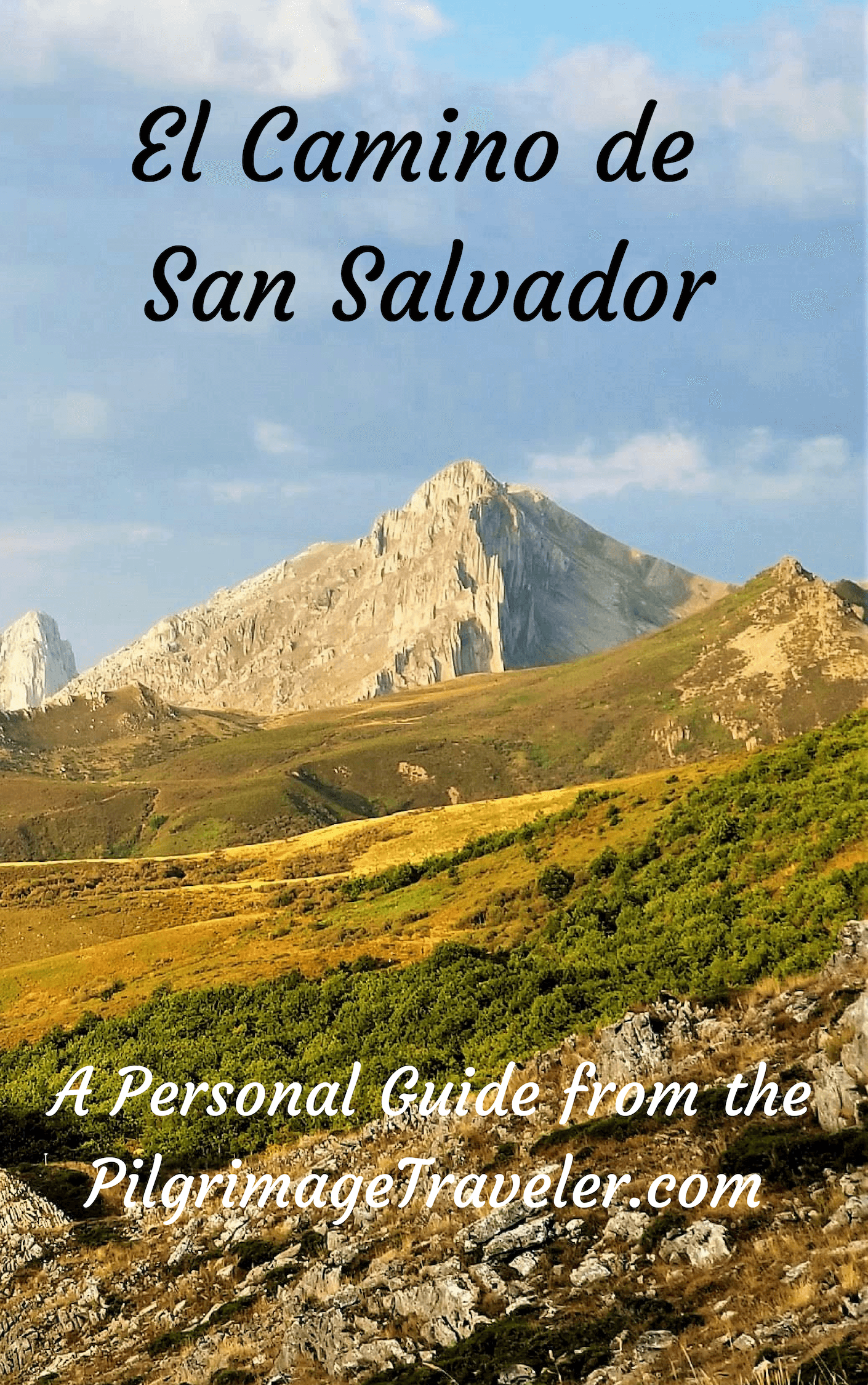
The most incredible mountain scenery on this camino from Leon to Oviedo!👇
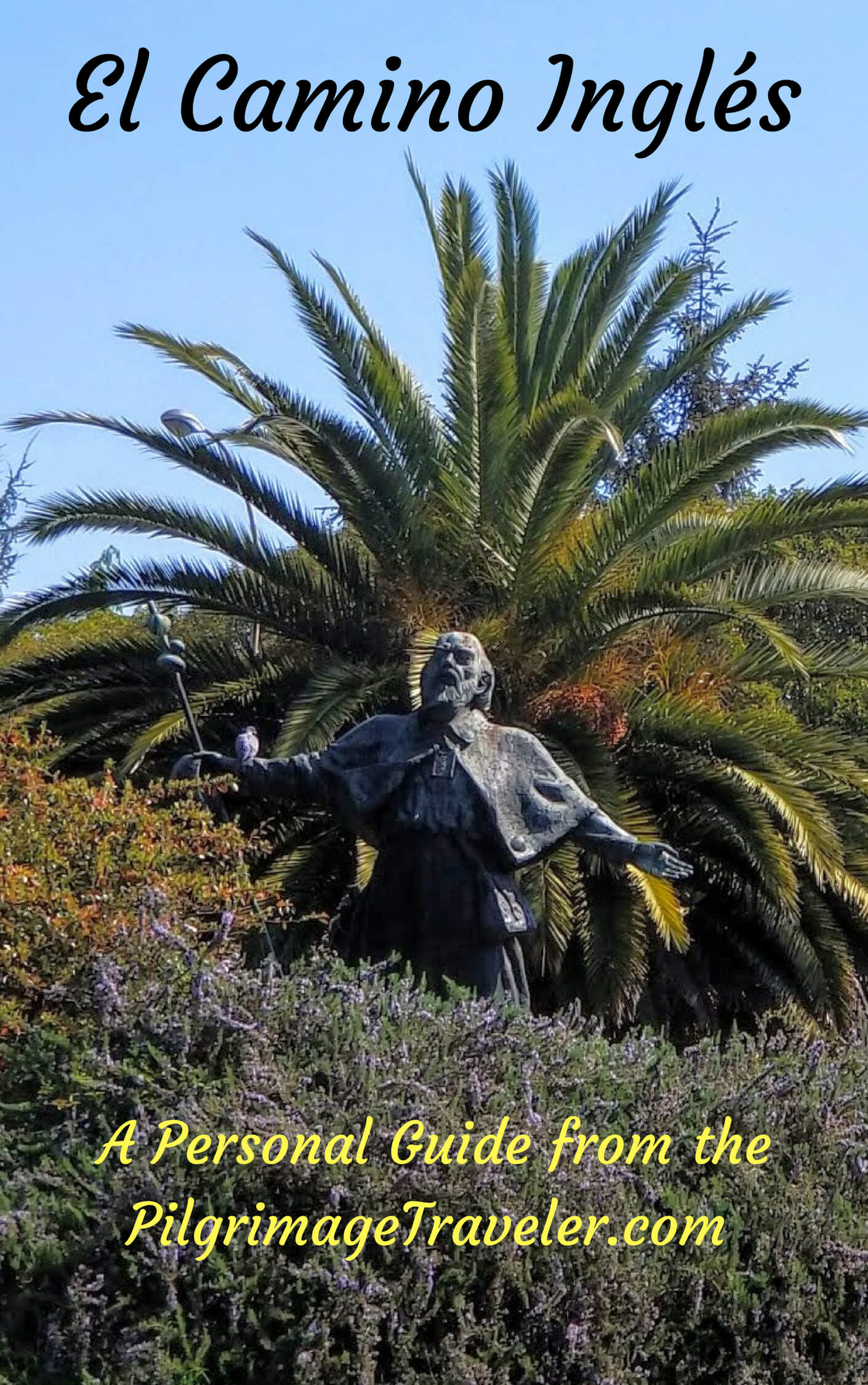
The shortest of the caminos, but not easy!👇
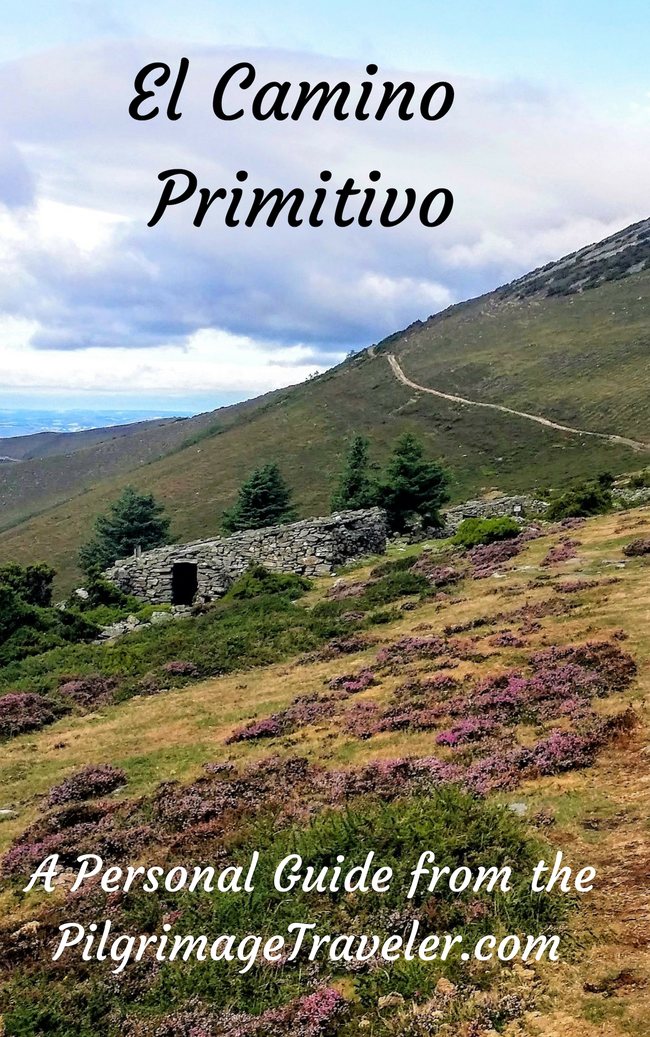
The very first, Original Way from Oviedo to Santiago!👇
The pilgrimage to the "End of the World" ~ The perfect add-on to your camino!👇

All Banners, Amazon, Roamless and Booking.com links on this website are affiliate links. As an associate of these companies, the Pilgrimage Traveler website will earn from qualifying purchases when you click on these links. We have used and love all of our product recommendations and believe you will too! We sincerely thank you!

🙋♀️ Why Trust Us at the Pilgrimage Traveler?
We’re not a travel agency ~ we’re fellow pilgrims! (See About Us)
We've trekked Pilgrimage Routes Across Europe since 2014!
💬 We’ve:
- Gotten lost so you don’t have to. 😉
- Followed waymarks in the glowing sunlight, the pouring rain and by moonlight. ☀️🌧️🌙
- Slept in albergues, hostels & casa rurals. Ate and drank in cafés along the way. 🛌 😴
- Created comprehensive and downloadable GPS maps and eBook Guides, full of must-have information based on real pilgrimage travels. 🧭 🗺️
- Shared our complete journeys, step by step to help YOU plan your ultimate pilgrimage and walk with your own Heart and Soul. 💙✨
Every detail is from our own experiences. Just fellow pilgrims sharing the Way. We have added a touch of spirituality, heartfelt insights and practical guidance from the road ~ offering a genuine connection to the spirit of pilgrimage. Tap into the wisdom of seasoned pilgrims!
Ultreia and Safe Pilgrimage Travels, Caminante! 💫 💚 🤍
Follow Me on Pinterest:
Find the Pilgrimage Traveler on Facebook:

Shroud Yourself in Mystery, along the Via de Francesco!
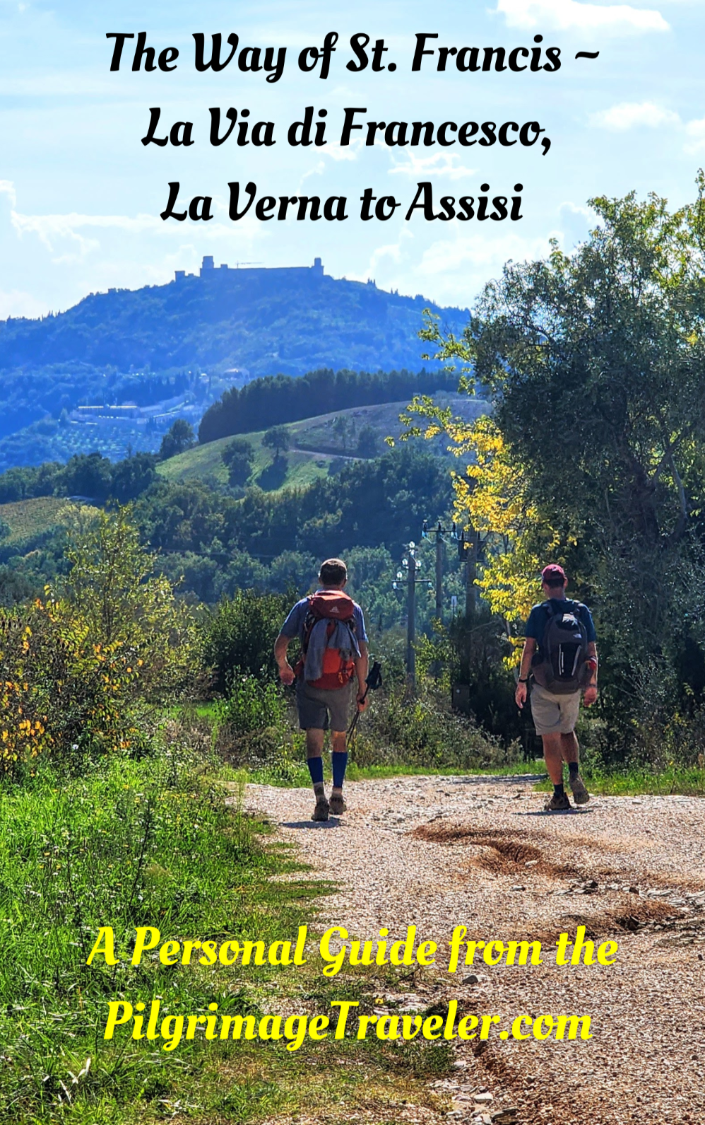
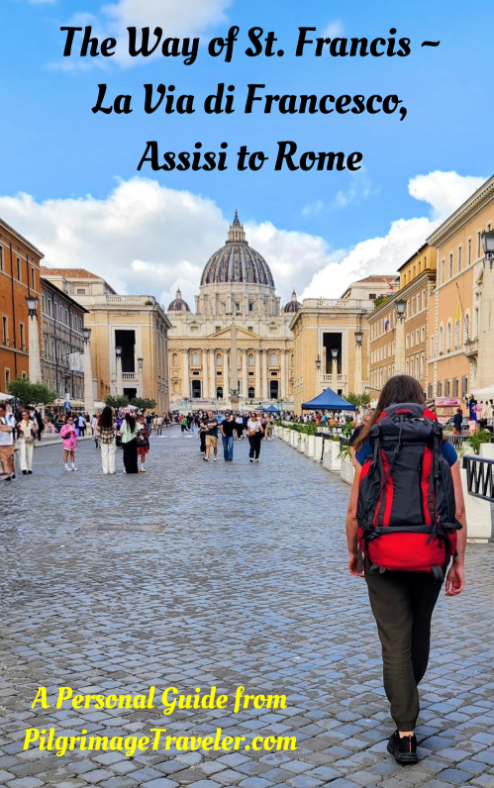
Walk in the Footsteps of St. Francis, and Connect Deeply with the Saint and to Nature in the Marvelous Italian Countryside!
Need suggestions on what to pack for your next pilgrimage? Click Here or on the photo below!
Carbon Trekking Poles ~ My Favorites!
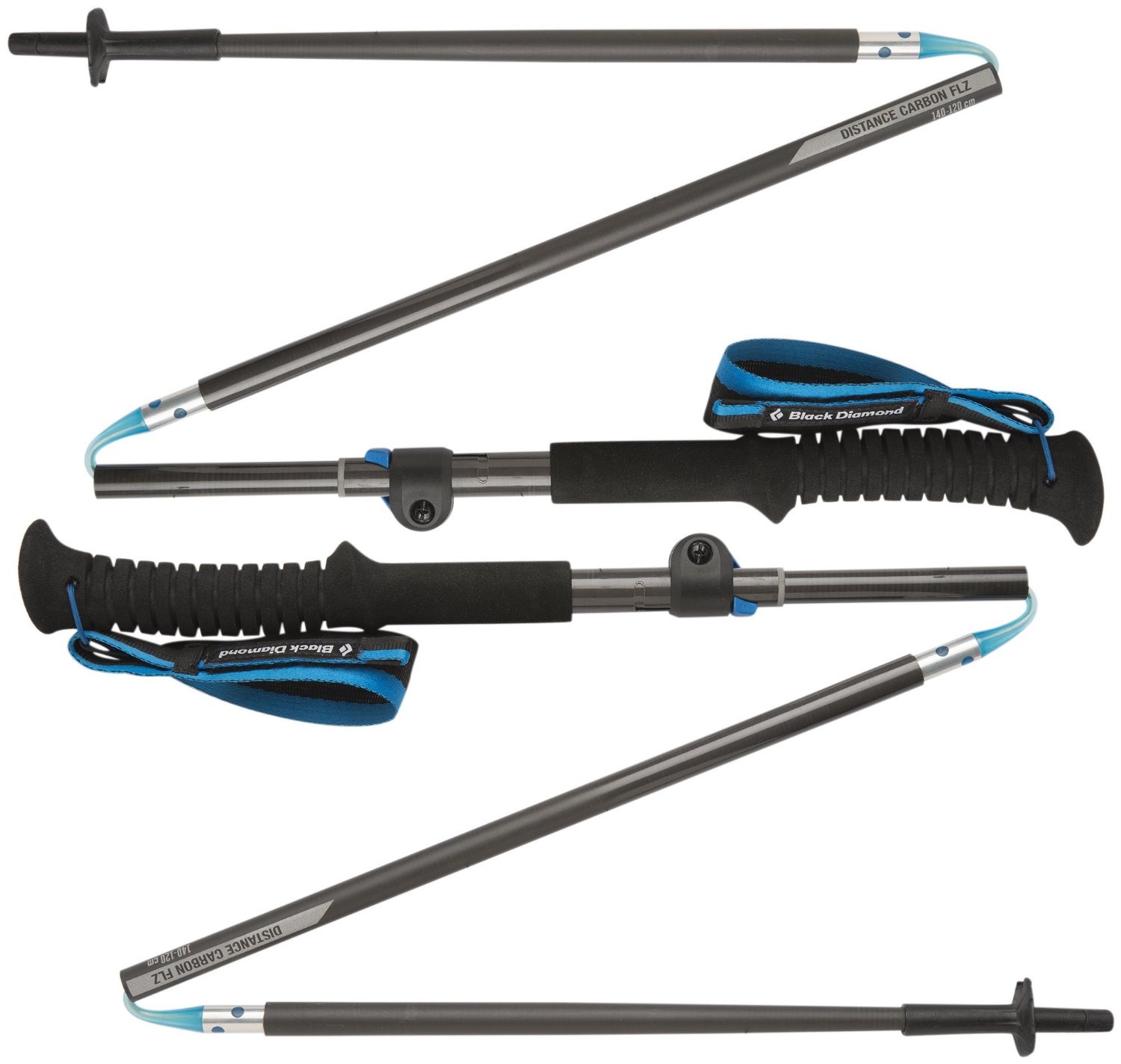
Carbon fiber construction (not aluminum) in a trekking pole makes them ultra lightweight. We like the Z-Pole style from Black Diamond so we can hide our poles in our pack from potential thieves before getting to our albergue! There are many to choose from! (See more of our gear recommendations! )
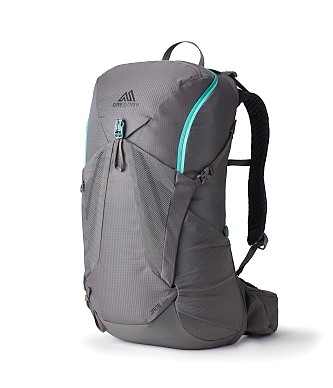
Gregory BackPack ~ My Favorite Brand

Do not forget your quick-dry microfiber towel!