- ~ Home
- ~ Camino Sanabrés (The Sanabrés Way)
- Santa Marta de Tera to Rionegro del Puente, Day Three
Jump to Camino Sanabrés Stages
Camino Sanabrés, Santa Marta de Tera to Rionegro del Puente, Day Three, 27 Kilometers (16.78 Miles)
Day three on the Camino Sanabrés, from Santa Marta de Tera to Rionegro del Puente is essentially a gentle and steady climb through increasingly deciduous forests, walking by a reservoir and on open lanes, and finally a descent into town.
🙋♀️ Why Trust Us at the Pilgrimage Traveler?
We’re not a travel agency ~ we’re fellow pilgrims! (See About Us)
We've trekked Pilgrimage Routes Across Europe since 2014!
💬 We’ve:
- Gotten lost so you don’t have to. 😉
- Followed waymarks in the glowing sunlight, the pouring rain and by moonlight. ☀️🌧️🌙
- Slept in albergues, hostels & casa rurals. Ate and drank in cafés along the way. 🛌 😴
- Created comprehensive and downloadable GPS maps and eBook Guides, full of must-have information based on real pilgrimage travels. 🧭 🗺️
- Shared our complete journeys, step by step to help YOU plan your ultimate pilgrimage and walk with your own Heart and Soul. 💙✨
Every detail is from our own experiences. Just fellow pilgrims sharing the Way. We have added a touch of spirituality, heartfelt insights and practical guidance from the road ~ offering a genuine connection to the spirit of pilgrimage. Tap into the wisdom of seasoned pilgrims!
Ultreia and Safe Pilgrimage Travels, Caminante! 💫 💚 🤍
Quote for Day Three on the Camino Sanabrés, Santa Marta de Tera to Rionegro del Puente
“For my part, I travel not to go anywhere, but to go. I travel for travel’s sake. The great affair is to move.” ~ Robert Lewis Stevenson, Scottish Author
Today's walk, at least for me, was not much more than just moving! I do enjoy the mere activity of the walk, despite the ultimate "going somewhere" to Santiago. This day is less interesting than some, but walking is what a pilgrim does, and today the focus was on the activity of moving itself.
Maps and Stats of Day Three on the Camino Sanabrés, Santa Marta de Tera to Rionegro del Puente
Here is my Google Map from my GPS tracks. While we did walk through several small towns, the services were either non-existent or unreliable. The first significant town, Calzadilla de Tera, is 11 kilometers down the road, without a café, but it does have a small grocery store - the only one until Mombuey, 9.0 kilometers into day four! Stock your pack here or request food to go at the bars in Rionegro del Puente at the end of the stage. We were caught without food on a Sunday night and had to eat from the vending machine at the albergue, both for an evening snack and Monday’s breakfast. It wasn’t great, but was adequate.
It isn’t until Olleros de Tera another two kilometers farther along until you will find a café. Much to our chagrin, this only bar in town was closed each time we passed through. Oh well ~ such is Camino life!
It is best to plan to find nothing and if something is available you will be pleasantly surprised. You may be able to get a reprieve at the Albergue Rehoboth, more than 21 kilometers into the day. This quaint place will give you coffee or tea and cookies, au gratis - a real refuge for pilgrims, however, a healthy donation is highly suggested.
The final destination of Rionegro del Puente has all the services that the pilgrim needs.
Please note there are three alternative routes in orange. The first is from Camarzana de Tera, if you had to walk on to the Juan Manuel hotel to find accommodations the night before. It is very easy to get back onto the Camino after walking west along the N-525 for 2/3 kilometer, then taking a left onto the ZA-105 and walking about one kilometer to the large gravel pit by the Tera River. See the description below. You will cut off about four kilometers of the day's total if you start from this hotel.
The second route in orange, is the route to and from the albergue in Calzadilla de Tera.
The third route in orange best taken in inclement weather when the path to the dam is slippery and muddy. This route is along the road designated as the way for bicycles.
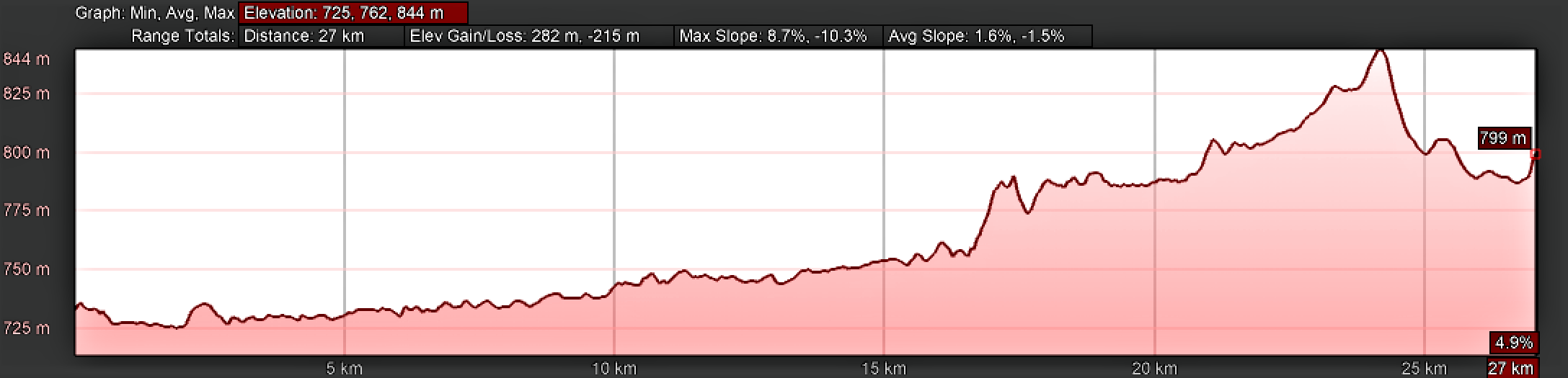
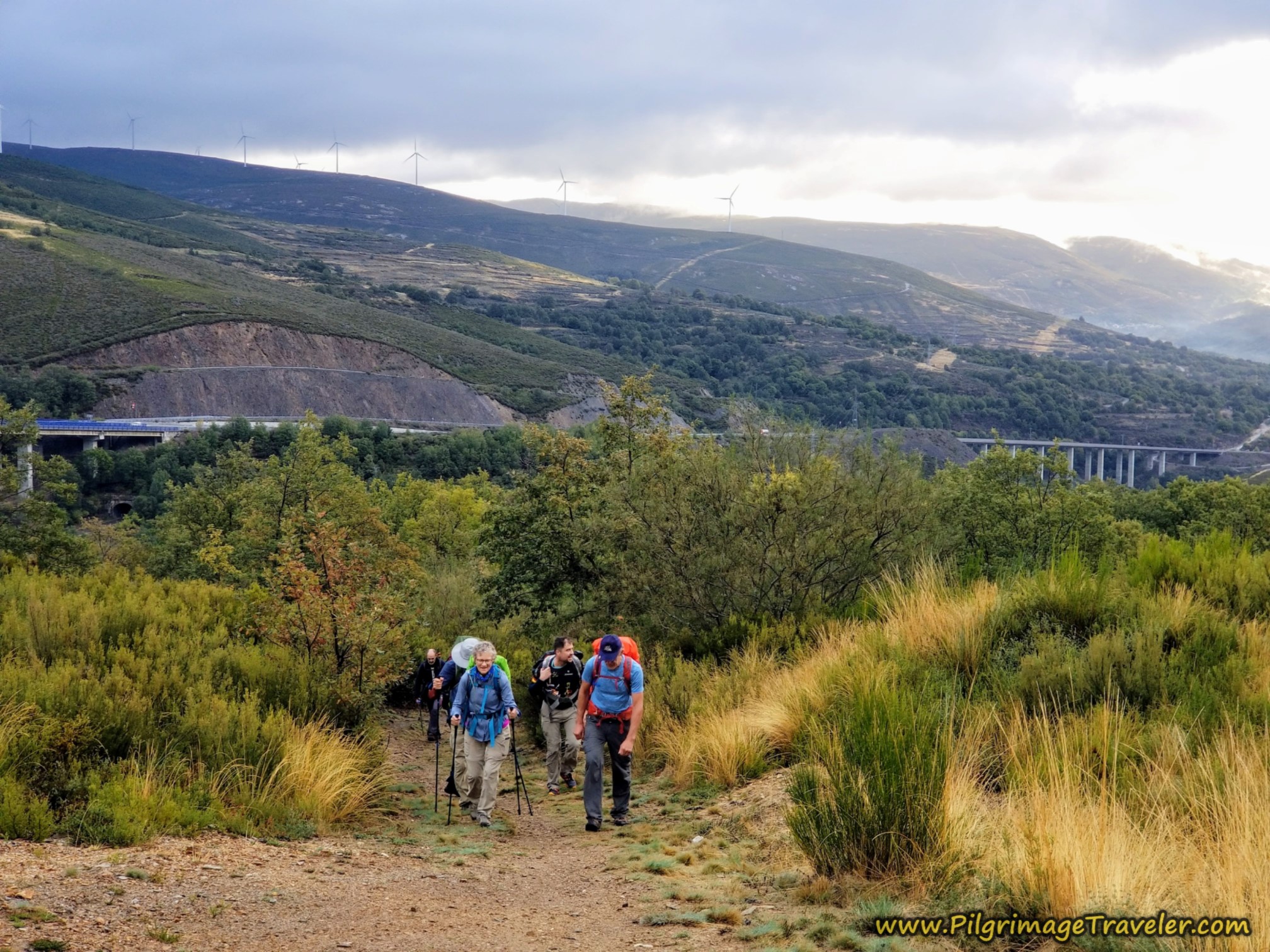
The day is essentially a long gradual climb, with a few steeper areas thrown in. All-in-all the elevation gain is less than 300 meters (about 980 feet), so you will not be too taxed. A nice descent into Rionegro del Puente is an easy finish to a long day.
👣 Camino Sanabrés EBook:
Offline Guide with Bonus Route
~ Includes 4-5 additional days on the Vía de la Plata from Salamanca!
Walk smarter with our ad-free, beautifully formatted Camino Sanabrés eBook Guide, perfect for offline use ~ important in the mountainous and remote areas. Includes daily stage details, stunning photos, historical background and a BONUS digital guide on the Vía de la Plata from Salamanca, called the Camino Fonseca. This allows you the opportunity to add 4-5 more days to your Camino in the beginning.
Don't carry a hard copy guide book to increase your pack weight. Use our frequently updated digital guide on your next Camino instead!
📲 Instant download. 💸 Money-back guarantee. 🔄 Free updates for 1 year.
👉 Click here for more info or BUY NOW!
Jump to Camino Sanabrés Stages
Photo-Rich Travelogue for Three on the Camino Sanabrés, Santa Marta de Tera to Rionegro del Puente
We set off from Santa Marta before dawn, on a cool, crisp autumn morning. Everyone was up early in the albergue, and it felt like the bed race was on. In actuality, the municipal albergue in Rionegro del Puente has plenty of beds, 32 to be exact - almost triple the amount in Santa Marta. The municipal albergue is the only accommodation in Rionegro del Puente.
We had fixed ourselves a hearty breakfast at the Albergue de Santa Marta. There is no nearby café.
Heading west from the albergue and towards the church, you walk past it and across the main square. You will see a "Camino de Santiago" sign on the west side of the square, with the iconic photograph of Santiago as a pilgrim, guiding you to stay high and to the right, above the wall and onto a small side road that leaves town. Do not drop down to cross the river by the way you entered town. Hopefully you noted this sign as you entered town the day before.
Within a short distance of about 1/4 kilometer, you come to more waymarks, ensuring that you are on the right track. By about 0.6 kilometers the pavement in town turns to a gravel lane.
After 1.12 kilometers, come to this intersection shown below, and take the lane to the left, crossing the small cement bridge. It is all clearly marked.
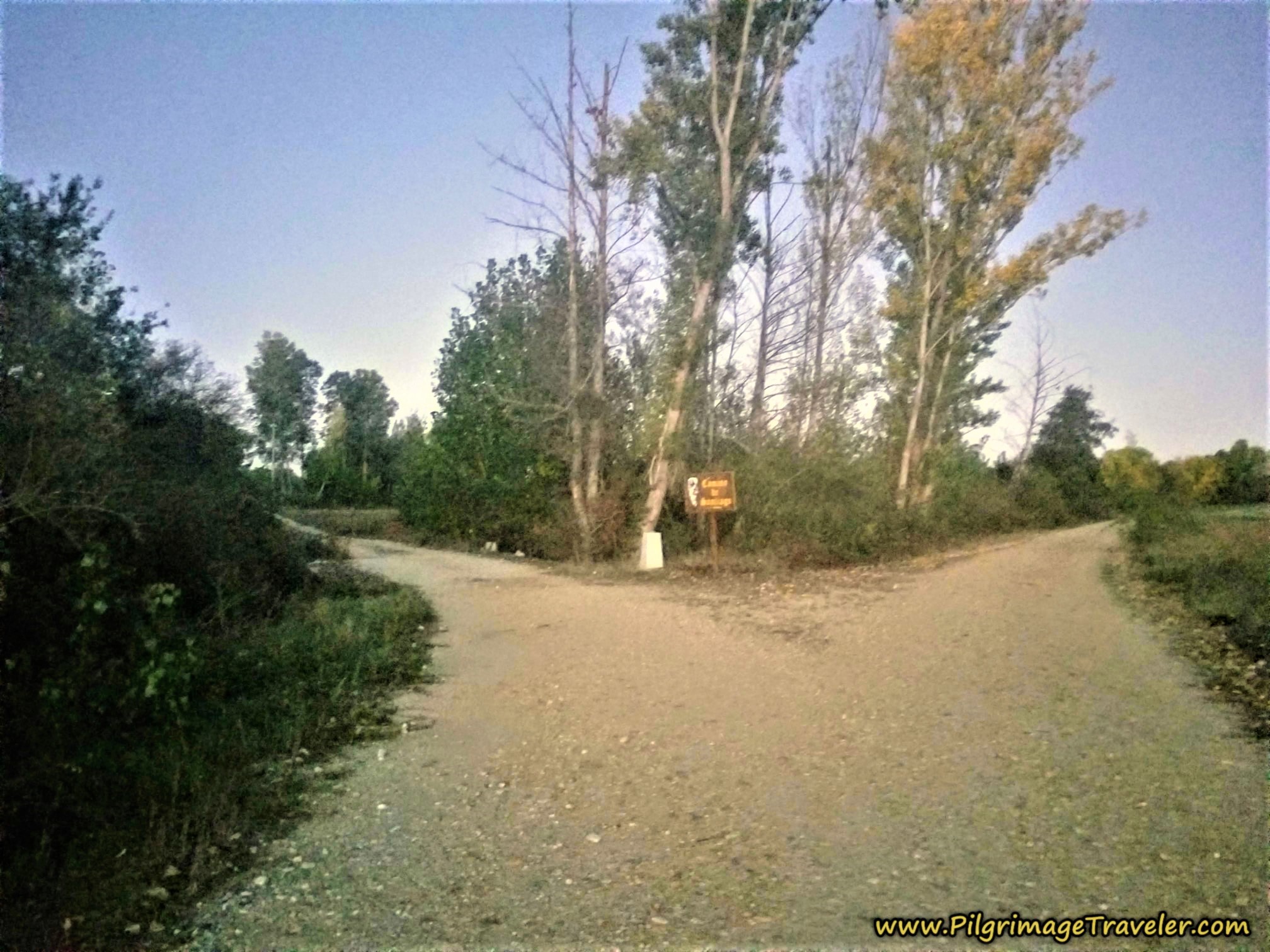 Left Turn onto Southwest Lane
And thus begins the many seemingly endless farm roads for the day.
At around 1.45 kilometers, on the Camino Sanabrés, come to a T-intersection and take a left.
After another 1/2 kilometer, come to another T-intersection, shown below, where you are again directed to turn left. At this T-intersection, is yet another very old sign we had seen thus far, with a photograph of the iconic image of Santiago as a pilgrim, from the church in Santa Marta de Tera.
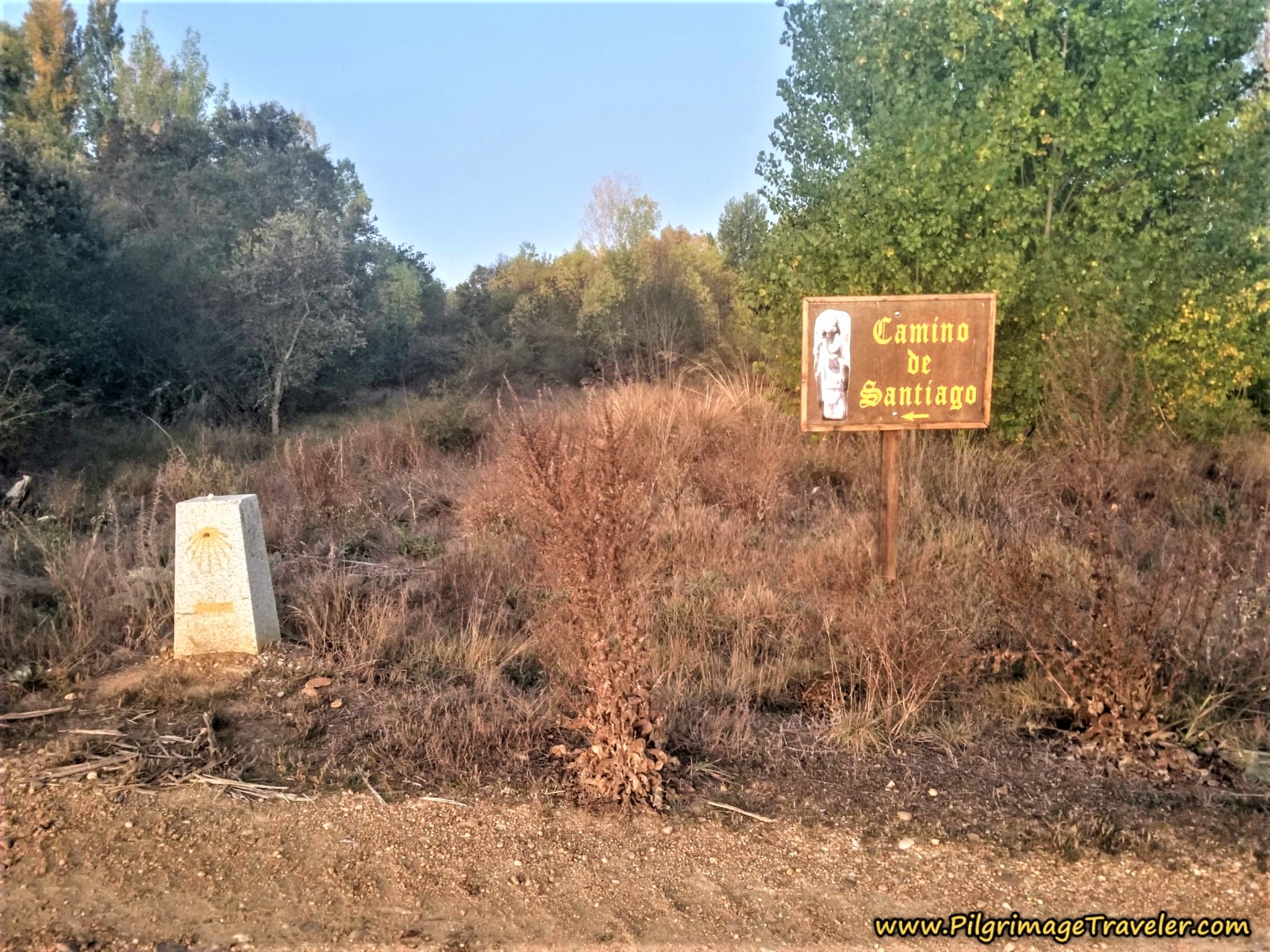 Very Old Pilgrim Santiago Waymark
After 2.9 kilometers, keep straight by an intersection with another trackway that veers to the right, passing the 315.272 kilometer waymark.
We soon found ourselves walking through beautiful cultivated forests of poplar trees.
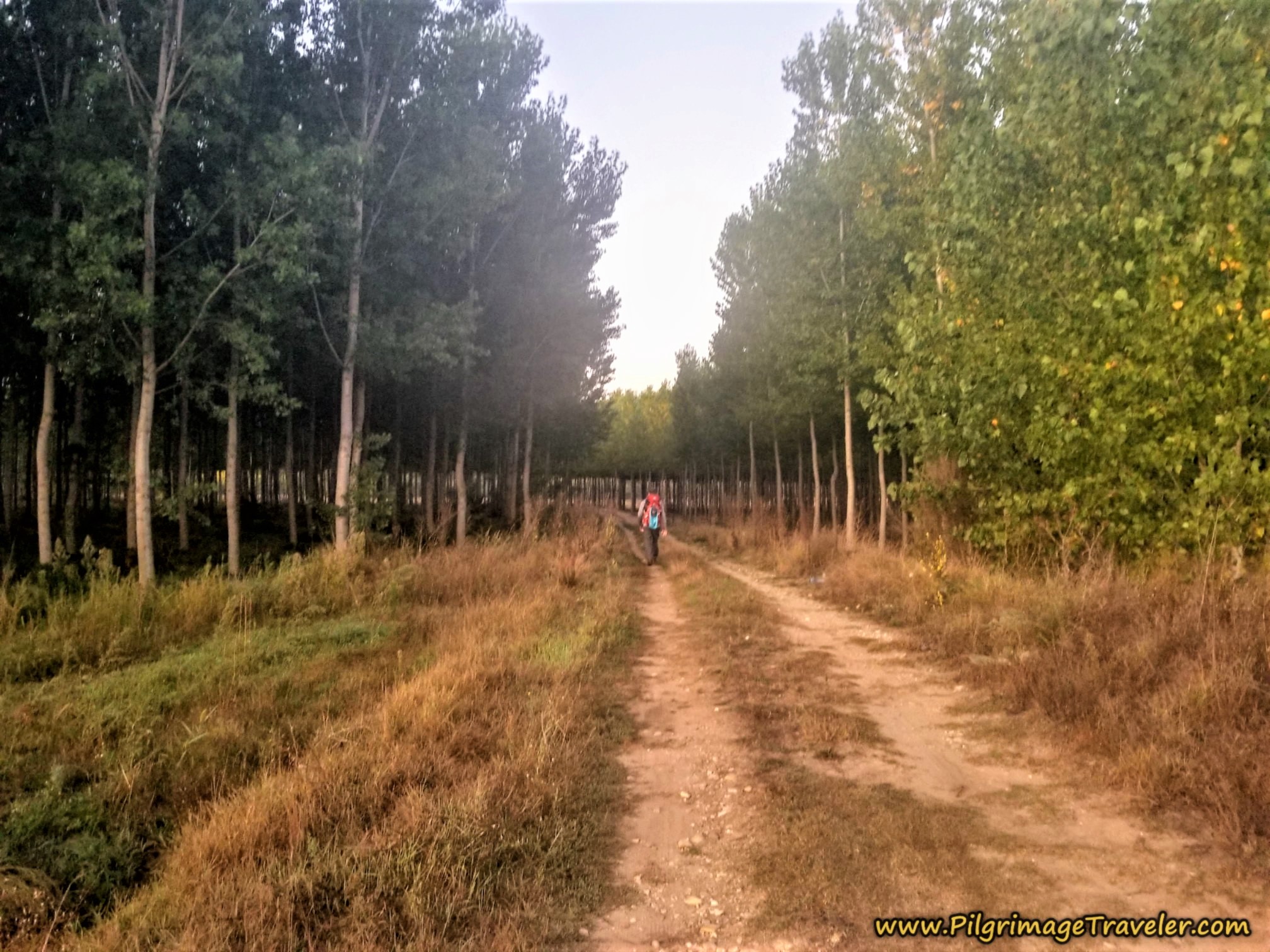 Walking Through Cultivated Forests
By approximately 3.39 kilometers into the day we turned right at an intersection with the Tera River.
The Camino now follows the river for more than 2.0 kilometers.
In October, when we first passed through here in the early morning it was quite cool. So much so that I used my gloves for cold hands! In fact, water vapor was rising from the warmer river.
What a difference it was walking through in June. Once again, you will see photos from both seasons!
After around 3.9 kilometers, pass this little abandoned, white building.
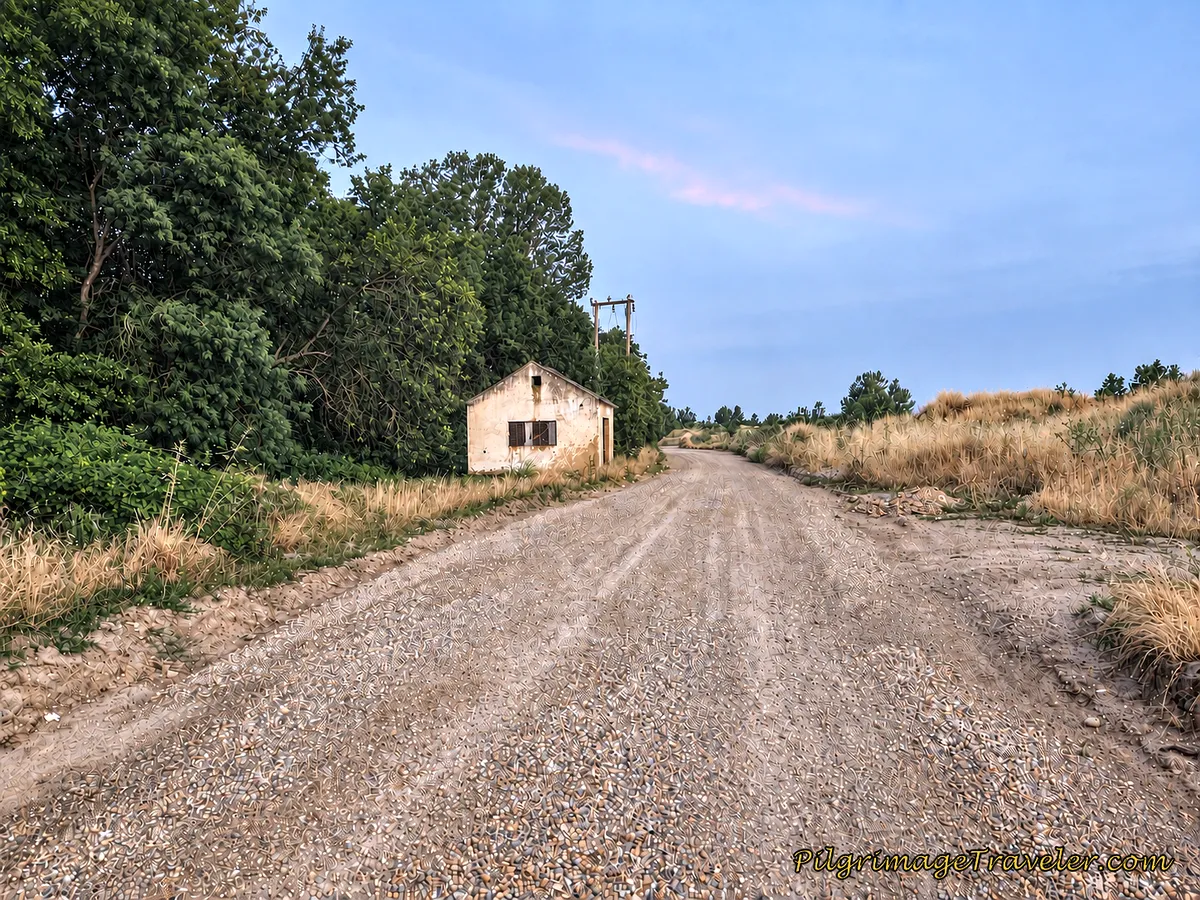 Pass Abandoned Building Along the River
By around 4.33 kilometers, we arrived at this triangular-looking intersection, see photo below. Several large trucks passed us through this area. Several more water trucks also passed us, watering the lane.
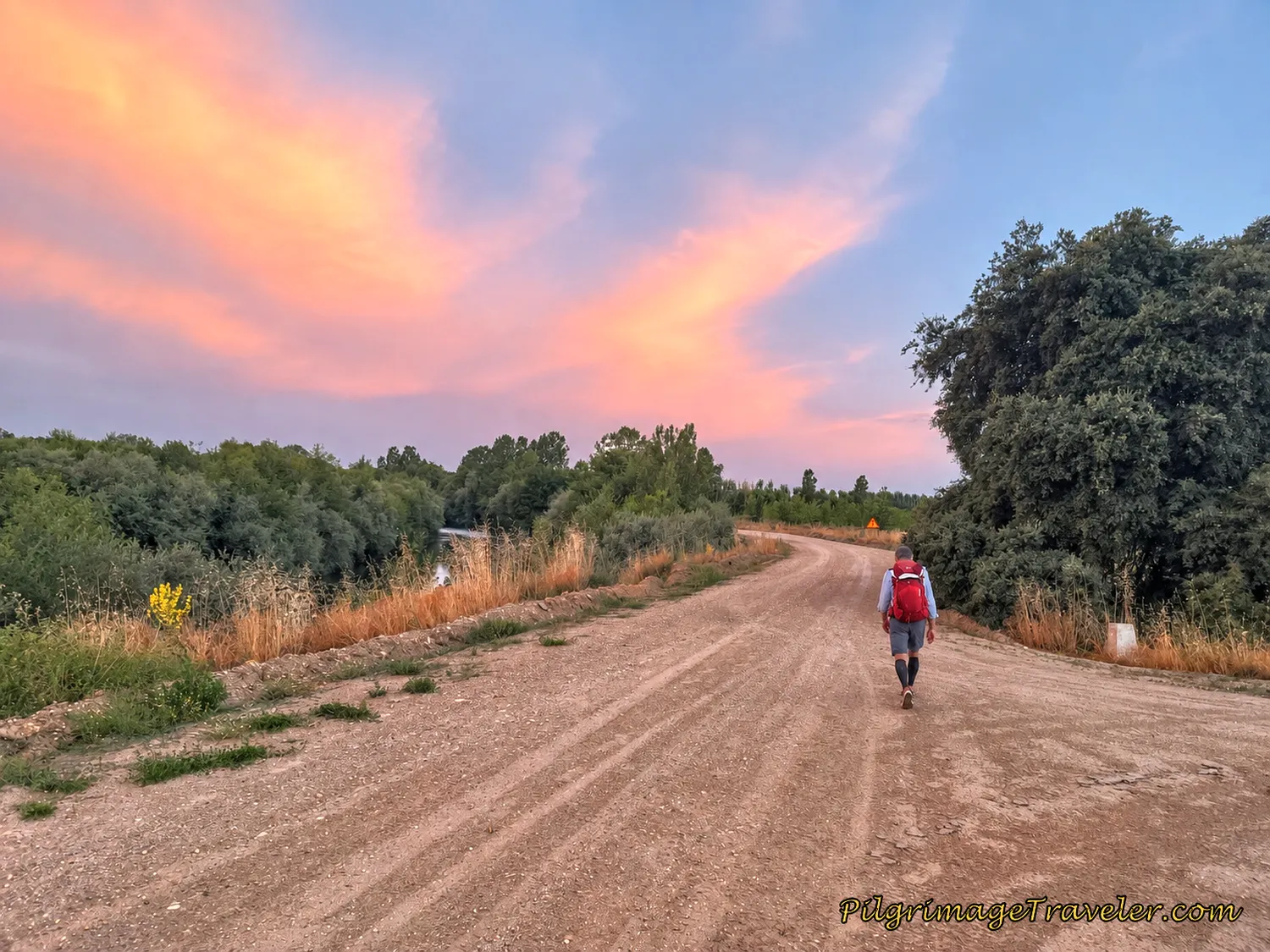
We could hear the humming of the motors of heavy equipment and there was a lot of dust in the air. It is more of an industrial area than we thought. Without the frequent watering of these dusty lanes, I'm sure it would have been much worse. The truck traffic can be quite substantial through this section, so caminante beware!
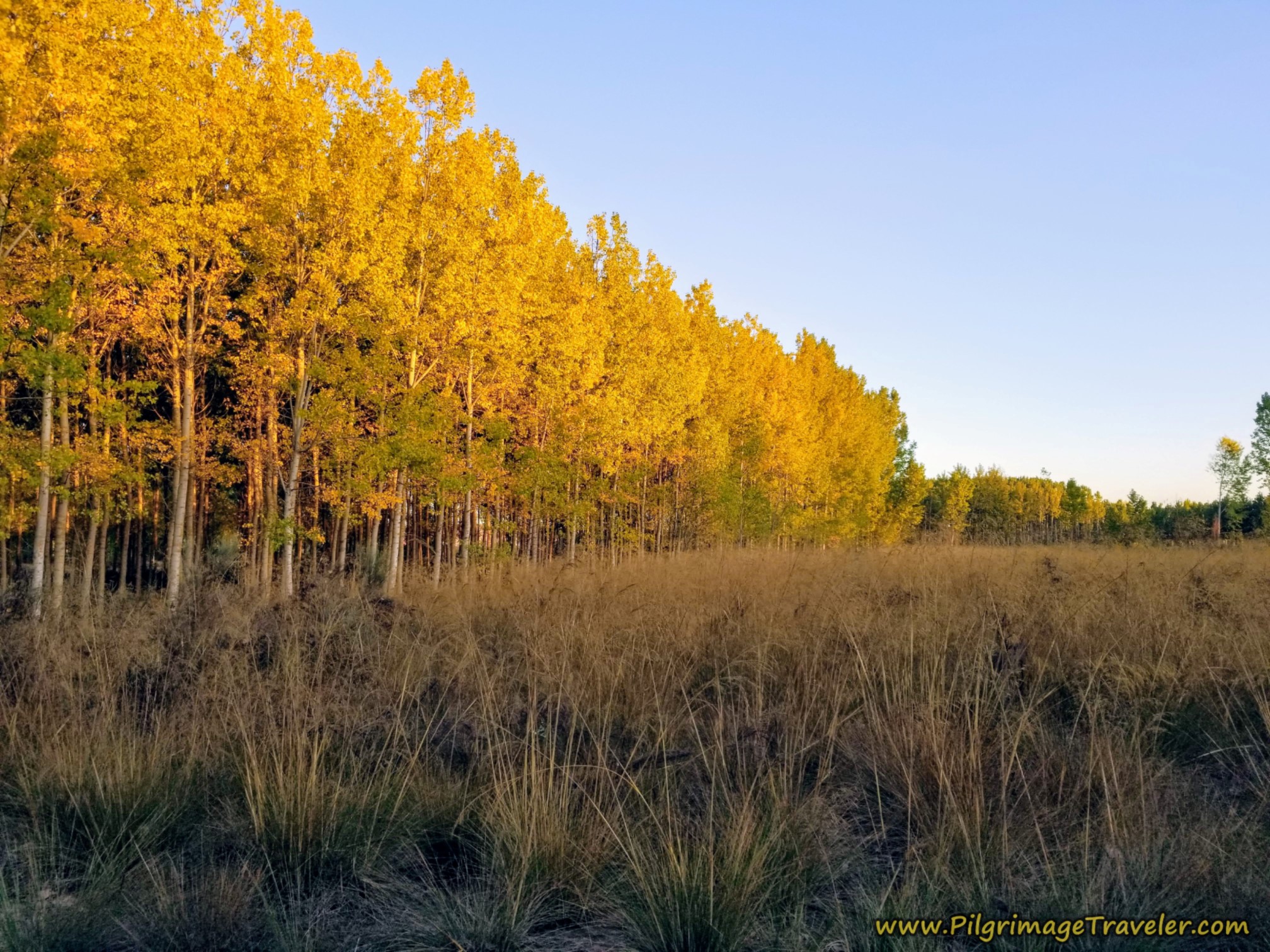
Fortunately, the cultivated poplars provided some beauty with their splashes of golden color through this unpleasant area. The cool temperatures and fall color allowed us to really experience autumn for the first time, walking through in mid-October.
After 5.74 kilometers, the gravel road turns to pavement at a big bend to the right and by a really nice camping/picnic area. And suddenly, the source of all the noise became apparent. Below is a photo of the large gravel pit that you will see just across the highway ahead. The Camino joins the highway here.
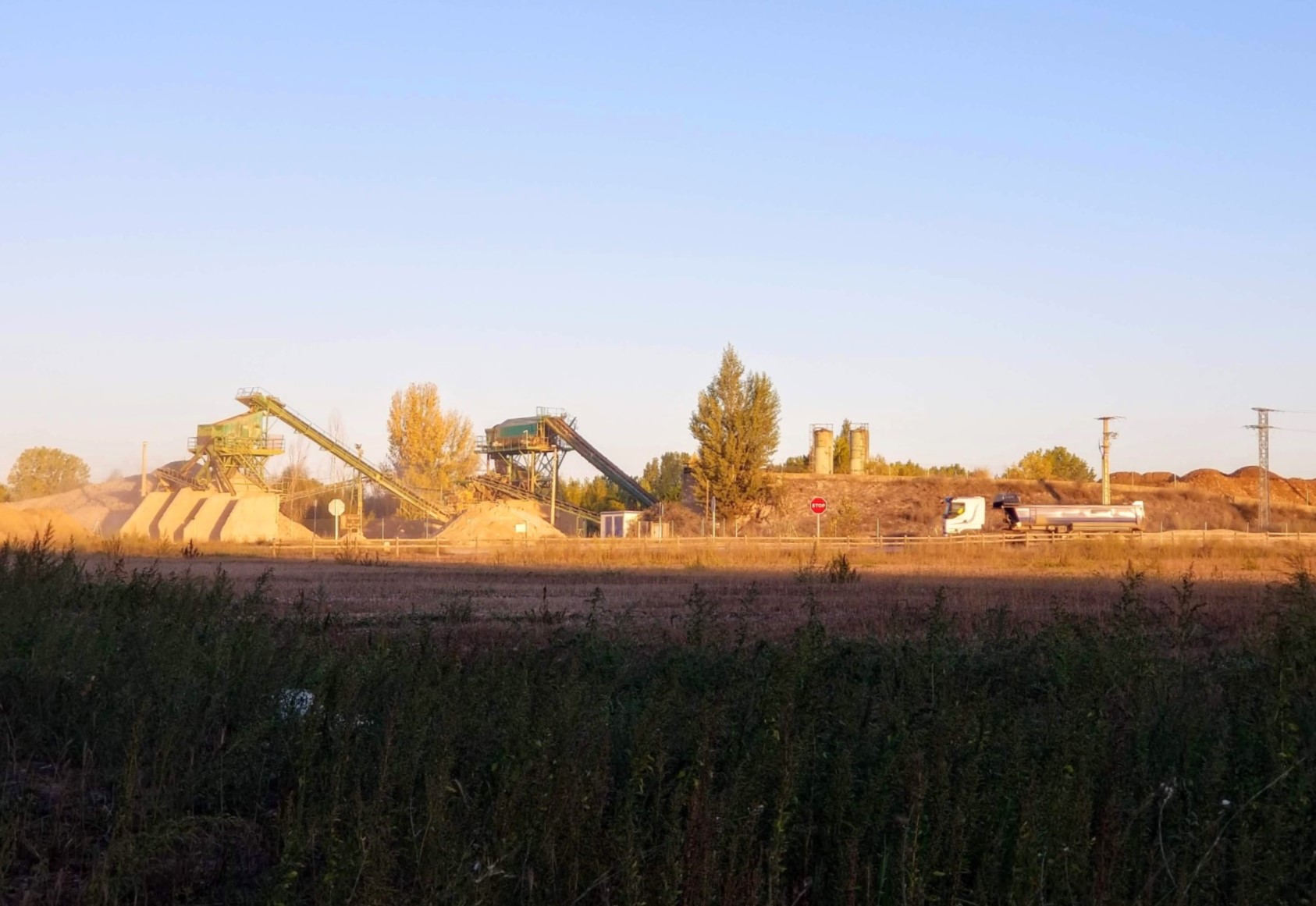 Come to a Gravel Pit, Turn Left Onto ZA-105
Jump to Camino Sanabrés Stages
Upon reaching the highway, the ZA-105, the Camino turns to the left. It is here where the route from the Hotel Juan Manual joins the Camino.
You will see the bridge immediately ahead that you will cross after 6.0 kilometers from Santa Marta de Tera on the way to Rionegro del Puente.
There is a beautiful recreation area called La Barca on the opposite side of the highway, on both sides of the river. You can see a sign for the park, just discernible in the photo below. There are picnic tables and perhaps restrooms, and one restaurant here that opens late.
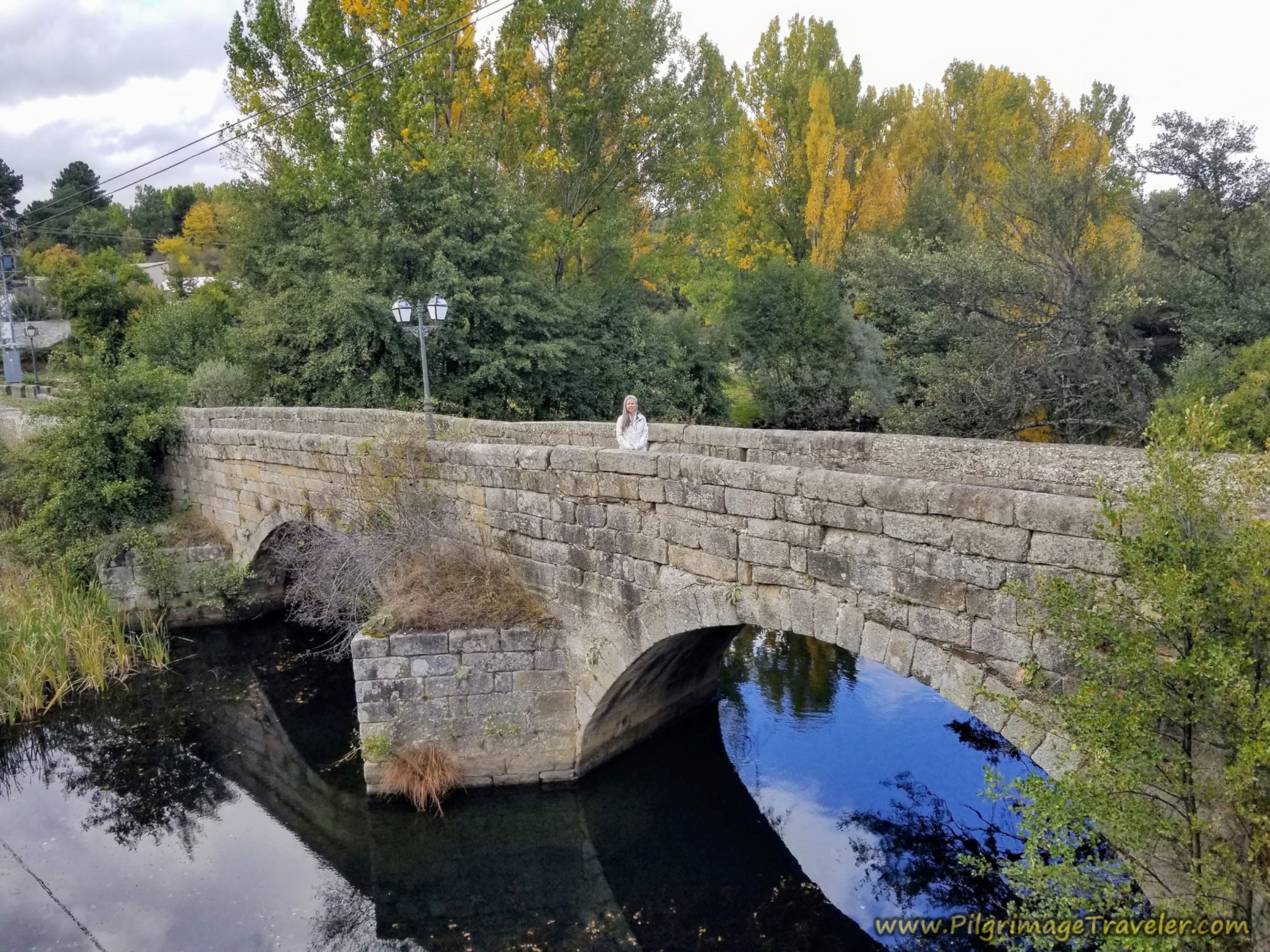
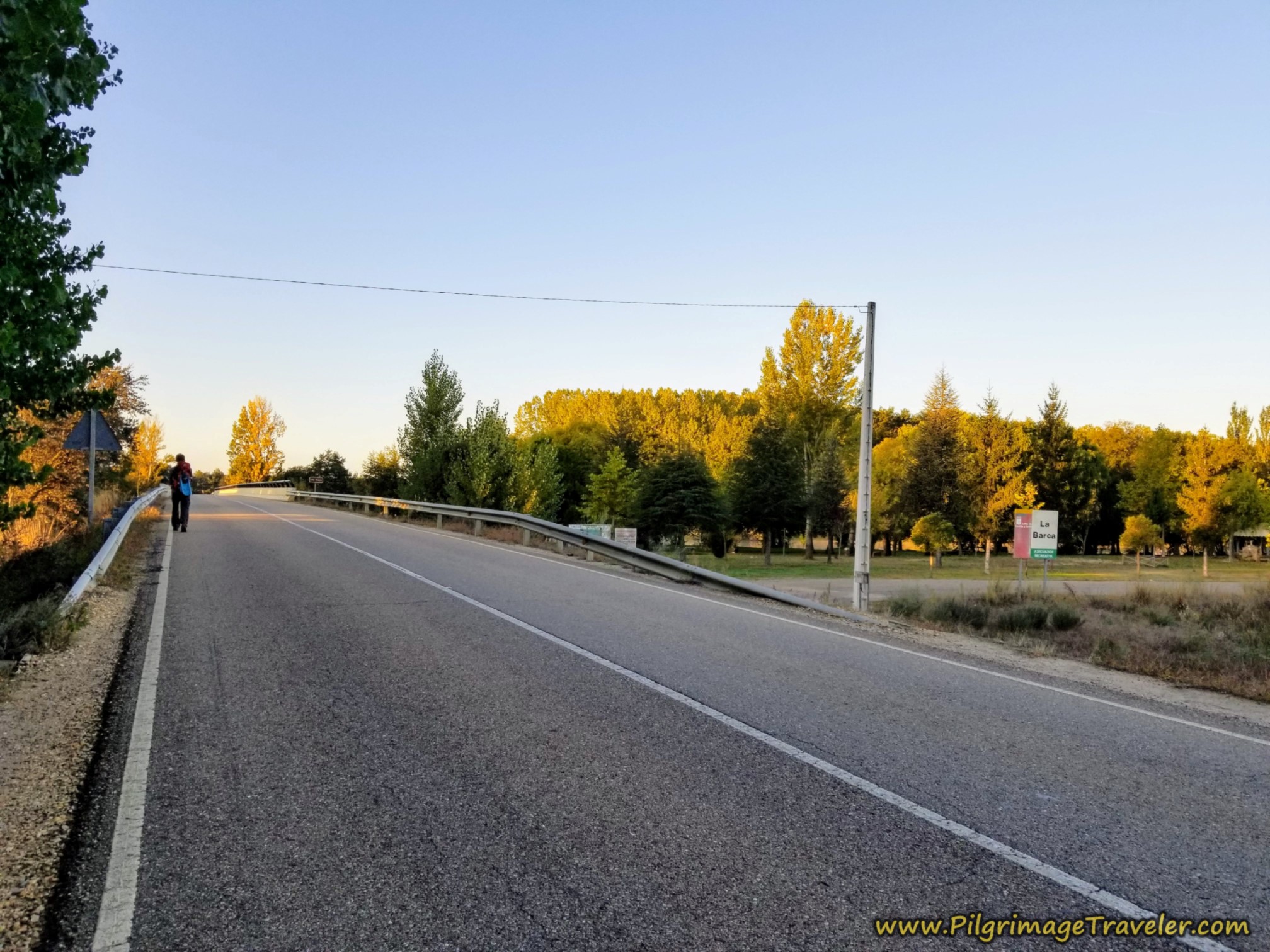 Cross the Río Tera
As you cross the bridge, there is a very narrow sidewalk that offers a bit of protection, but you must still beware of the heavy truck traffic. Rich got off the sidewalk by mistake as he was crossing, and an approaching truck blared his horn at him! Oops!
The views on the bridge are lovely, especially on an autumn day, as you can see below. Just take care when photographing it, that you don't step out on the roadway. It is easy enough to do.
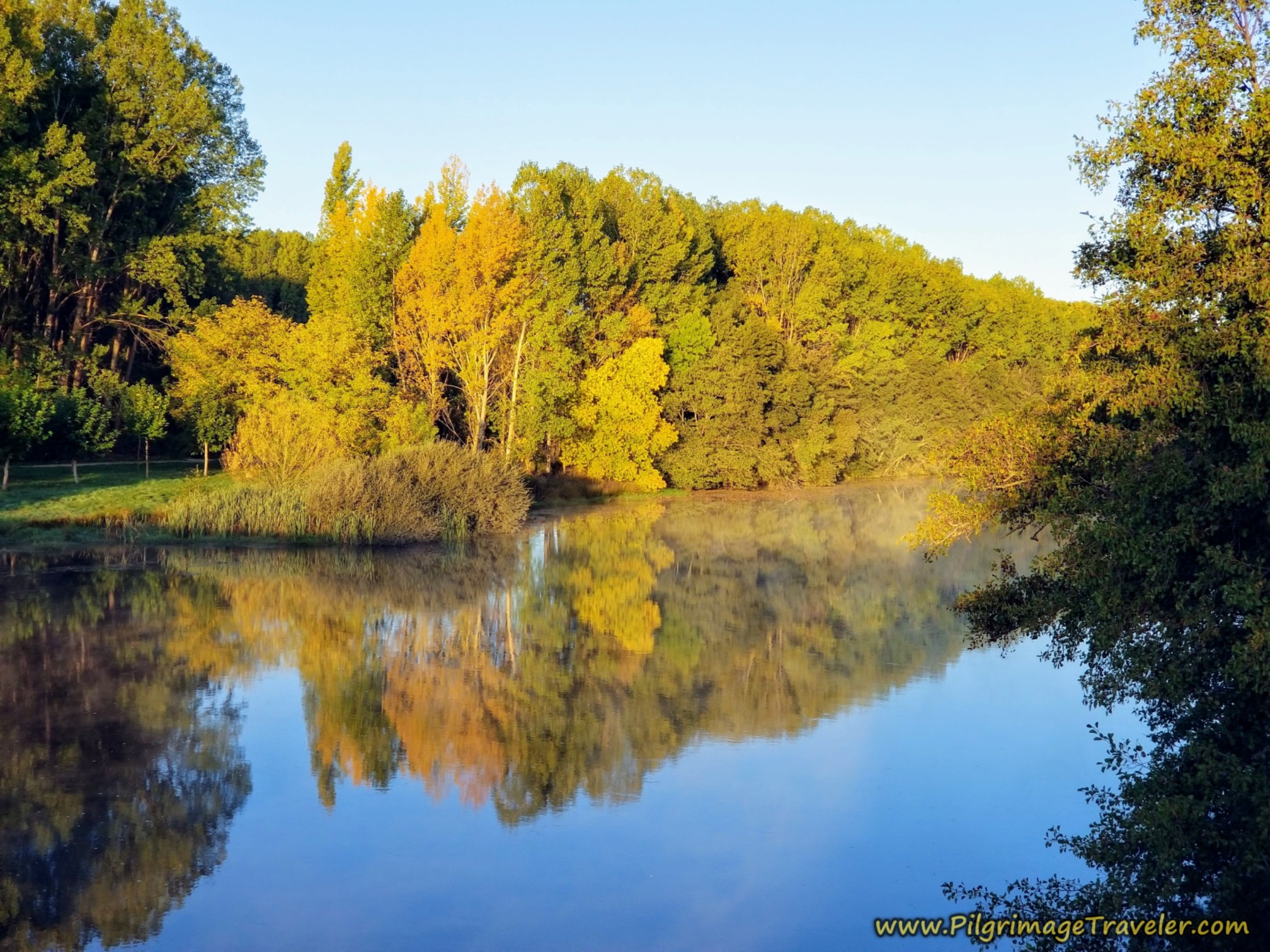
Immediately after the bridge the Camino directs you to the right and into La Barca Recreation Area. Not much farther along, you leave the river and the park and walk through more poplar plantations on farm lanes. This area provides quite pleasant walking after the gravel pits, with the truck traffic now gone.
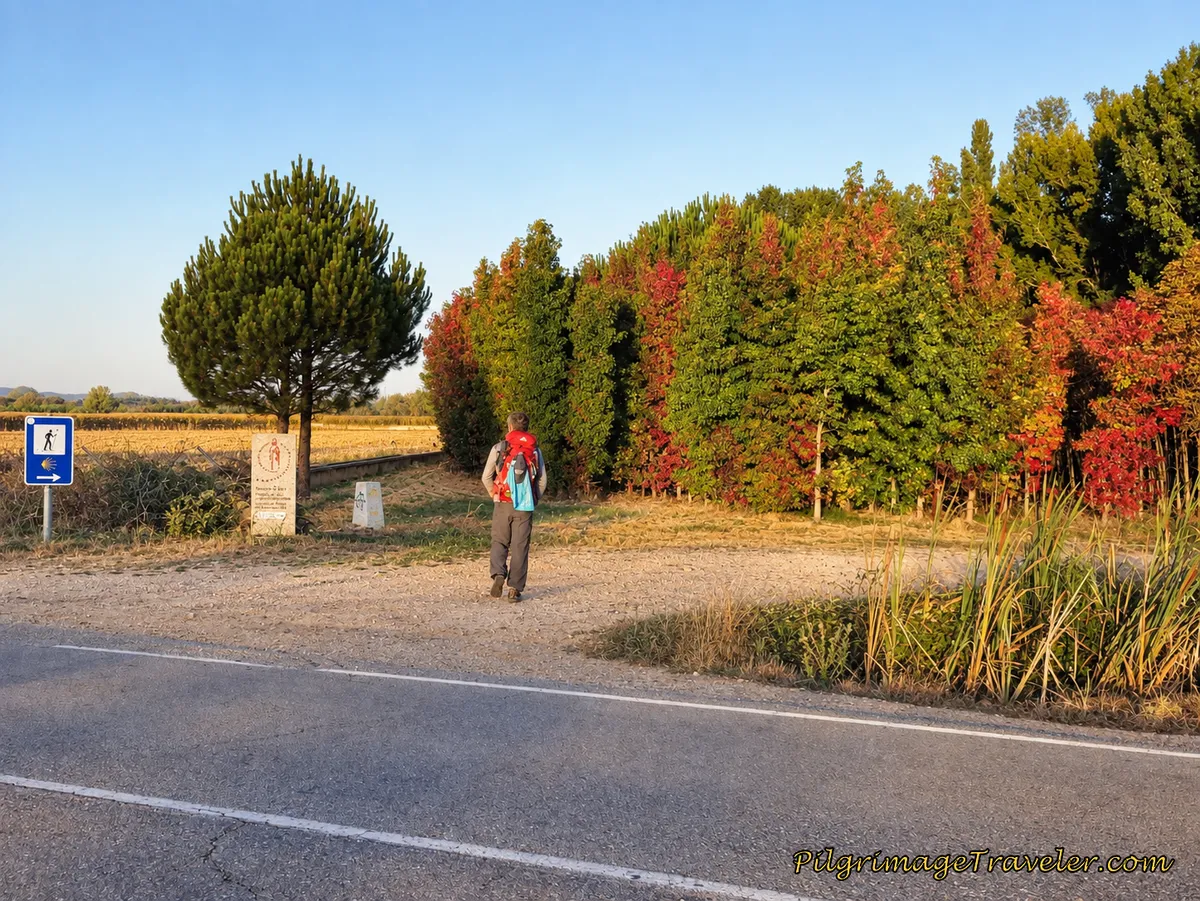
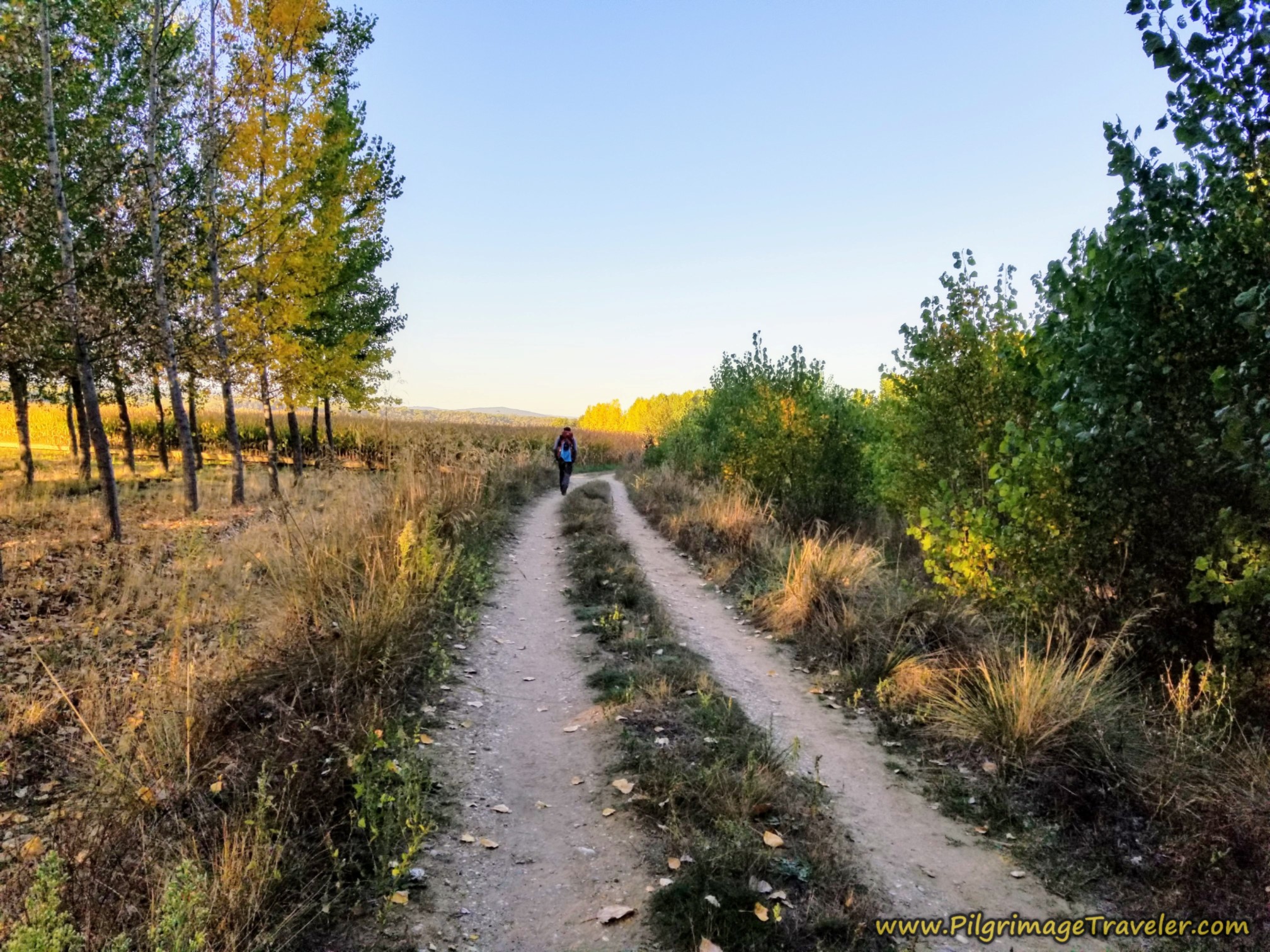
For the next three or so kilometers the Camino takes you through these lovely tractor tracks, without gravel, but nice soft dirt. The waymarking is perfect through here.
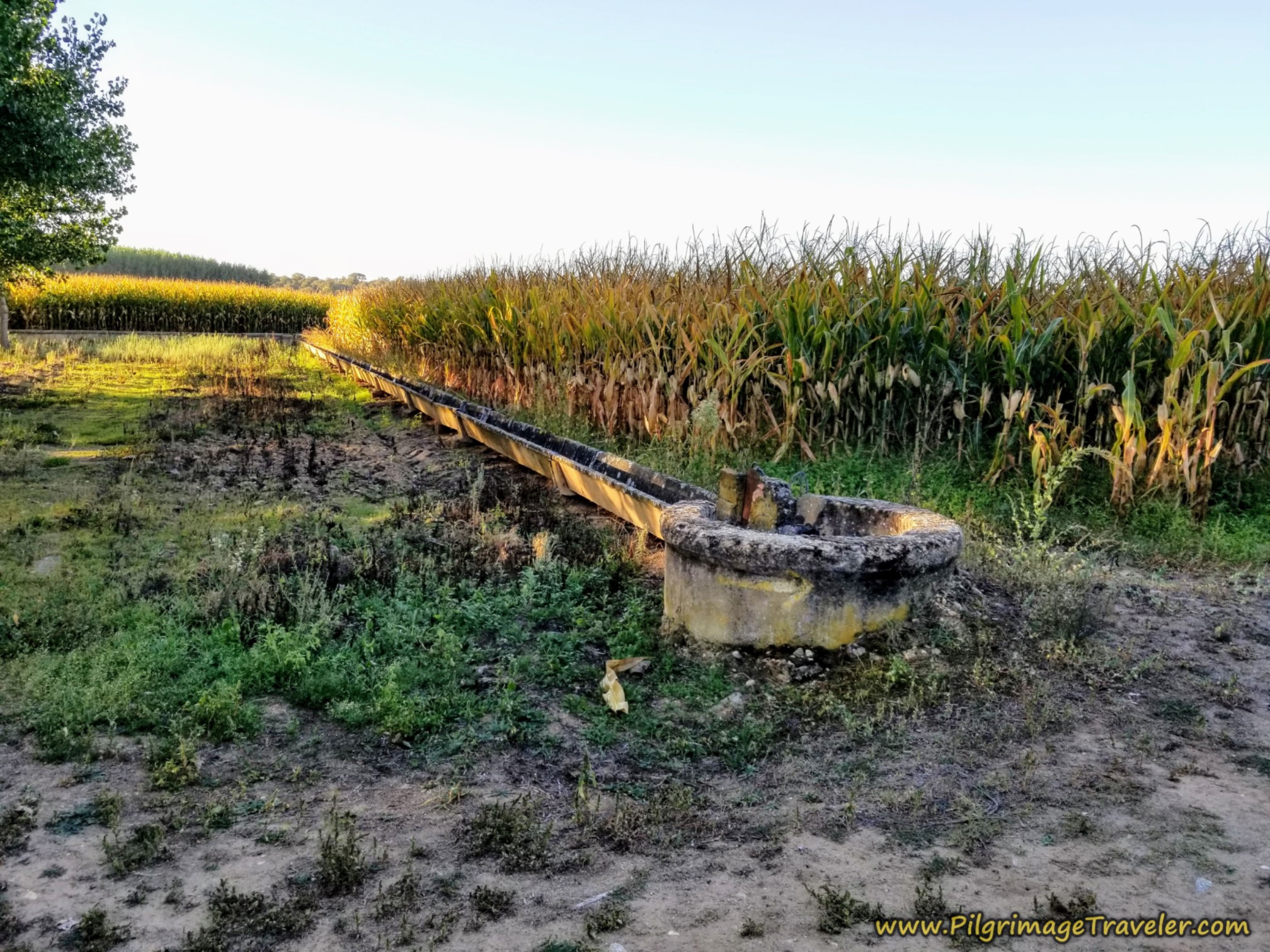
The farming fields alternate between corn and poplars. I also observed this unique concrete irrigation system.
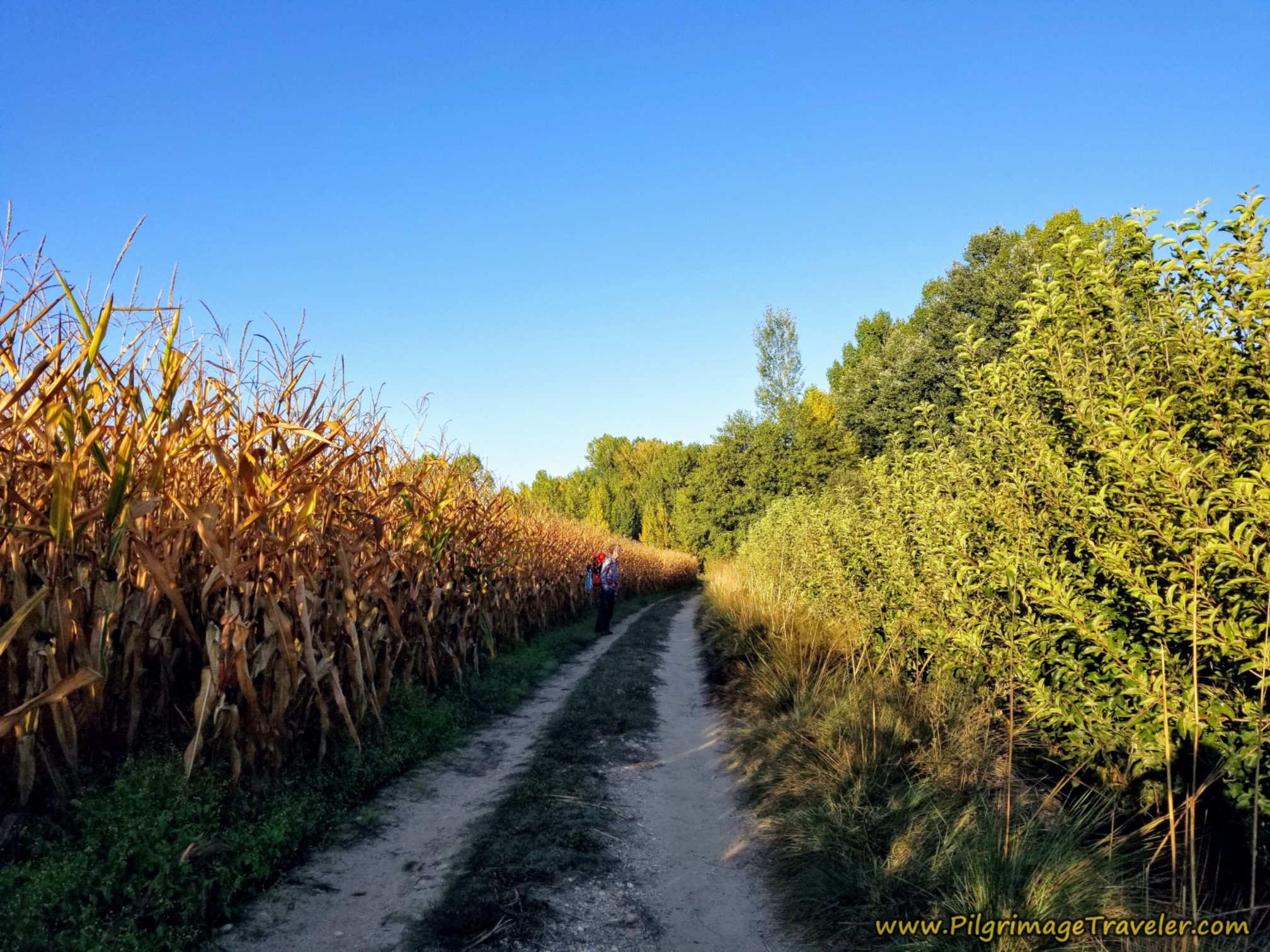
The farmers lanes end after approximately 9.34 kilometers into day three, where you come out at the ZA-P-2547 roadway. You turn right onto the highway. Below is a stretch of this road, and as you can see, we saw quite a few peregrinos ahead.
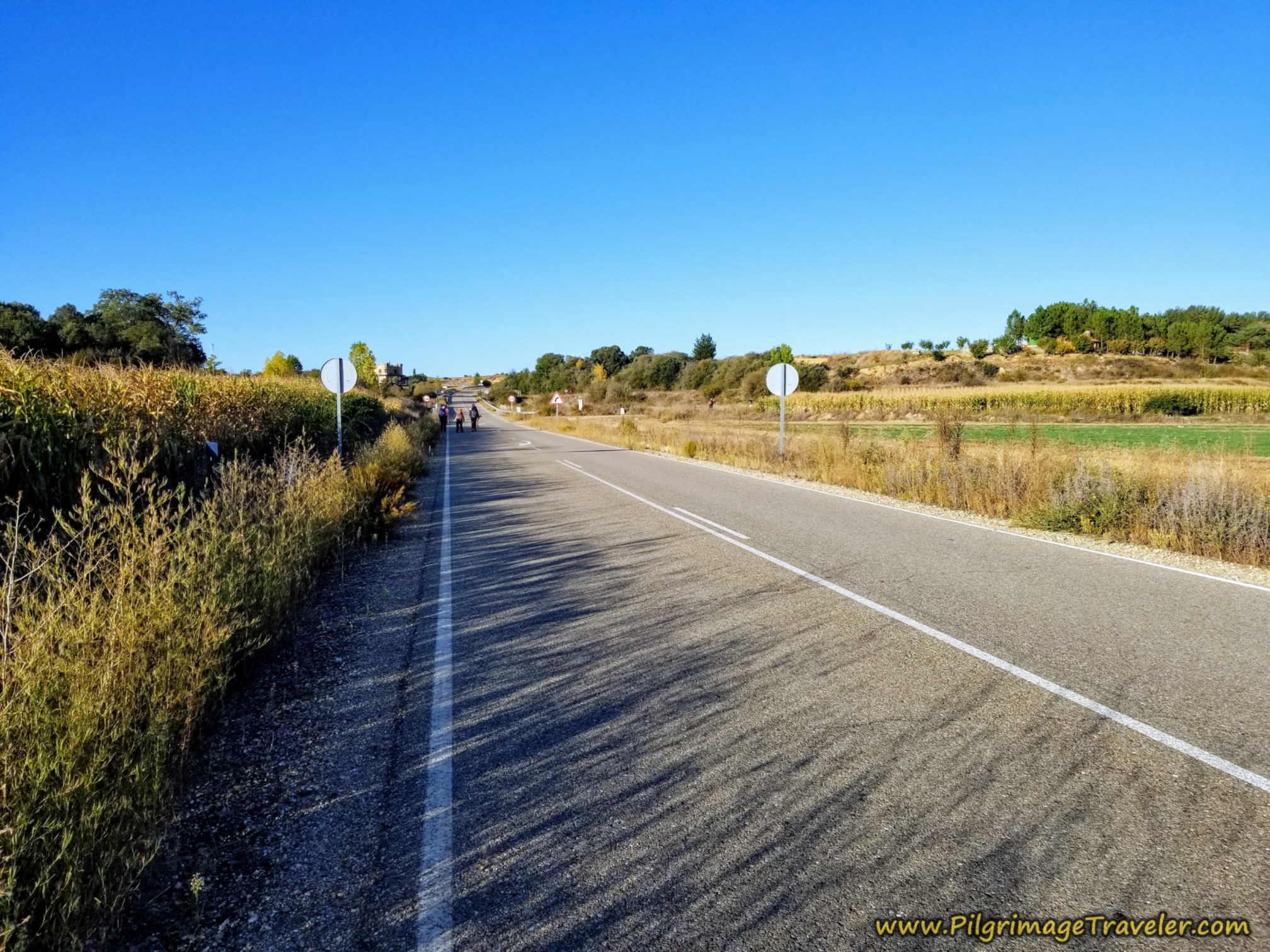 Join Highway ZA-P-2547 Briefly
Fortunately, the stretch on the roadway is only about 2/3 kilometer, when you are directed to turn to the right, after approximately 10 kilometers total. We are now turning onto a nice lane paralleling a long canal system, called the Canal Margen Derecho del Tera.
It was at this intersection that we caught up to and passed our Brazilian/Spanish trio who had needed to taxi ahead to the next accommodation. I guess we were all moving well in order to have overtaken them. Or they started later, most likely.
Shortly after the turn, about 1/3 kilometer later, you pass this lovely fountain. The signs warn you that the water is not safe to drink. The steps to the right of the fountain lead you up to the bank of the canal and over it on a bridge.
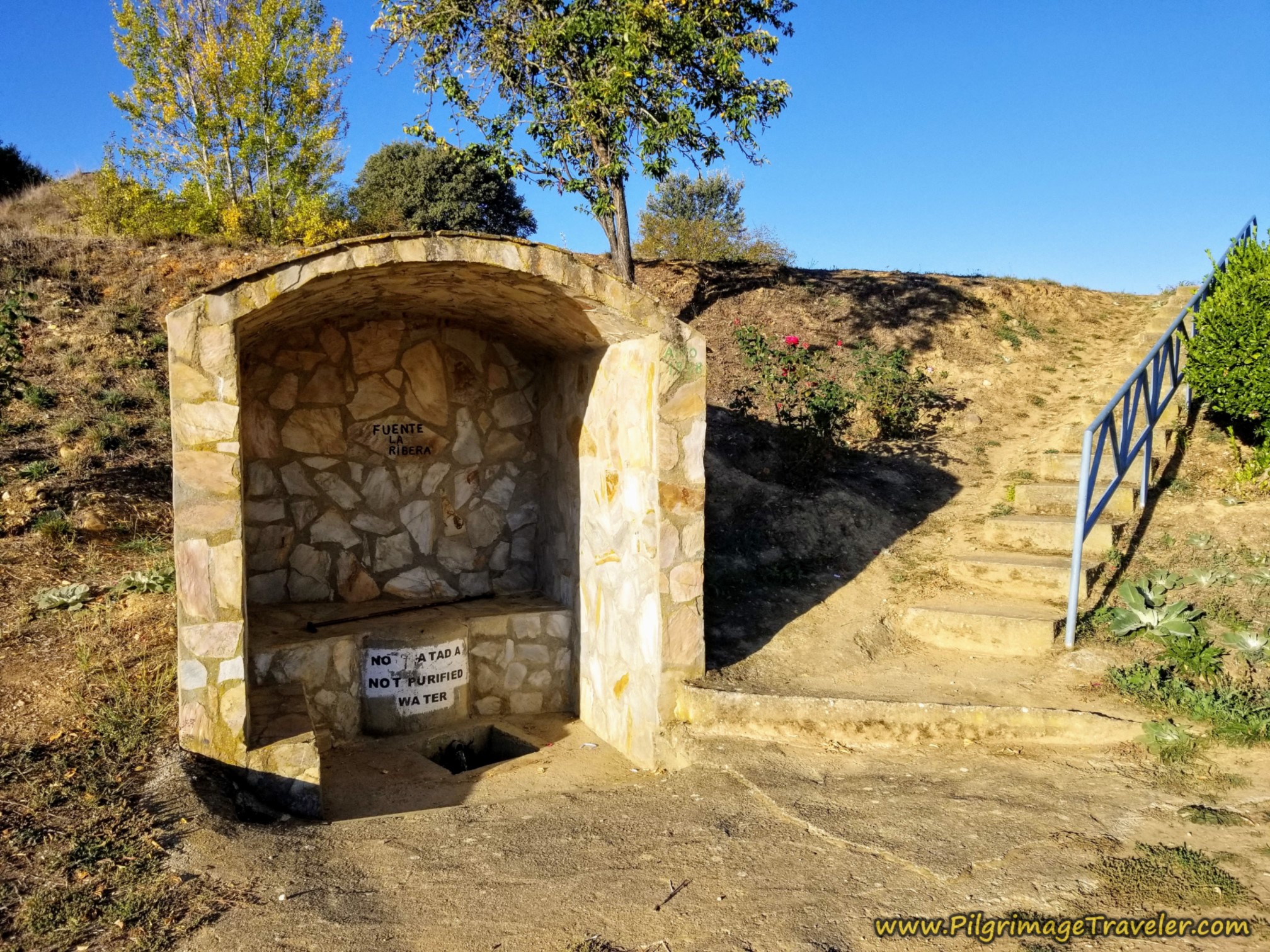 Pass the Fuente de Agua la Ribera
We continued straight on the lane as it walked up to the actual level of the canal, and came to another small bridge after 10.6 kilometers (not shown).
Continue straight, leaving the path along the canal to the right and instead cross the bridge toward the next town of Calzadilla de Tera. After cresting a small hill you can see the town ahead down a long straight lane.
After about 400 meters, come to the edge of town, and a few steps later, come the first intersection, photo below, after 11.0 kilometers into the day, with a prominent sign for the Café Bar Blanco, pointing to the right. You can safely ignore this bar unless you wish to walk almost one kilometer off-Camino.
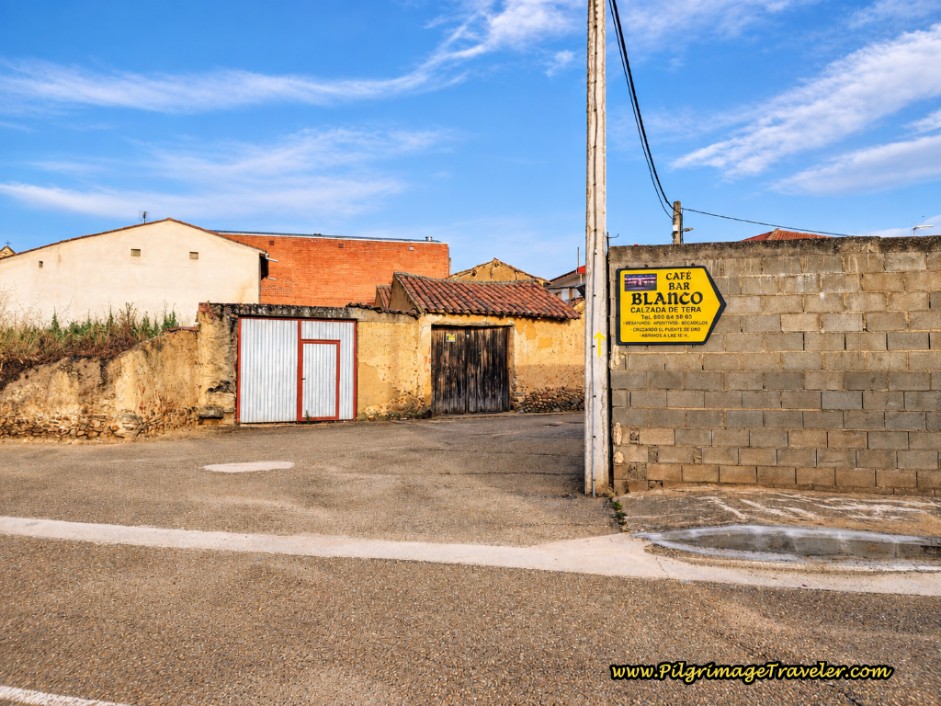 Decision-Making Crossroad in Calzadilla de Tera
Unfortunately, there is no bar in the town itself. However, in the next town of Olleros de Tera, only a few kilometers away, the bar there does not open until 1400. The Bar Blanco may be your only opportunity for an actual bar on this entire stage, if that is important to you.
It is at this same intersection, above, that you will turn to the left if you are going to the Albergue de Peregrinos de Calzadilla de Tera. Also to the left is a small grocery store if you need supplies, however the hours are limited from 10-2 and 5:30-7. Remember, this is the only grocery store until Mombuey more than 25 kilometers away!
It is about 1/3 kilometer off-Camino to the albergue and there is a Roman milario (mile marker) that will help you identify the building. The albergue is on the second floor of a shared building, with a retirement home on the first.
If you are not going to the albergue, continue straight through the crossroads into the center of the village.
A few steps later, turn left onto the Calle Travesia de la Iglesia. There are some historic sights to see here in the center of town, the Ermita, La Virgen de la O and an old washing well, both only a few steps off-Camino.
Walk for only two blocks through town, until you arrive at the canal once again, pictured next. Cross the canal bridge, leaving town and re-enter the countryside.
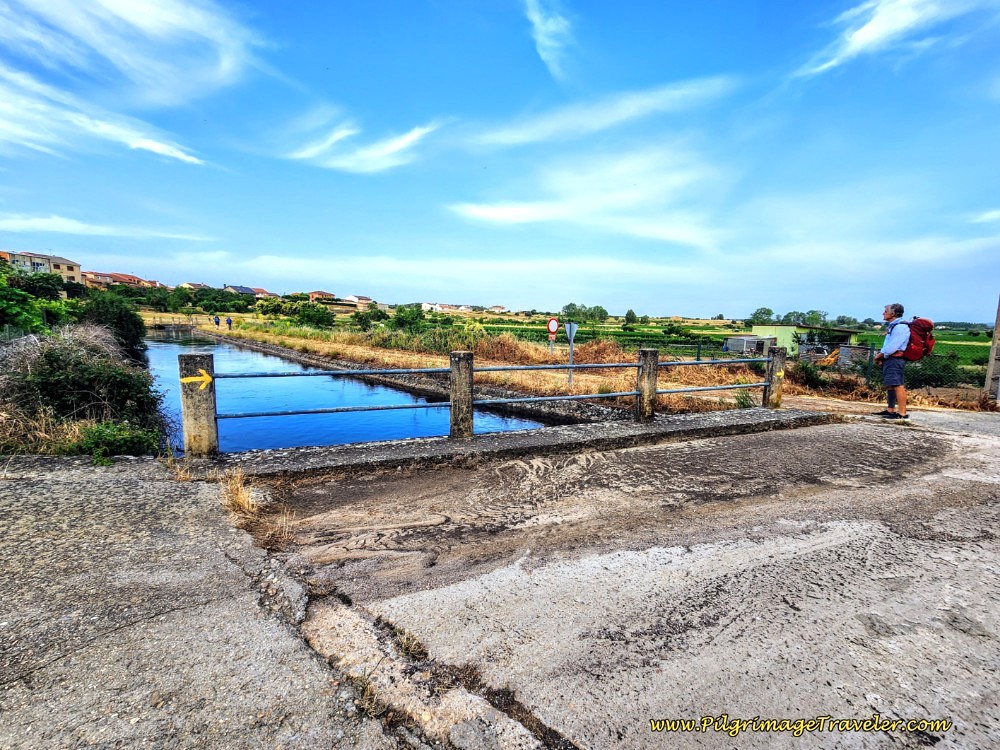 Cross Canal and Keep Straight
Just before the canal, a right turn will take you to the Casa Rural Lar Do Vento (+34 607 25 16 99) that has three rooms to inquire about, if you are interested, with a shared kitchen, living and dining rooms.
Jump to Camino Sanabrés Stages
Continue on the lane past the canal for about 1/4 kilometer when you arrive at a Y-intersection, below. Stay to the left.
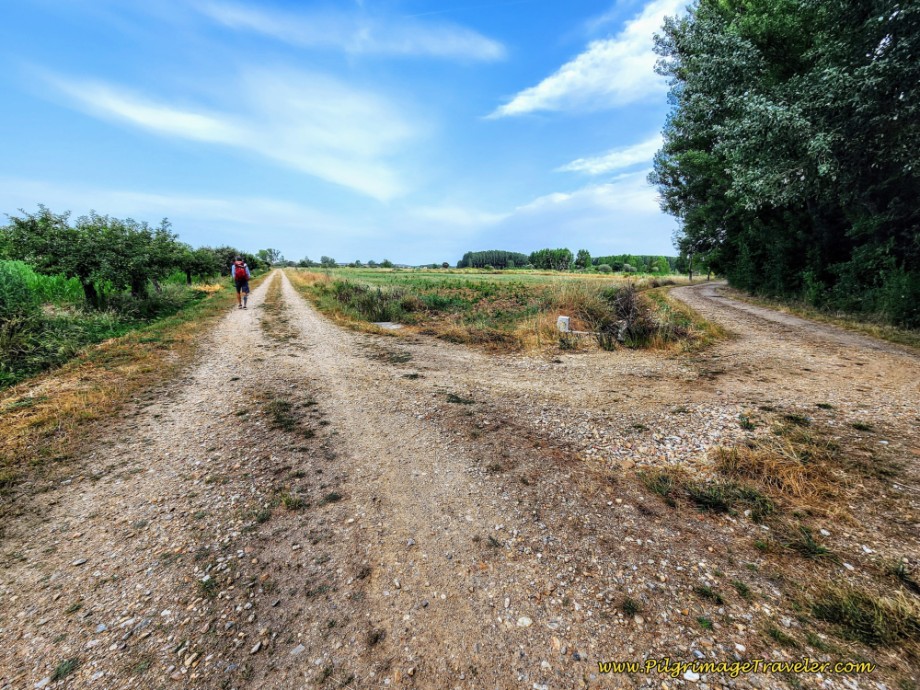 Stay Left at Y-Intersection
The Camino continues along this long, open farm road for the next 1.4 kilometers. You will soon see Olleros de Tera, the next town ahead in the distance, pictured below.
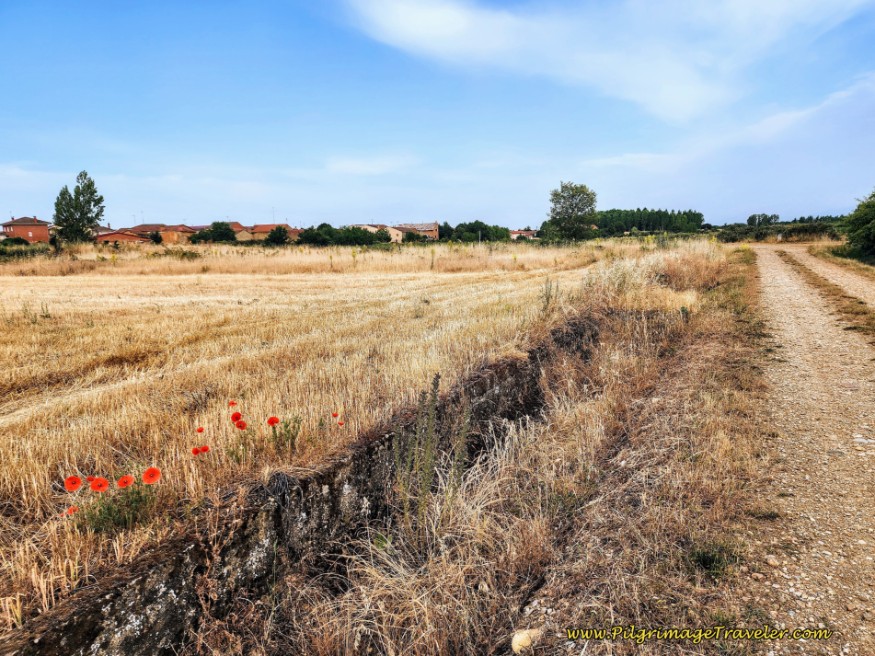 Olleros de Tera Ahead
By about 12.7 kilometers into the day, the main farm road bends to the left at a T-intersection and now follows an irrigation canal, the Arroyo del Valle.
Follow this arroyo, and a few steps later, notice on your right a large sign for the the Albergue Bar La Trucha, (+34 673 91 05 92, closed Wednesdays). The Camino used to enter town from that side of the arroyo, but you don’t have to follow the sign now. You will approach it through town later.
A few steps after the sign for the bar, you will turn right and cross the arroyo, below. After the crossing, immediately turn left and cross the canal on another bridge, not pictured, entering Olleros de Tera, just shy of 13 kilometers.
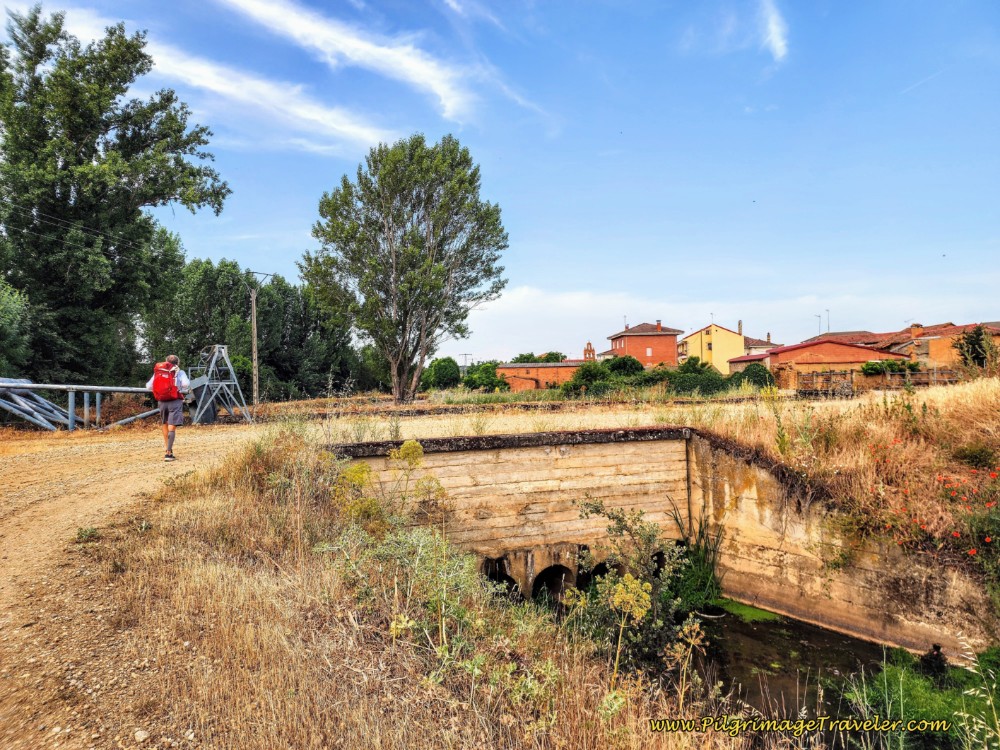 Cross the Arroyo del Valle Before Town
It is quite easy to navigate through town as there are many yellow arrows to guide you. When you enter town you are on the Calle el Caño. You can see the town church in the distance, the Iglesia de San Miguel, however the Camino will not take you there. It is one block off-route.
Turn to the right just before the church, in an open small square, following the arrows onto the Calle de la Fuente. Several blocks later when you arrive at another triangular open square, stay left, taking the Calle de la Agavanzal, pictured next. You can see the yellow arrow on the pole.
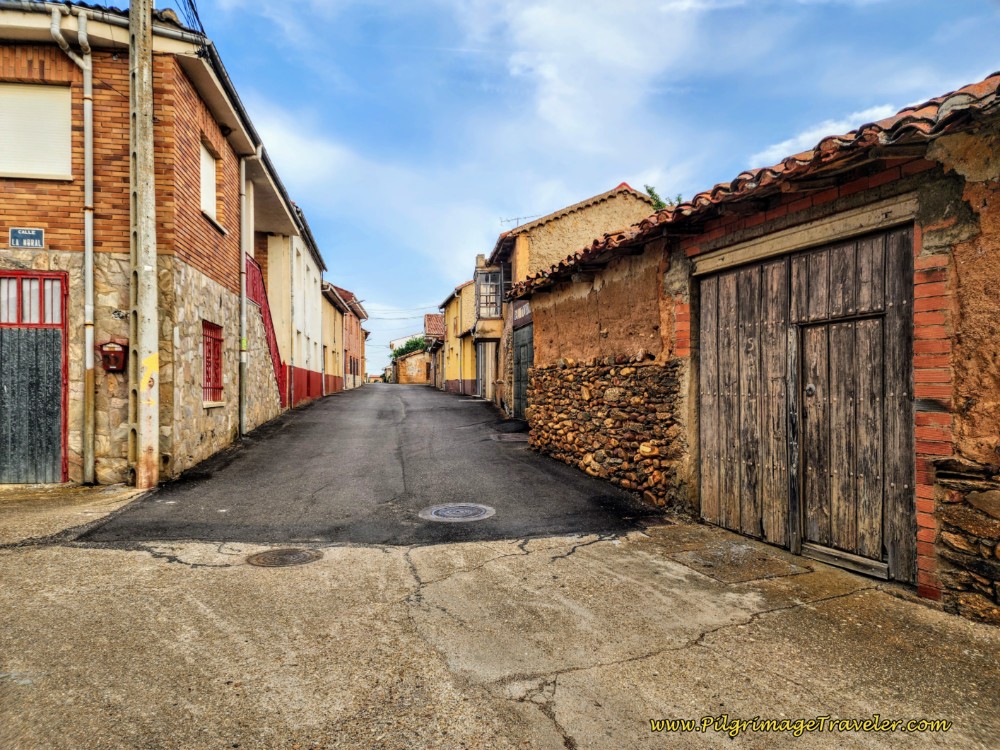 Walking Through Olleros de Tera
However, if it is after 1400, not a Wednesday and you wish to try the only café in town, pictured below, or if you are staying at the albergue, turn to the right in this square, and arrive at the Bar Restaurante Albergue La Trucha, after approximately 13 kilometers into the day.
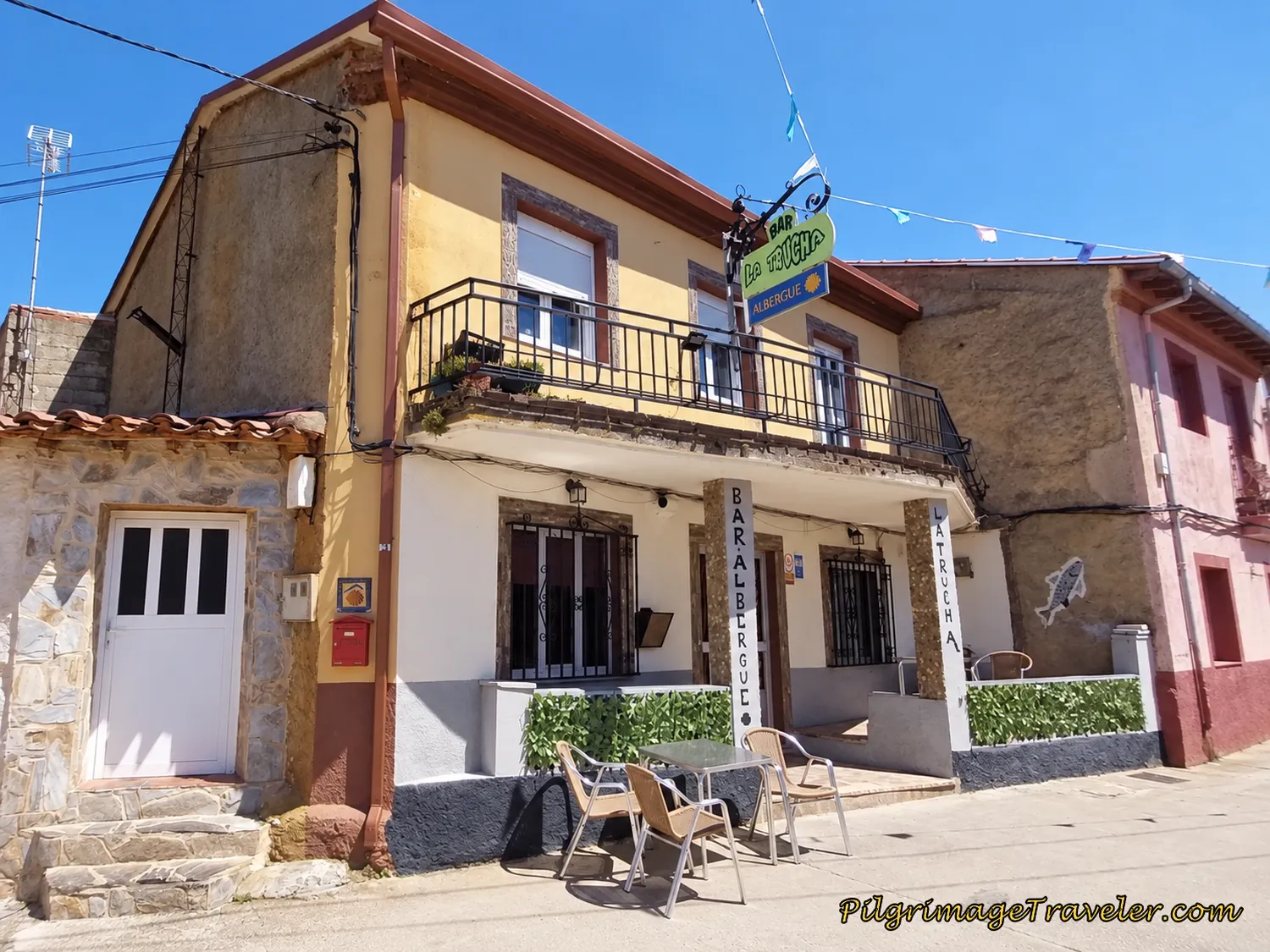
Our first time through, we arrived at the bar at 10:30 in the morning, only to find the café was closed. Two British pilgrims had arrived just before us and the woman was almost hysterical, running around the square trying to find someone to open the café, since there was nothing else in town.
When she finally found someone, she was told that the proprietor was out partying too late last night, so he was not going to open any time soon! It was certainly a disappointment. Rich and I sat down on a step on the street, to have a bite and to wait for Norm and Nadine to catch up.
The four of us took a break in the city street and ate from our packs. It seems the owner now just gave in to his own lifestyle and doesn’t ever open until two in the afternoon! The lesson, as usual, is to have your own food available at all times.
From the beginning of the Calle de la Agavanzal, back at the plaza, walk through the remainder of town along this street for the next 350 meters.
Arrive at the ZA-P-2547 once again at a T-intersection. Turn right onto it and enjoy a short section with a long row of trees. A few meters after the turn you see a potable water fountain. At the fountain you are directed to turn left, and onto a long, paved road that is very open, hot and boring.
The long asphalt road soon turns to concrete as you can see below, with an interesting building ahead. There is an occasional bench along this stretch to sit and rest if needed, leading me to believe that the building ahead was a road to something special.
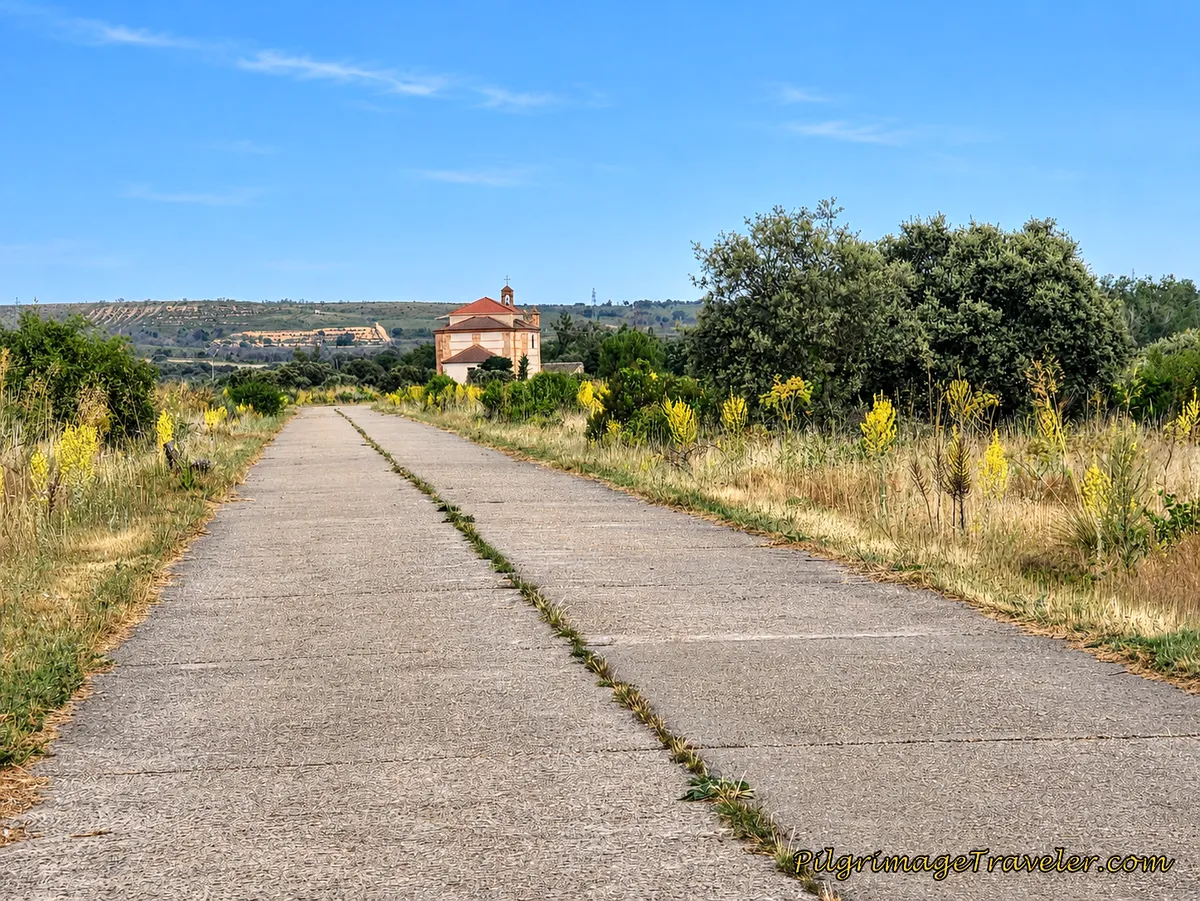 Long Concrete Road After Olleros de Tera
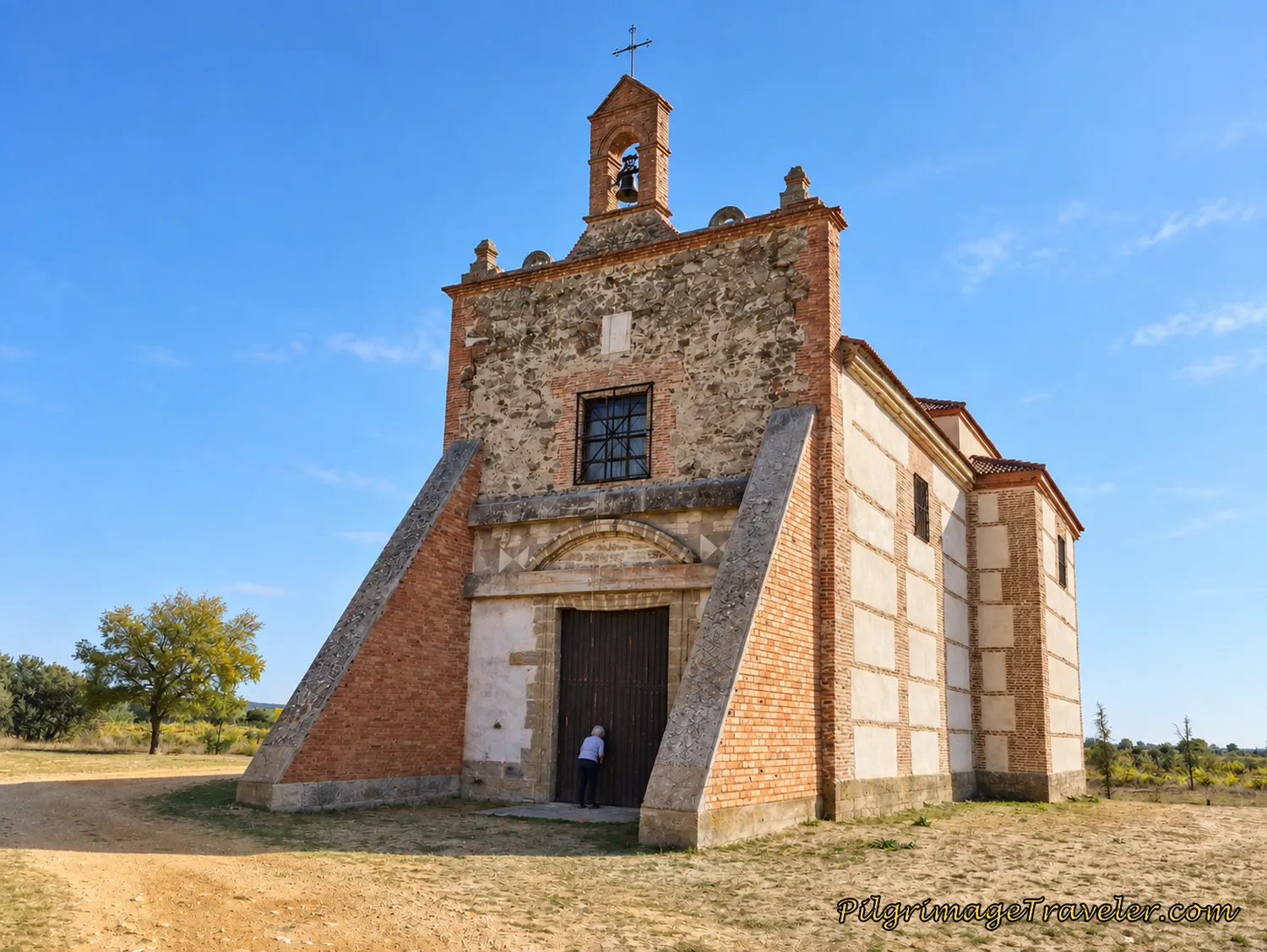
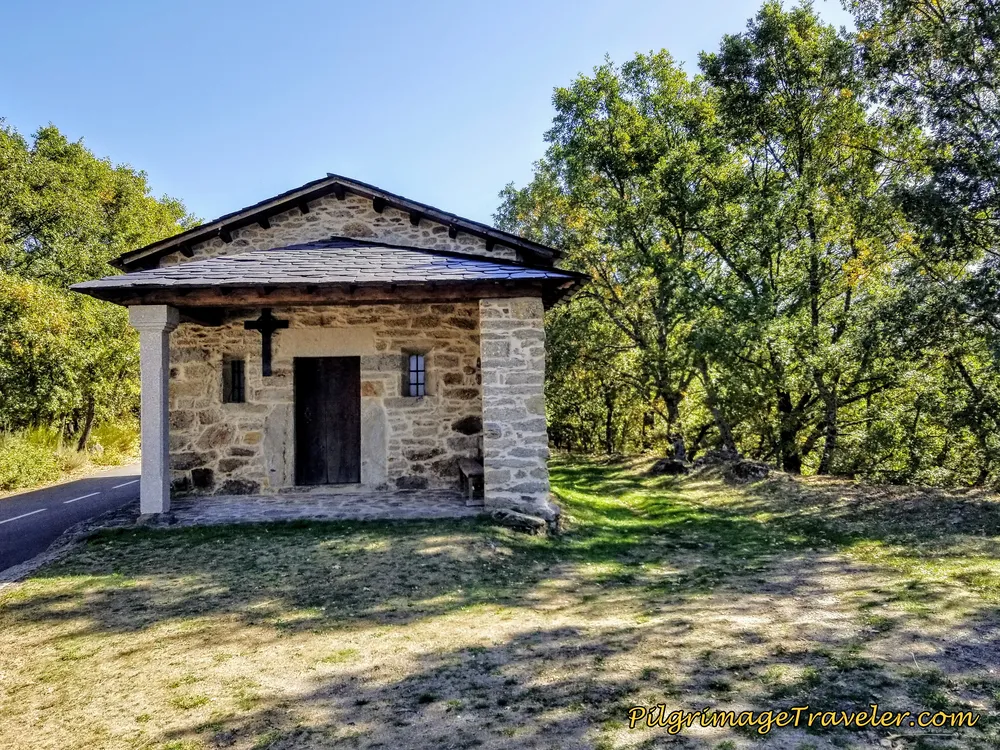
It is about 1.4 kilometers on the open road when the special place, the Ermita Nuestra Señora de Agavanzal, resides at the end of the concrete pavement as seen below. This road is a pilgrimage road to the Ermita. How lovely!
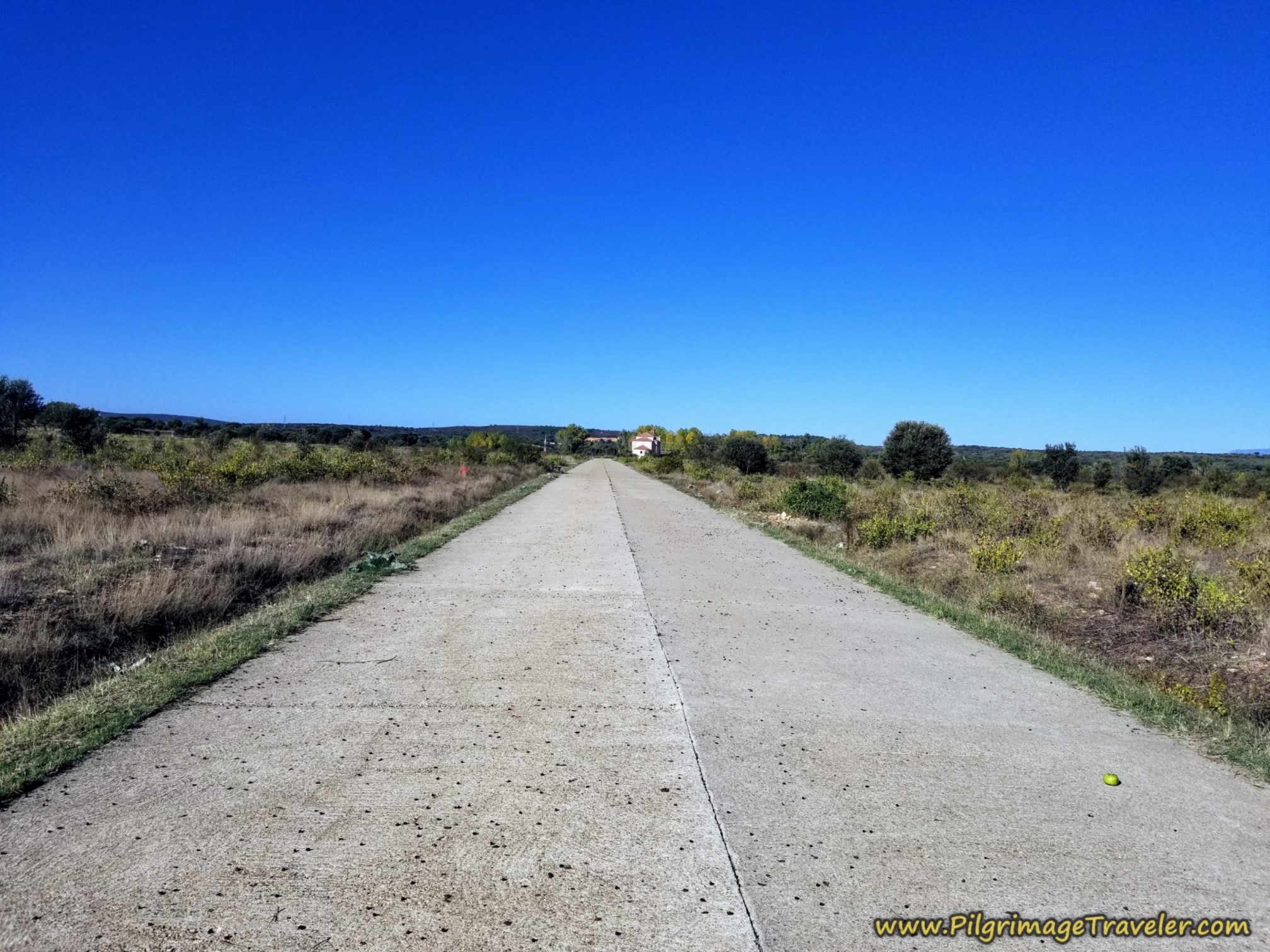 Ermita Nuestra Señora de Agavanzal
It is after about 14.9 kilometers total on the Camino Sanabrés, when you arrive at the Ermita Nuestra Señora de Agavanzal.
Across from the Ermita, there is this lovely building to rest, shown below. We found our french pilgrims here, and they were taking a break with a local elderly man.
Too bad I hadn't researched this prior to our street stop in Olleros de Tera. After only 1.4 kilometers down the road from town, this would have been a much, much nicer stop for "lunch" than on a street step. There are benches inside this building and picnic tables outside, to choose the sun or the shade.
The local in the shelter was a sweet, old Spanish gentleman, most certainly waiting to commune with whatever pilgrims walked by. Most likely it was his daily routine on fair weather days - a 1.5 kilometer excursion from town to chat with the pilgrims!
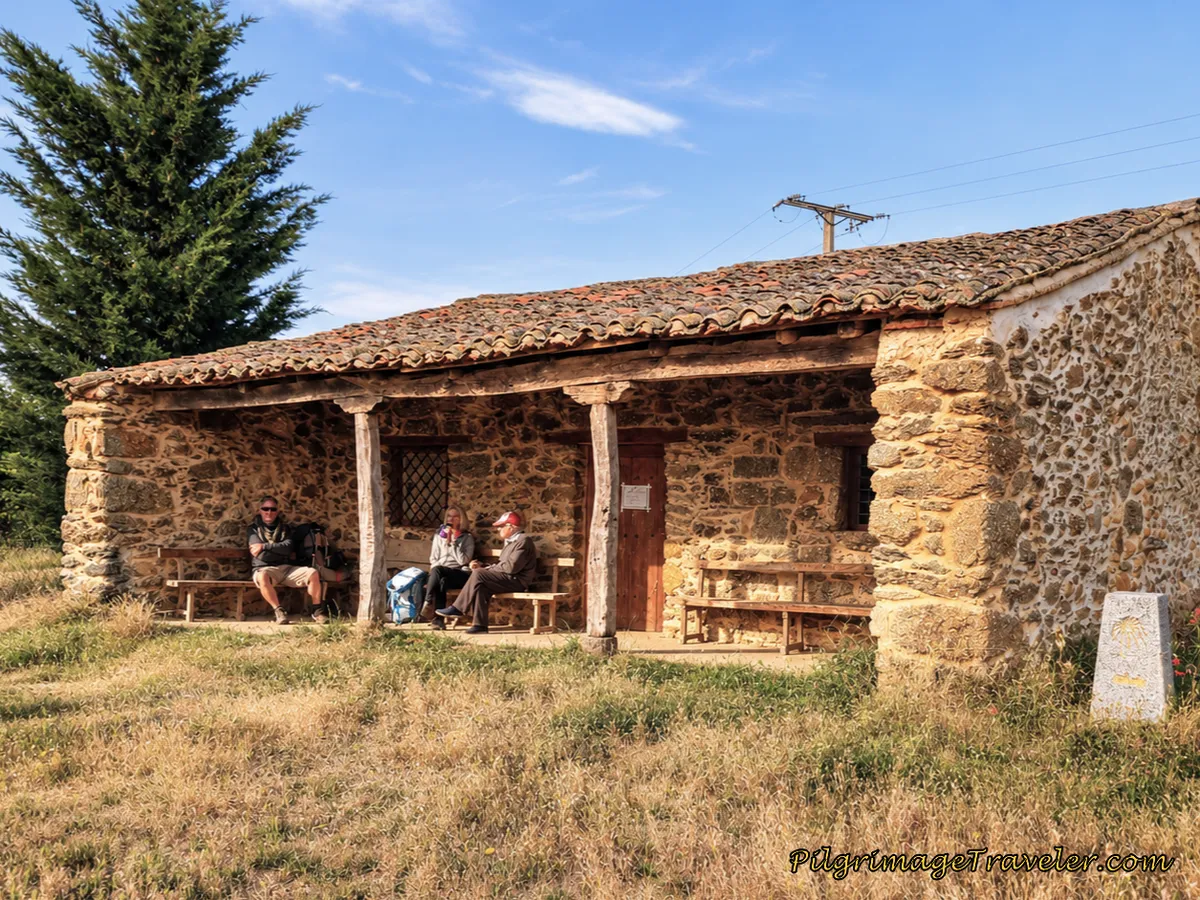
Here is a photo of the front of the Ermita, which faces the rest area and the river. While the hermitage was closed, there is a small peep slot in the door that you can peer inside the old building. You can just see Norm at the door, peering inside.
Jump to Camino Sanabrés Stages
After the Ermita, you walk on these lanes that parallel the Río Tera and almost immediately the dam at the reservoir comes into view. You can see the dam in the photo below. That is the next destination.
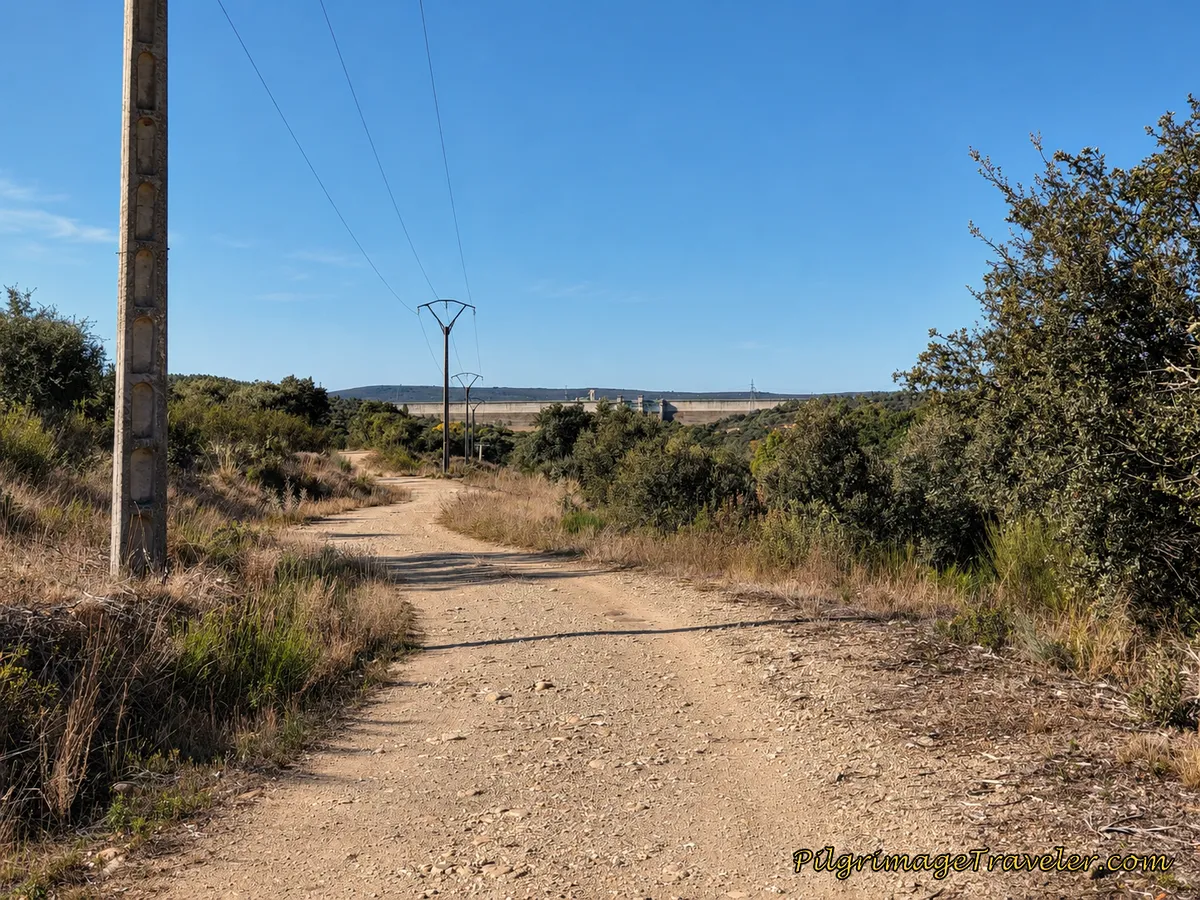 Southward Lane Follows the Río Tera
Soon after we saw a little hill ahead, and thus, a more significant climb commences.
About 3/4 kilometer after leaving the Ermita, come to an intersection, where a tractor track veers off to the right but the Camino stays straight. There is a very worn sign at the intersection stating “Peligro,” or “danger” and warns of the possible fluctuations of the water level; a bit disconcerting.
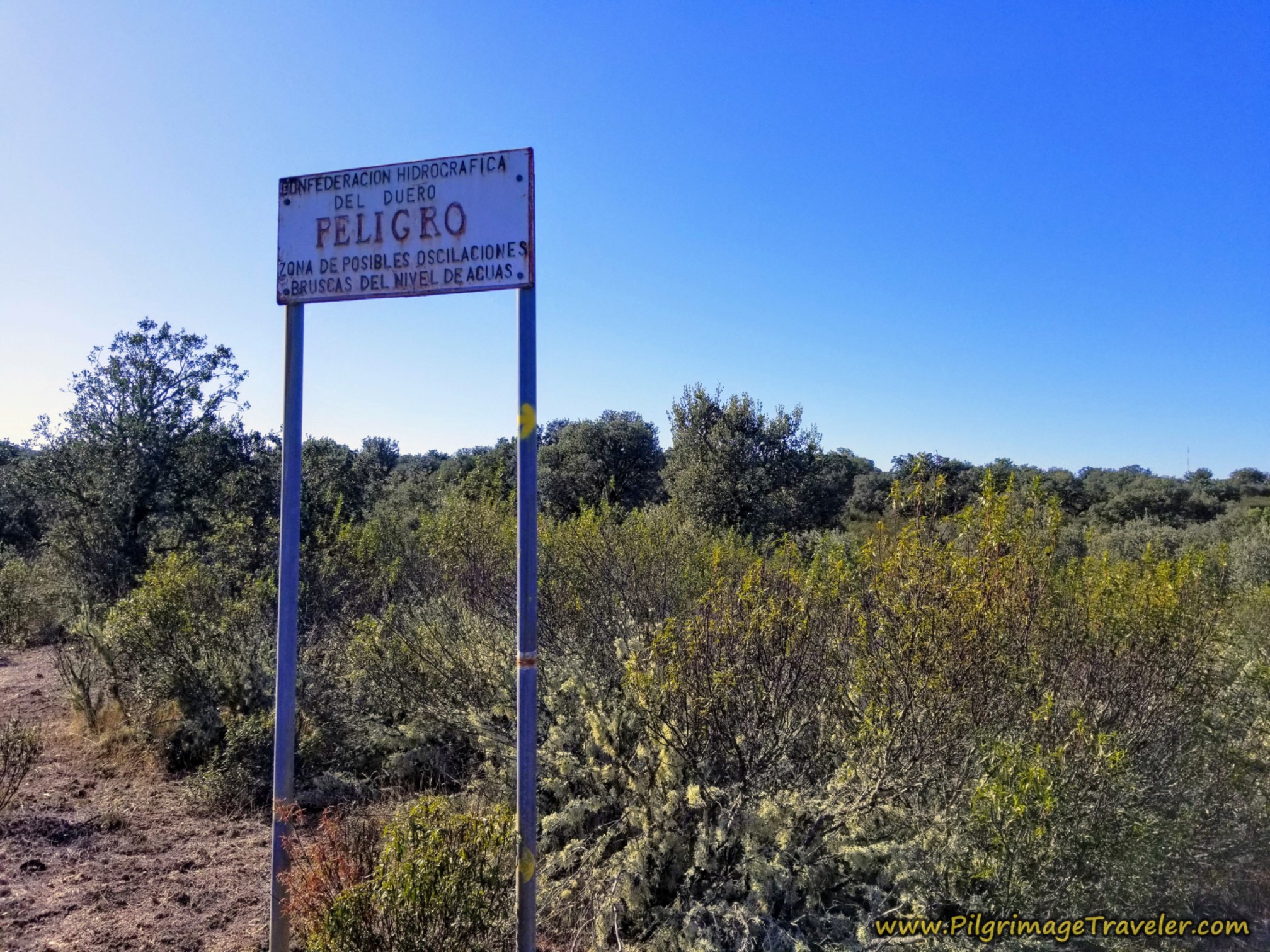 Watch Out For This Sign
As you climb up the road, come to the next intersection a few minutes later when the dirt road makes a big bend to the left, see next photo below. At this intersection, there is a mojón and yellow arrow on the road sign pointing up the road and to the left. This is the bicycle route that stays on the road.
However, there is also a worn hand-painted blue sign pointing to the right and onto a path.
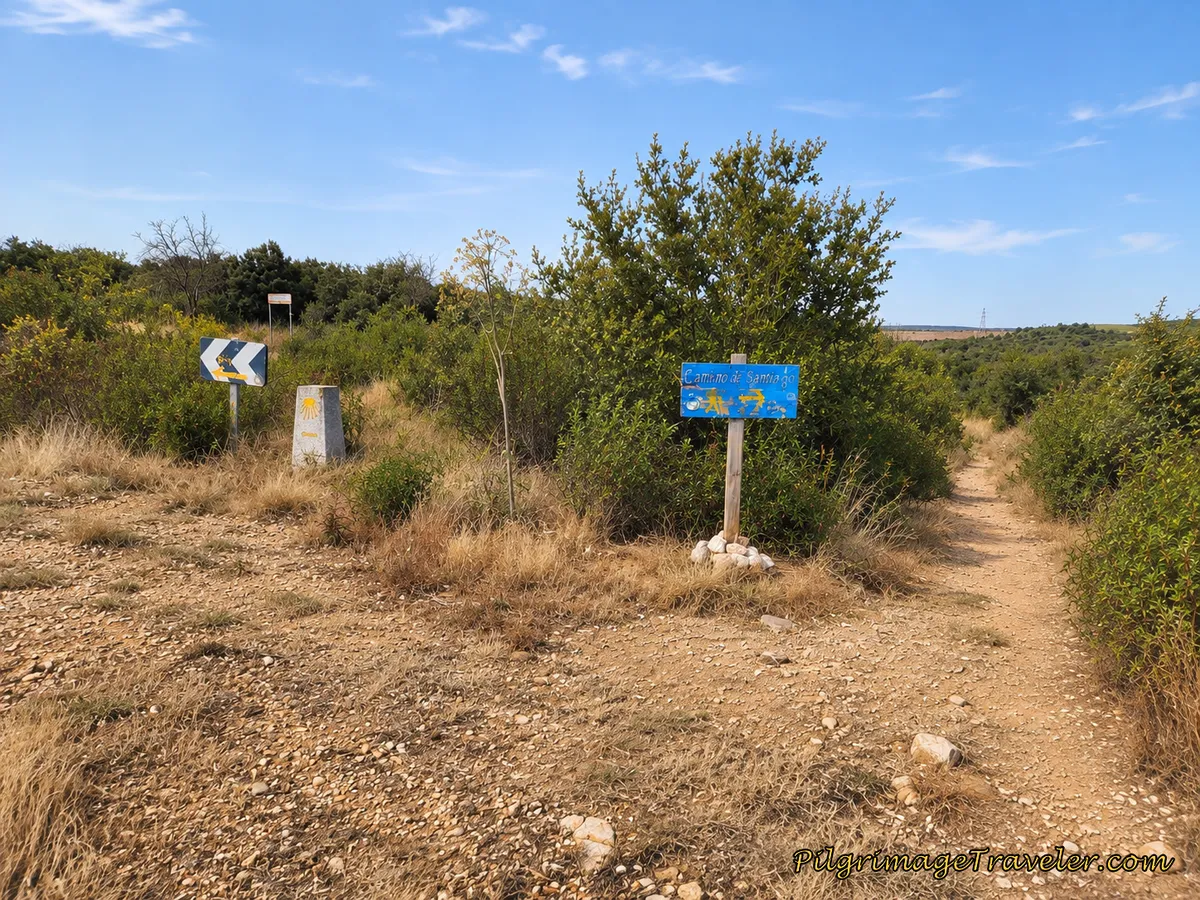 Trails Diverge: Pedestrian vs Bicycle Route
There is also another “danger” sign farther back at this intersection.
You have a choice of routes here, as noted on my interactive map, above. If you chose to go the bicycle way, the orange route, it is really far out of the way to the dam road compared to the direct path ahead through the brush. The difference is about 1.1 kilometers. But if it is raining or muddy, the road may be the better choice! Also note that this shortcut turnoff may be easy to miss, so if it is dry weather and you wish to take it, stay alert for it.
On the unimproved trail, below, we encountered many raspberry bushes and their concomitant thorns! It may still be overgrown, depending on the last time trailwork was completed. However, this unofficial path is now well-trodden by pilgrims!
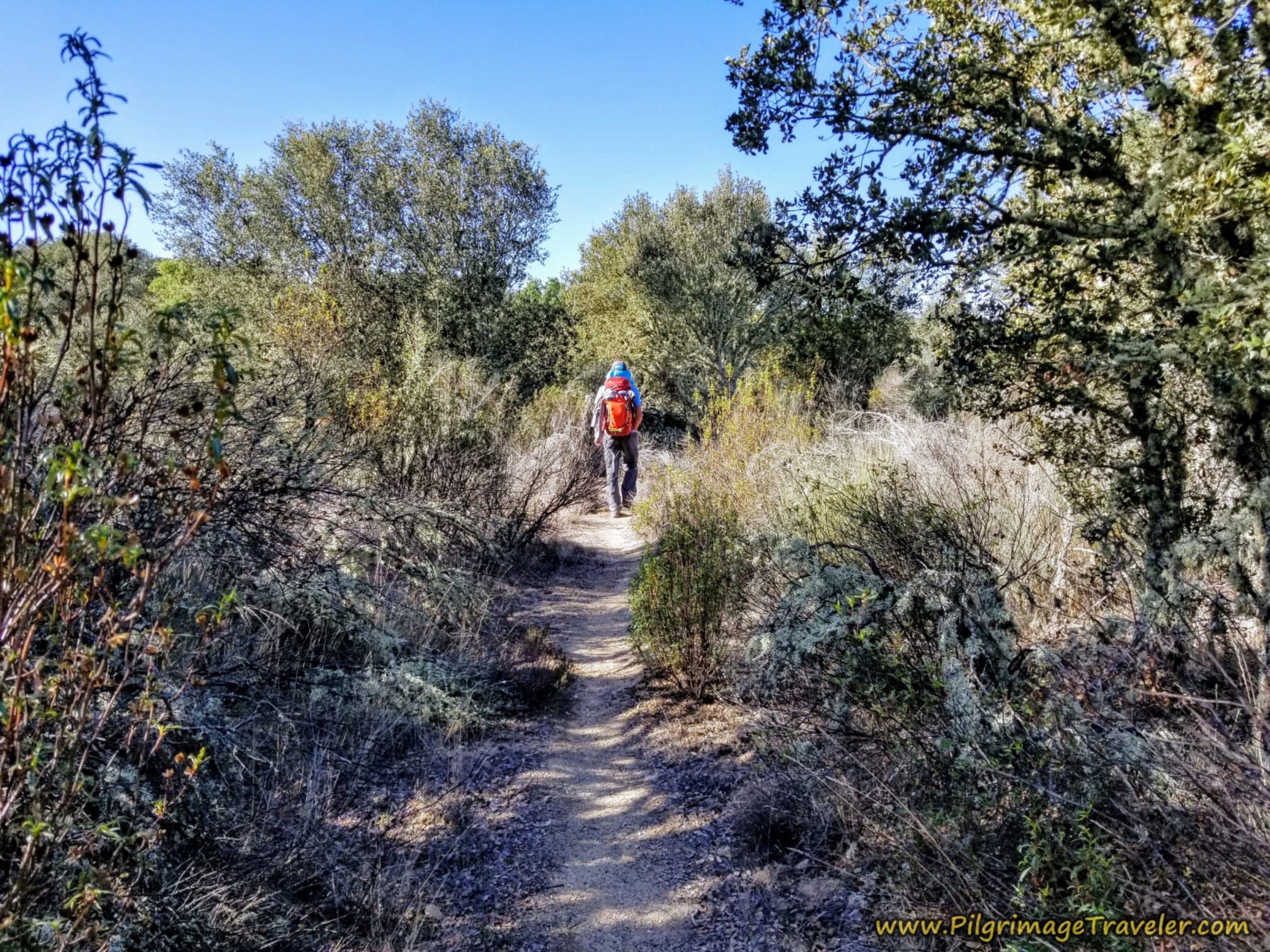
After dropping to the river, where the trail looks like it could be quite swampy in rainy and wet conditions, it leaves the river and starts to climb, rather steeply. This is the first nice elevation gain that you see on the elevation profile, after around 16.3 kilometers. The way is well-marked with yellow arrows on rocks and trees, photo below.
Ignore any steeper off-shoot paths to the left and stay on the wider trail.
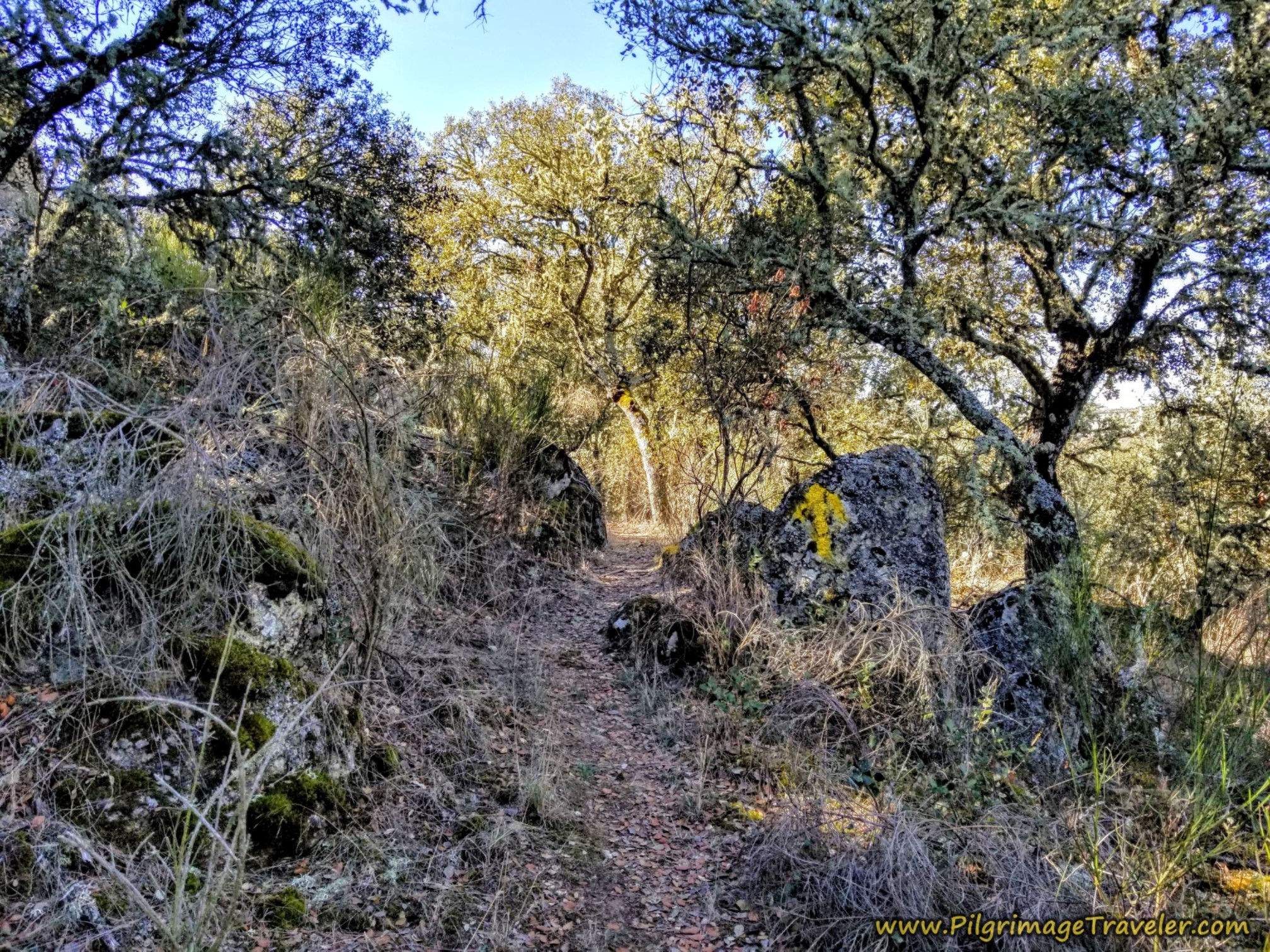 Yellow Arrows on Rocks
The trail arrives at a clearing and the dam is in full view ahead. Following a fenceline, the trail drops down a bit, then takes a steep, final climb up and out from the path, below.
This is actually an embankment, up to an unnamed, paved road where the shortcut ends after only a bit less than one kilometer through the brush.
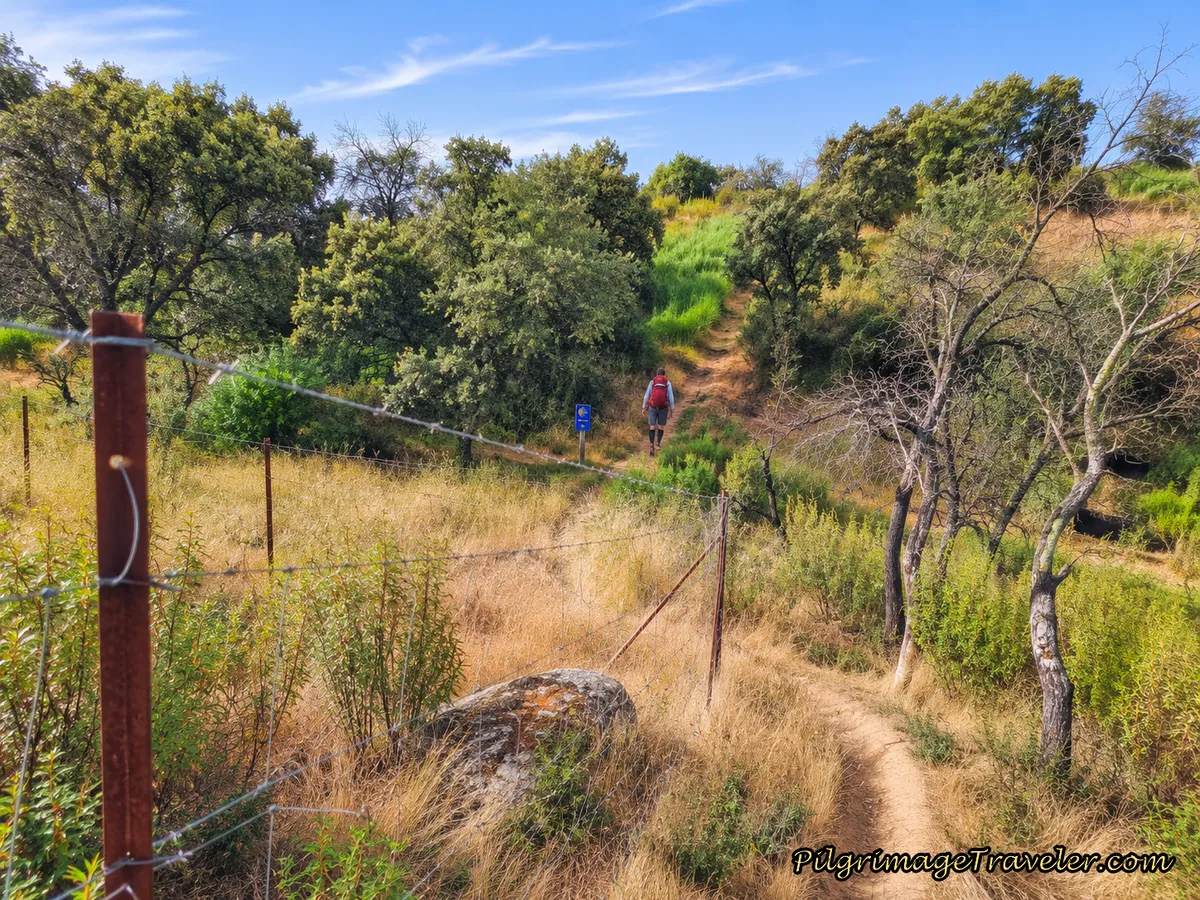 Steep Final Climb Up to Road
Once you get above the embankment, go left onto the paved road shown below. You can clearly see views of the dam along the road.
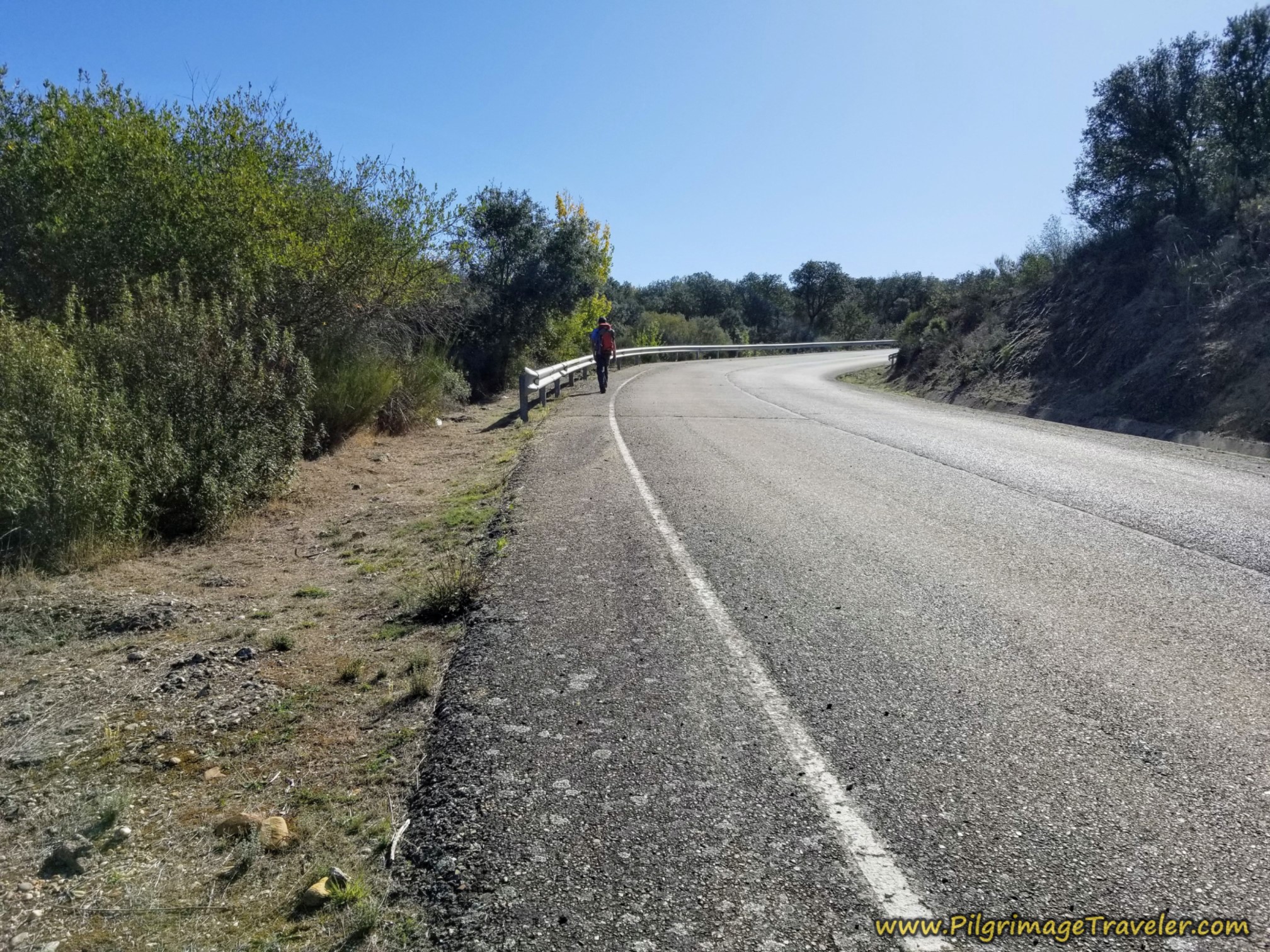 Join Roadway at Top of Climb
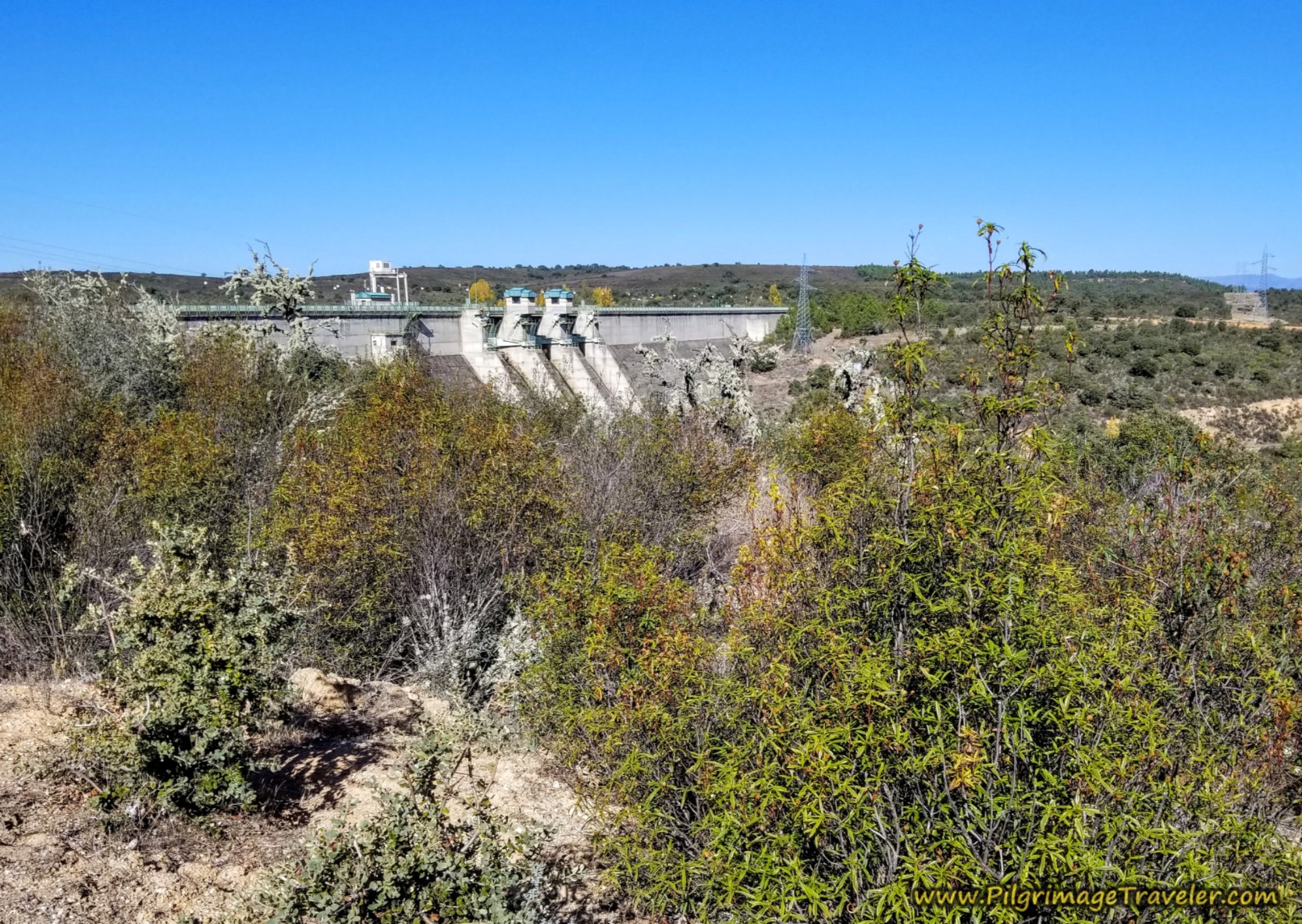 Reservoir Dam Ahead
The road takes a significant bend, and is not quite 400 meters along it, when you come to another T-intersection, after 17.1 kilometers. This is where you rejoin the bicycle route which comes from the left. The Camino takes a turn to the right here and onto the dam road shown below.
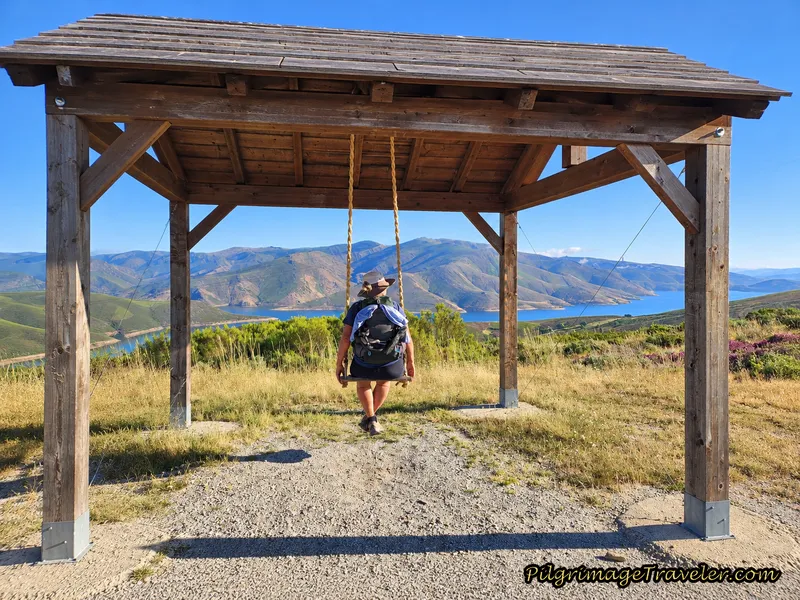
The views from the dam are nice, and you can see the Ermita off in the distance, from where you came. Take your time crossing the dam and drink in the views!
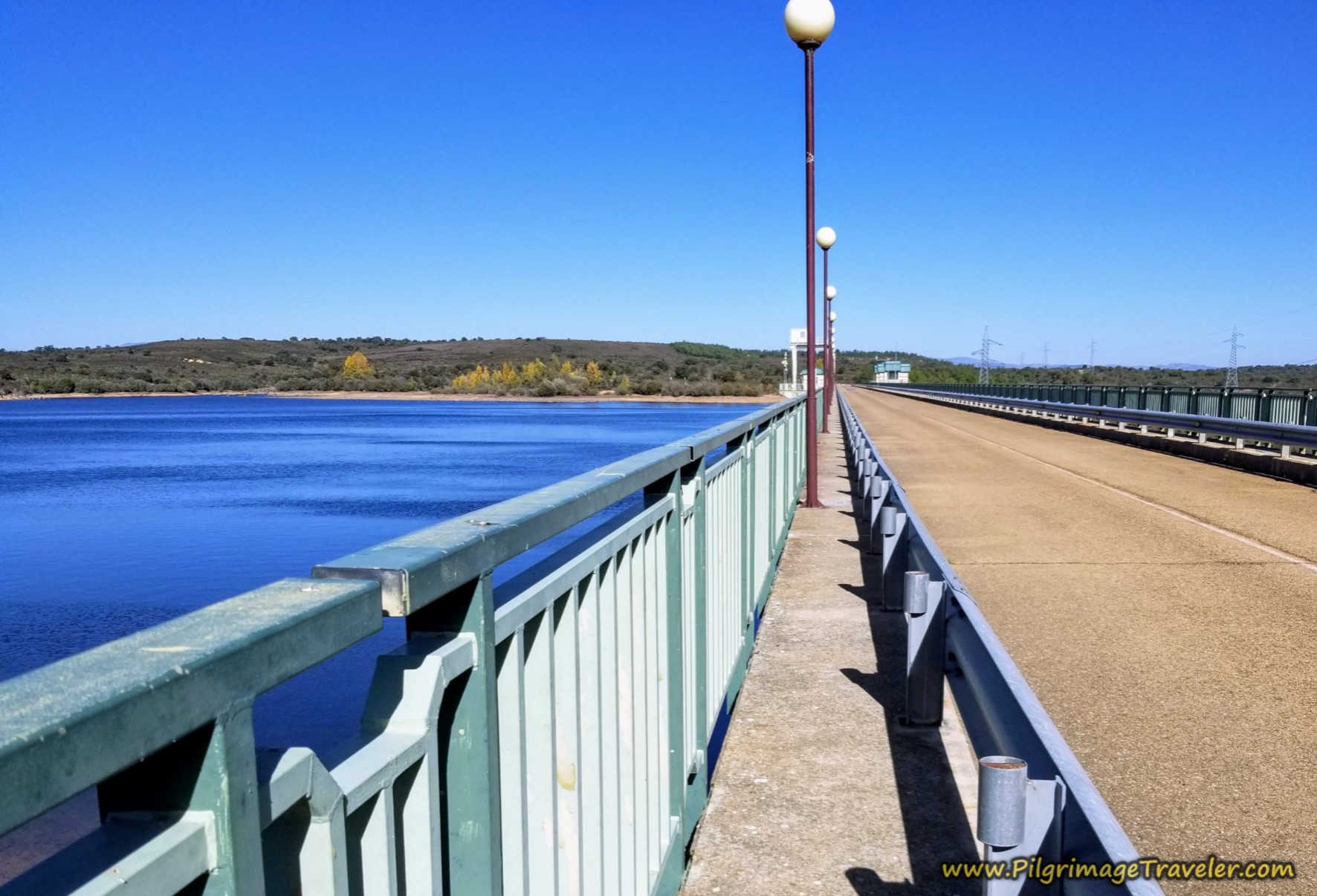 Cross Dam Road
After about 17.7 kilometers, on the other side of the dam, at the next intersection, you go left onto another paved road.
After only about 100 meters more, go left again onto a secondary road, and notice this encouraging blue sign at the turn, shown below, stating that one could get coffee in 3.5 kilometers! Maybe we would have coffee today after all?? We tried not to hope too much!
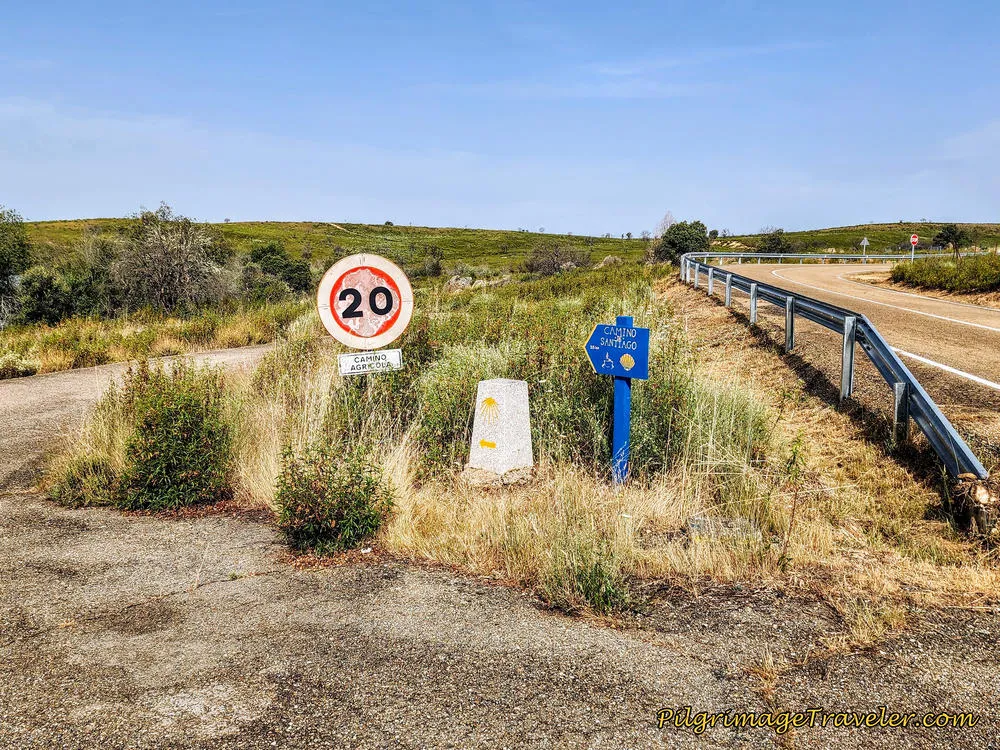 Café 3.5 Kilometers Ahead
The secondary road is paved and essentially follows the contours of the reservoir for the next 2.8 kilometers.
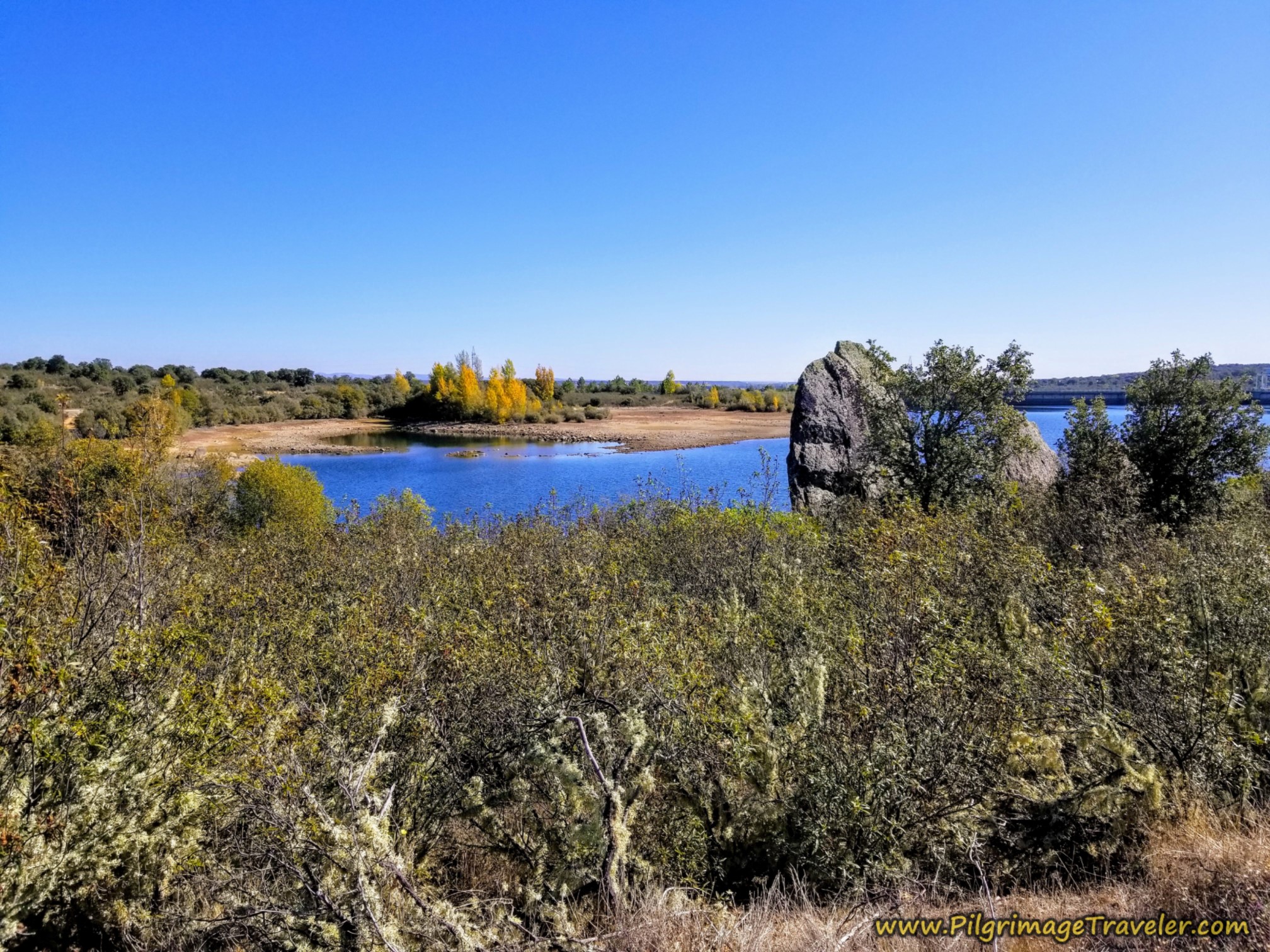
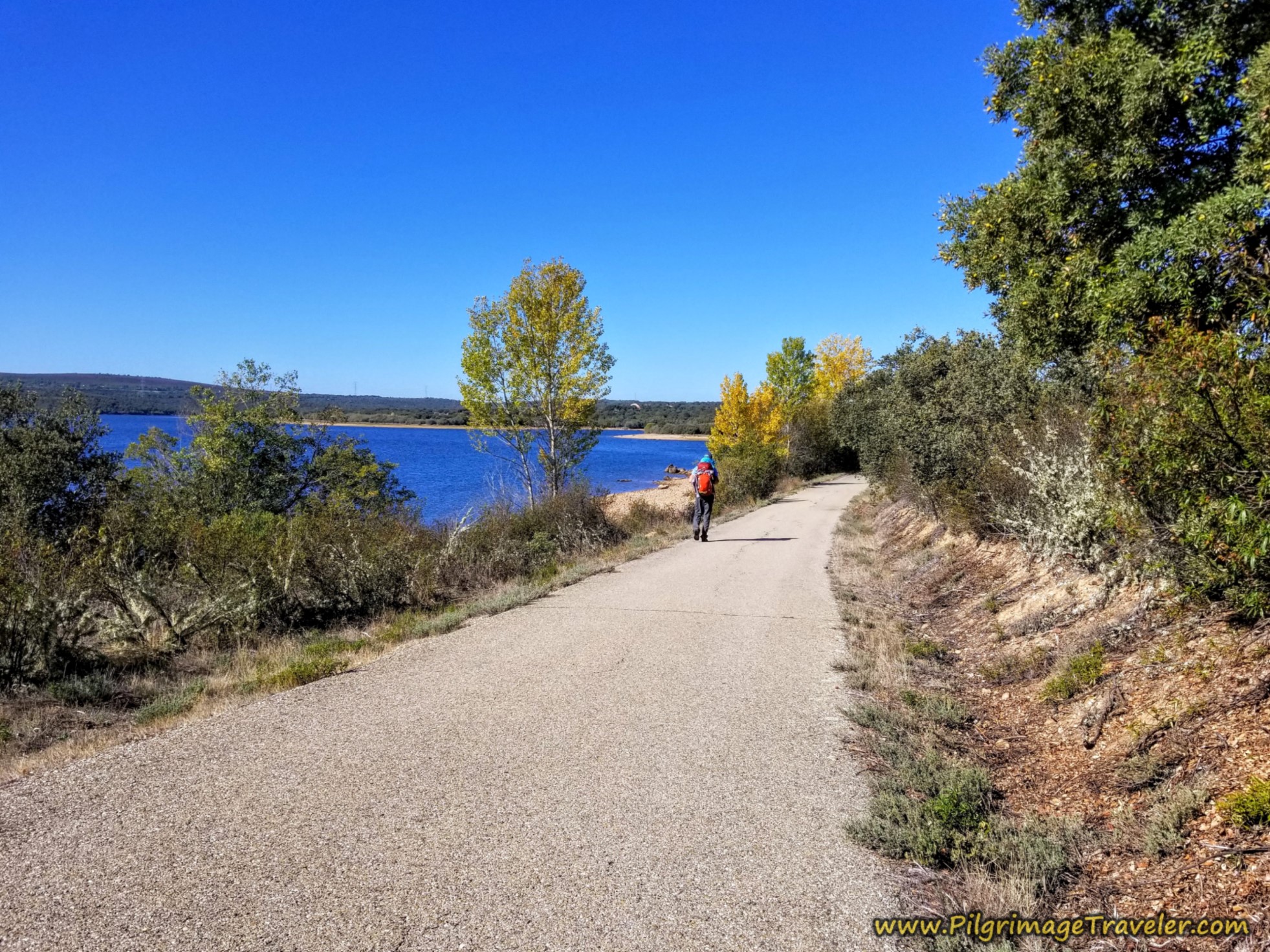
And finally, after the road takes a small bend to cross a little bridge, walk another 200 meters, and after about 20.4 kilometers, you come to a T-intersection. Here you take a left turn onto this divided highway, shown below, and the sign for the next village is ahead, Villar de Farfón. We arrived in town at about 1:00 in the afternoon.
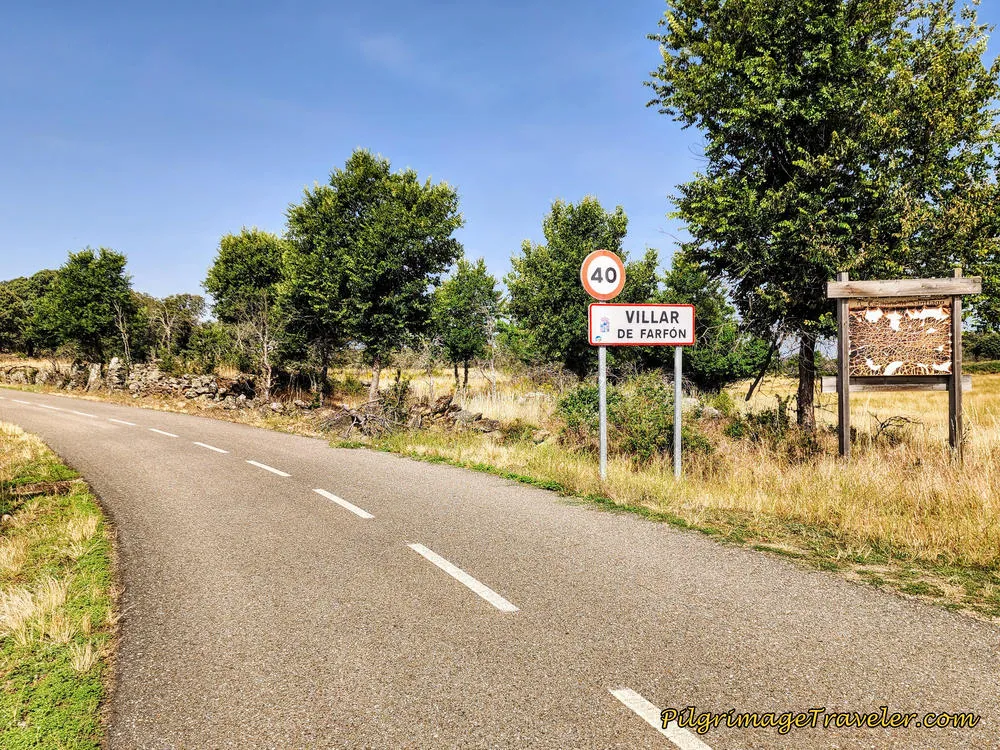 Welcome to Villar de Farfón
At the first intersection in town, see this lovely old stone building, and a sweet, wooden Camino sign, directing you to the left.
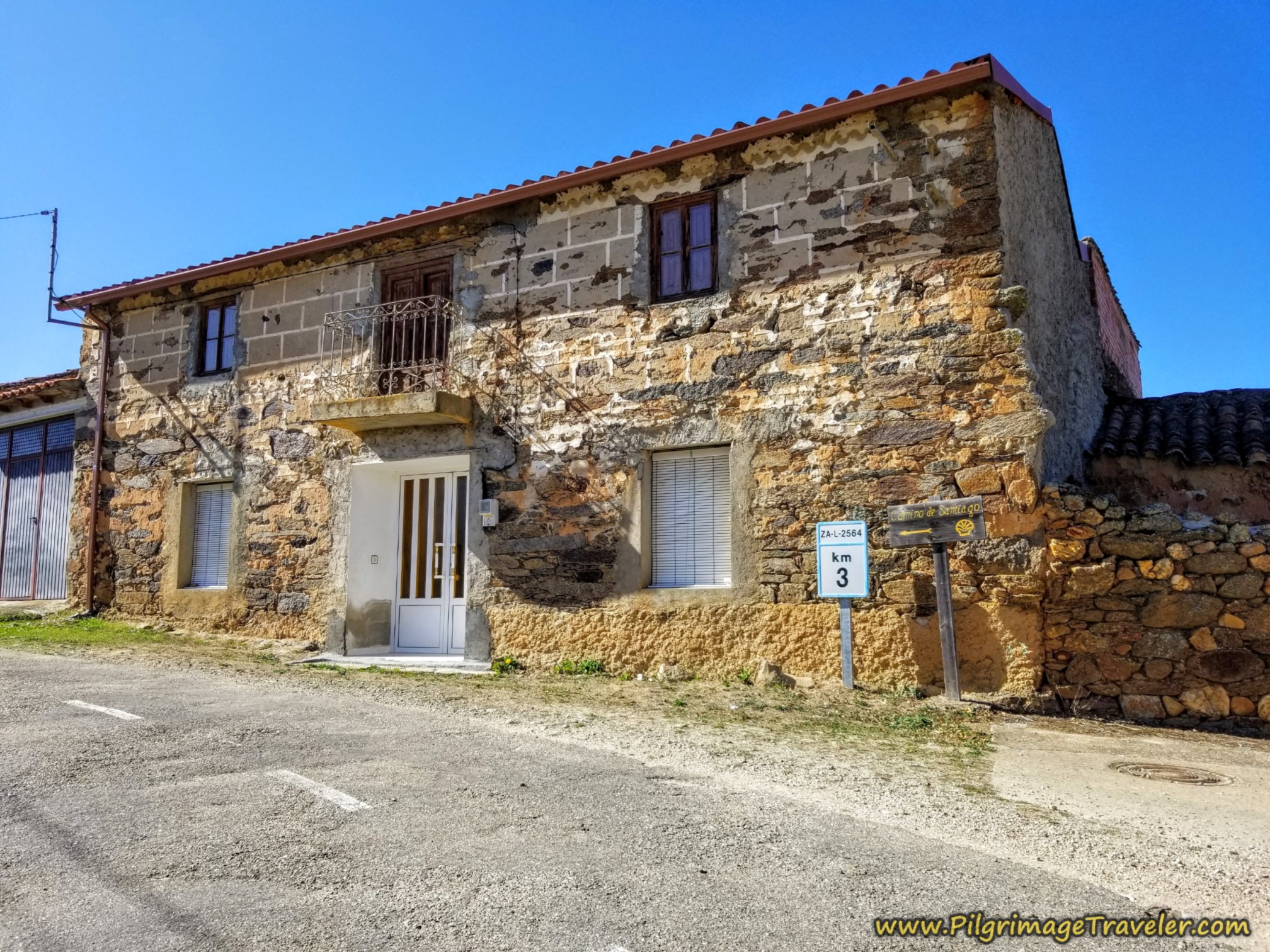 Left Turn in VIllar de Farfón
Walk to the church, with the now-familiar Camino placard, only 40 meters later and turn to the right. At this intersection, notice another blue Camino sign with the steaming coffee cup that says coffee is only 200 meters away now.
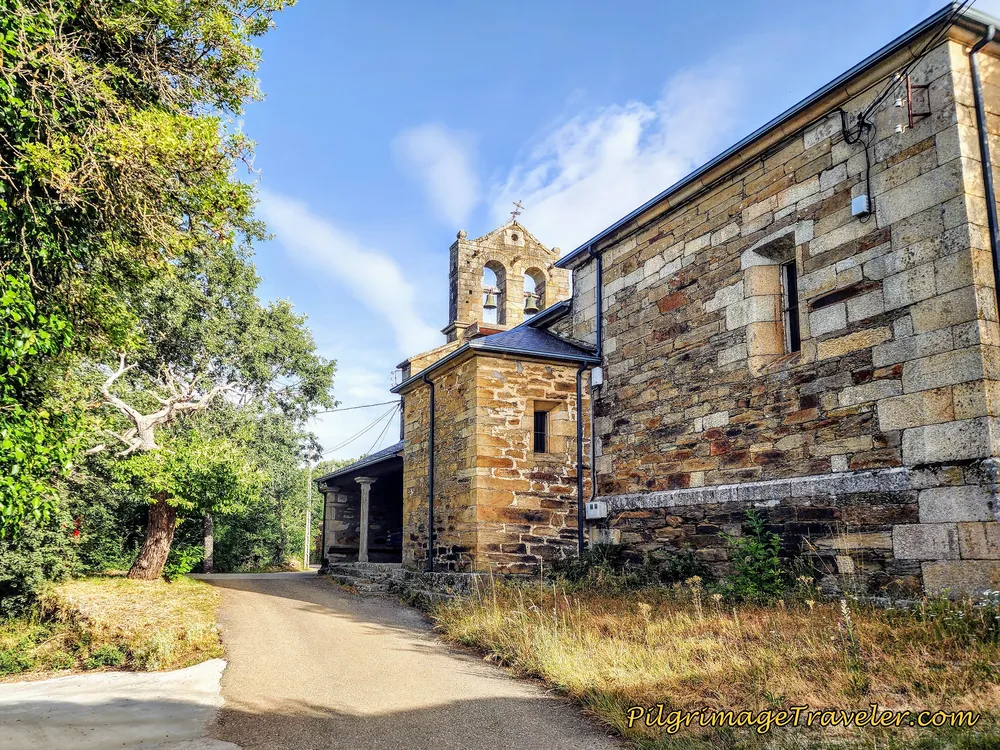
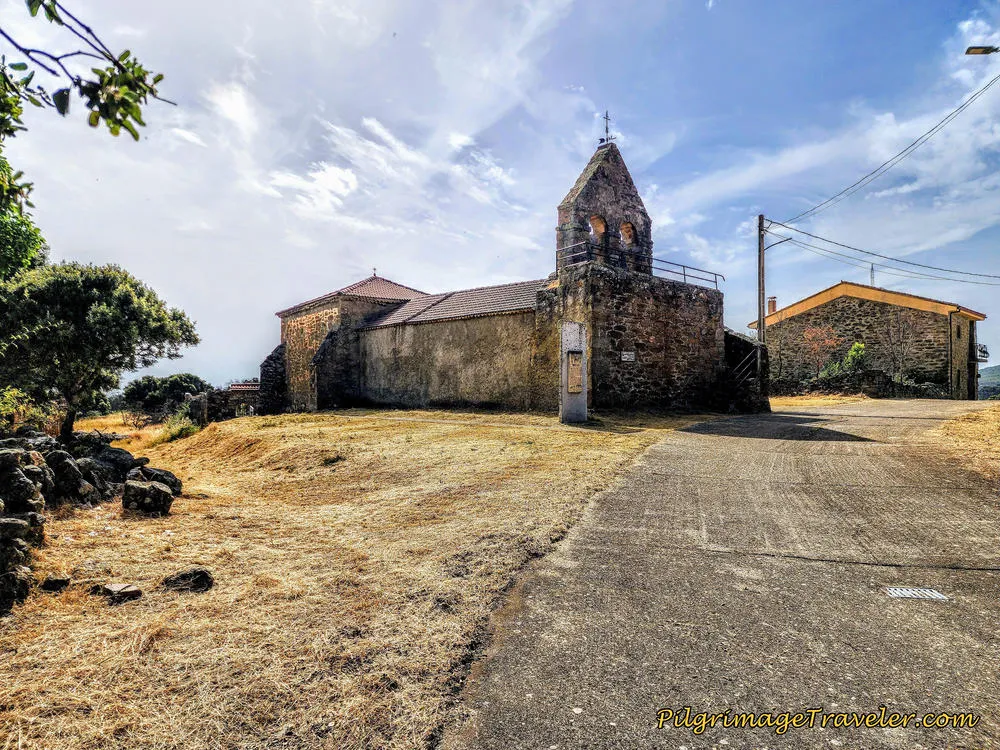 Iglesia San Pedro Apóstol, Villar de Farfón
This is an amazingly quaint little town. 100 meters later, turn right again and you are already leaving town.
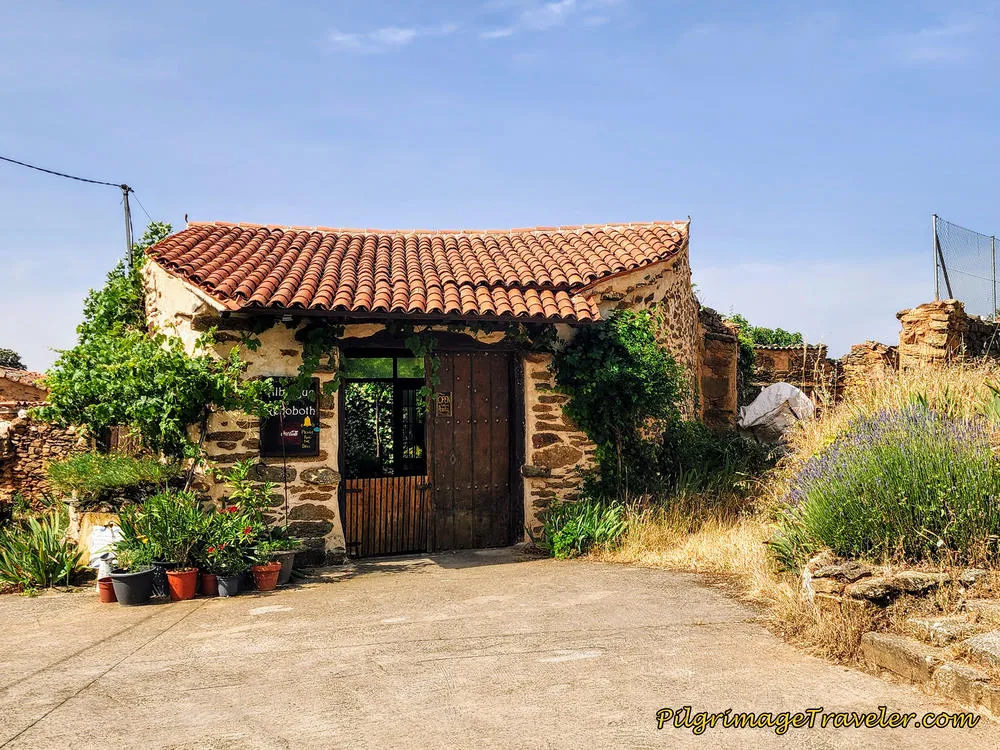
Less than 100 meters later, after about 21 kilometers into the day, you come to the 4-bed donativo Albergue Rehoboth (+34 679 86 32 85) shown below. What a quaint and wonderfully restored place this is! This was where we would be able to take a respite and get coffee or tea as the blue sign indicated, almost exactly 3.5 kilometers ago.
Jump to Camino Sanabrés Stages
We were offered Nescafe or tea and cookies, which we gratefully took! The proprietor also allowed us to eat our own food at the table. He was very helpful and friendly and told us he was from South Africa. He and his wife had been missionaries and felt called to the Camino, lovingly restoring this rundown place.
He does quite a bit of proselytizing as you would expect from a missionary, but his stories, especially of forgiveness, were very, very compelling. I could have stayed longer than we allowed. There was a little more than five kilometers to go to Rionegro, and after we left a donation for the refreshments, we needed to move on.
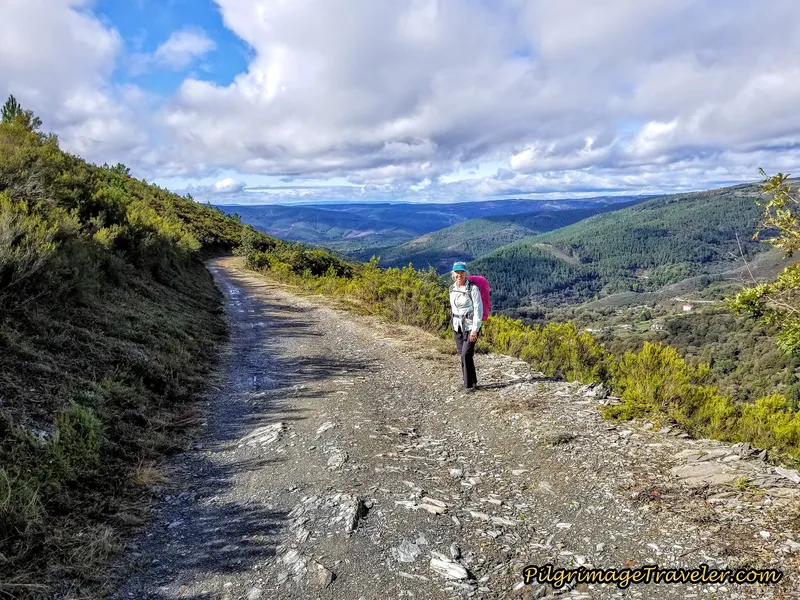
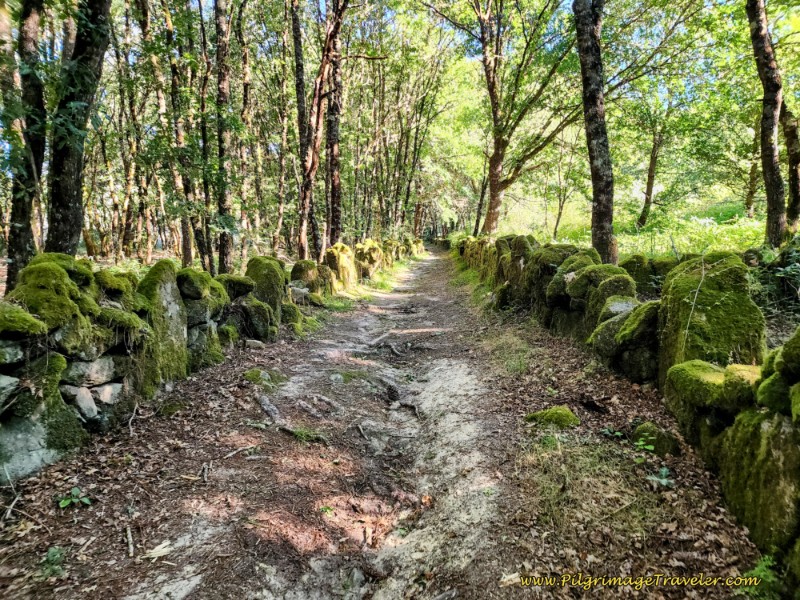
As we left the Rehoboth, the lane ahead looked like an ancient road. We thought this type of road and terrain looked more familiar and more "Camino-like" from our prior Caminos. It was so much better than the God-awful gravel lanes we had walked upon for so many days prior! I was hoping that we had left the hot and hard-on-the-feet gravel lanes for good.
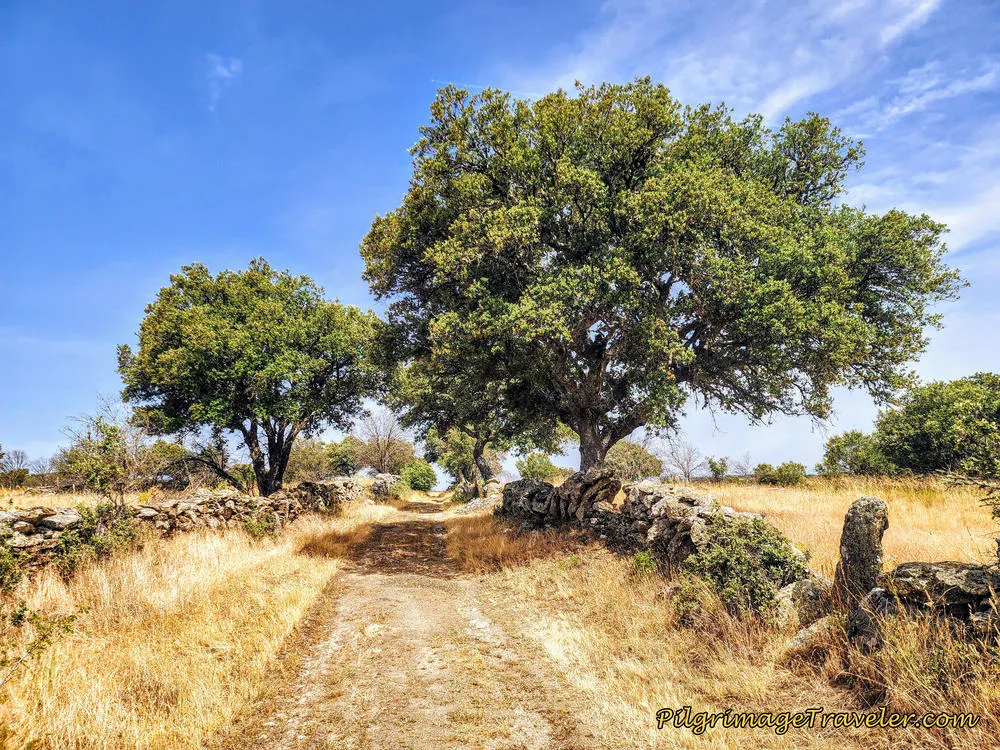
This next section of about three kilometers would constitute the final climb of the day of about 50 meters (160 feet), a steady, but gradual gain in elevation.
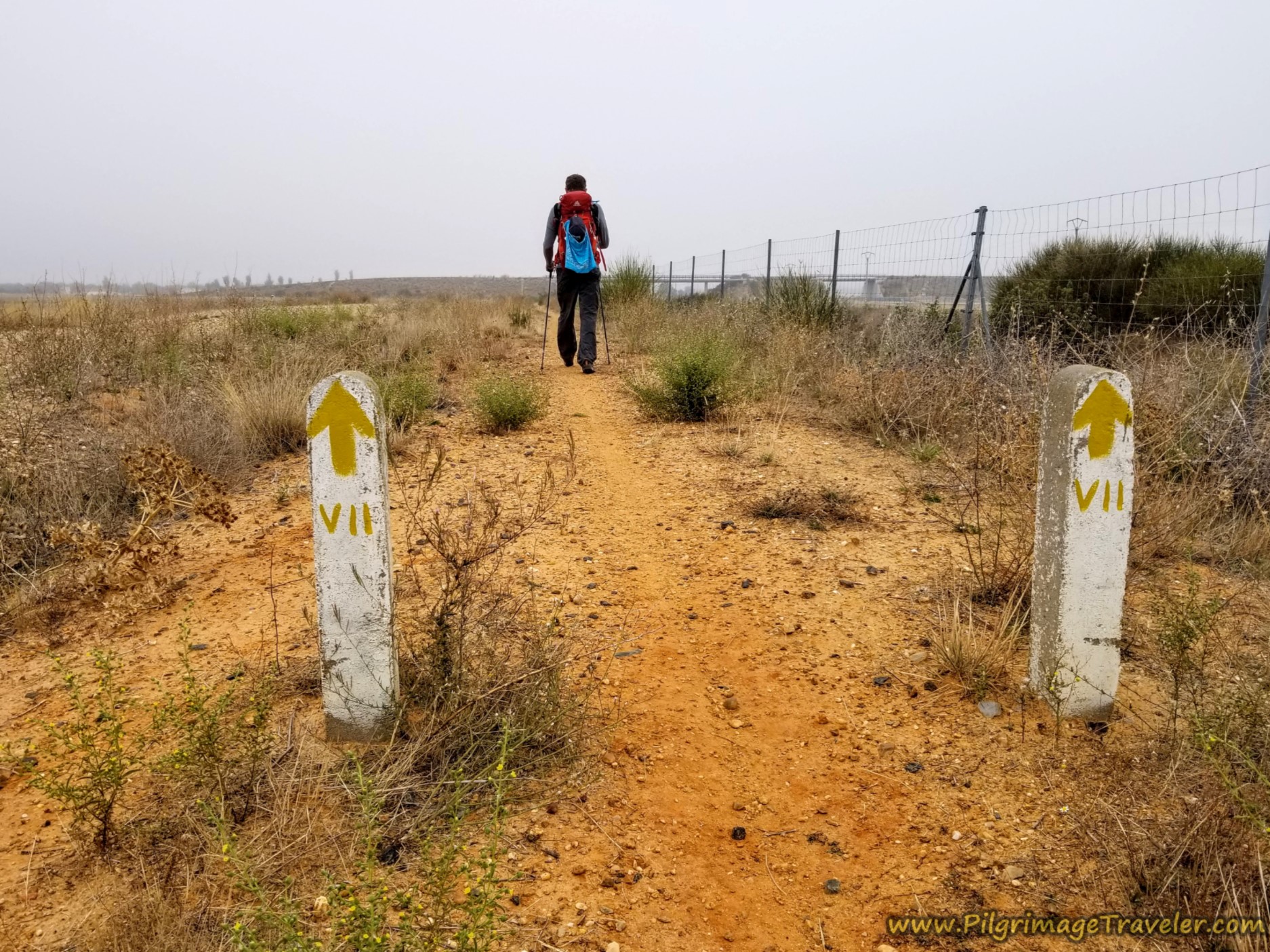
There were plenty of waymarks, like below and some old wooden ones too. Often they were not even at an intersection. It would be very difficult if not impossible to get lost.
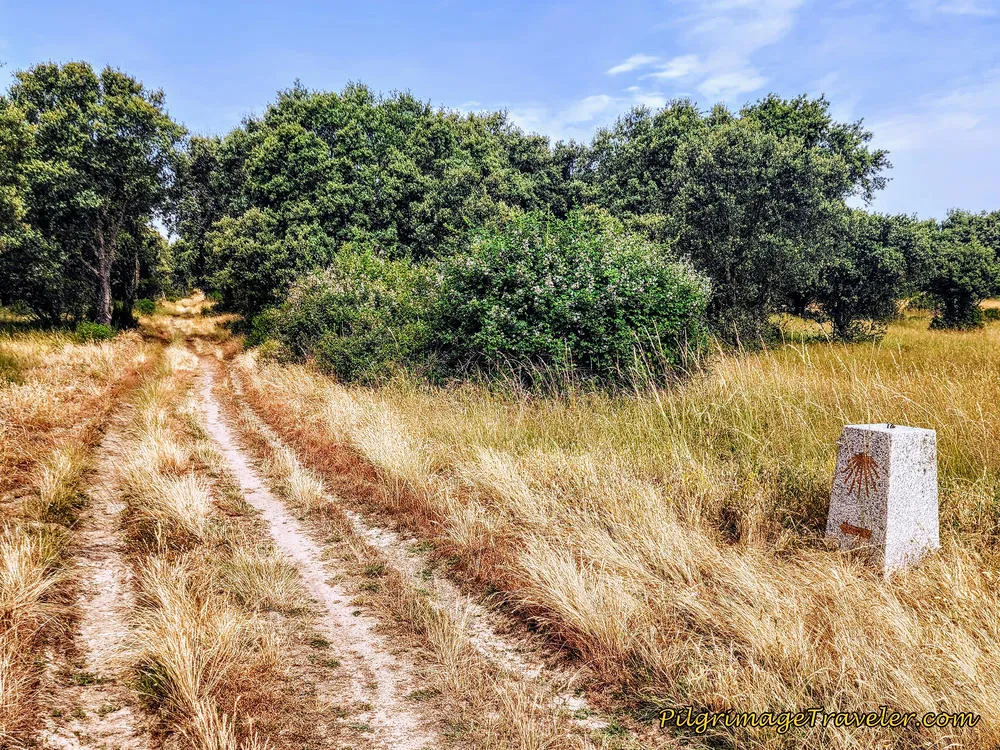 Country Lane Waymarking
After approximately 23.4 kilometers into day three from Santa Marta de Tera, you cross under a power line in an open field, and then go back into the forest. The road is lined with occasional pavers that suggested to us this had indeed been an established ancient road. I would have guessed it to be Roman, as in typical Roman fashion, they just built the road directly up and over the mountain!
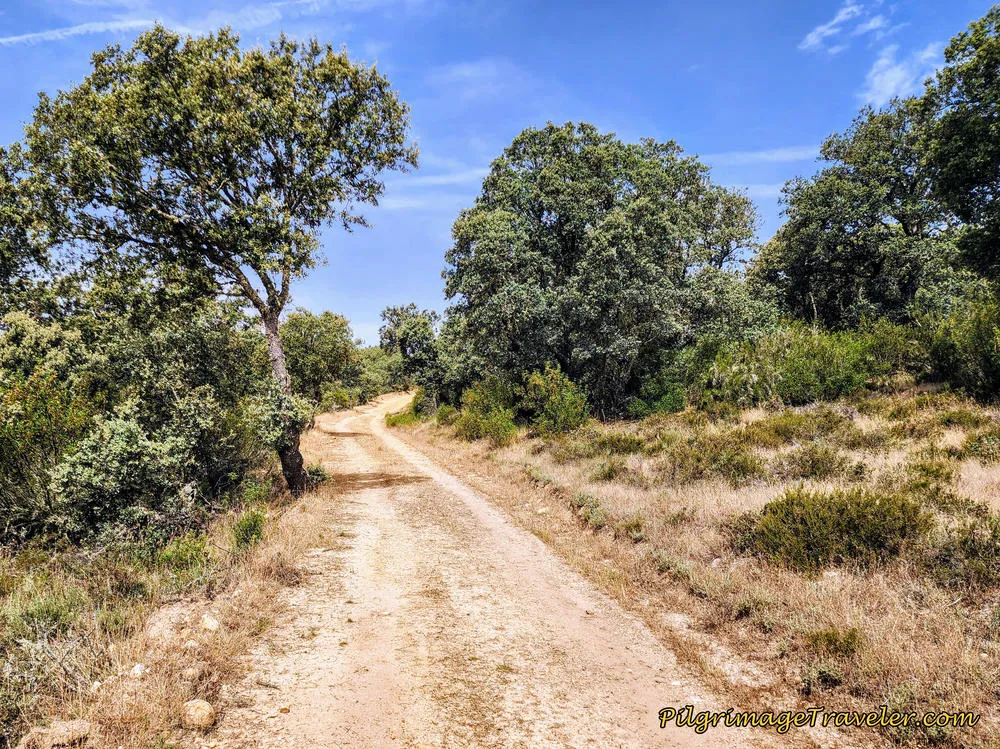 Begin Final Climb
By 23.8 total kilometers into day three, after this intersection, below, you reach the crest of the rocky hill, shown in the next photo.
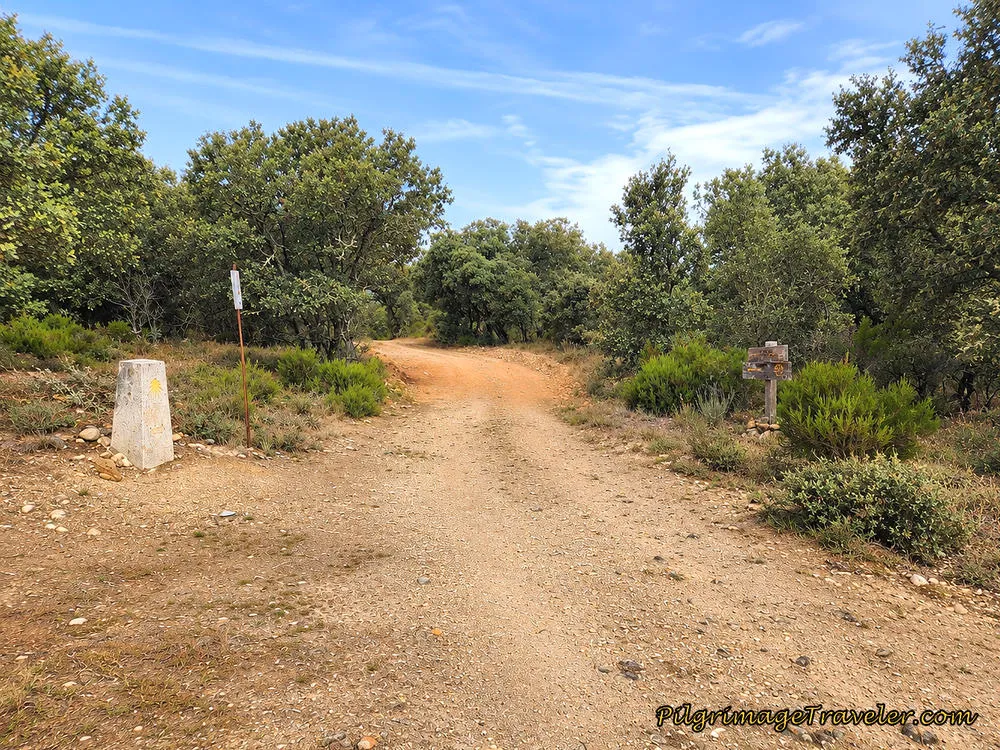 Nearing the Top of the Climb
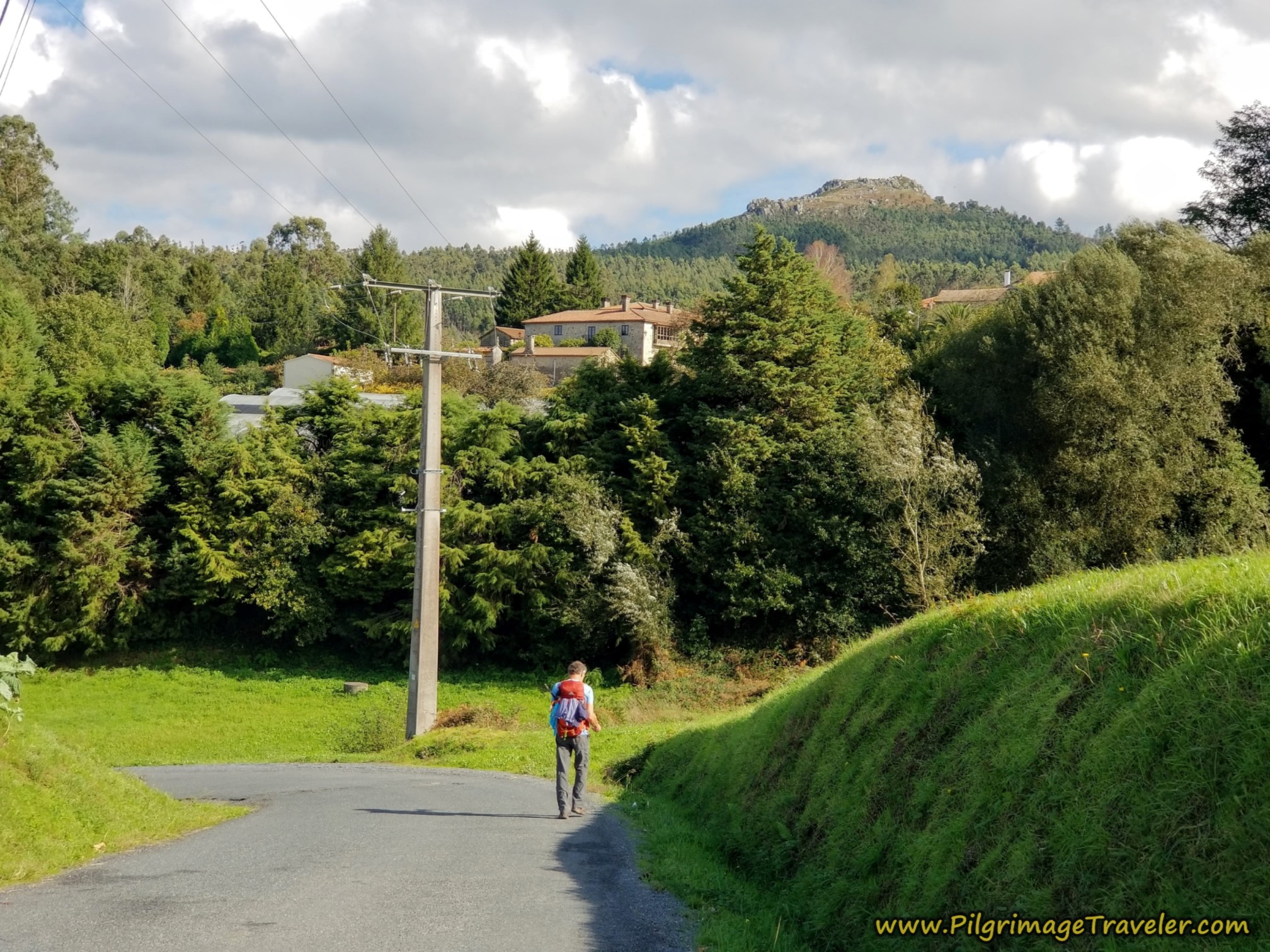
When you can see Rionegro del Puente in the distance, like in this photo below, you will know that you have arrived at the top for the day, at 844 meters (2769 feet). From here on, it is a nice downhill cruise!
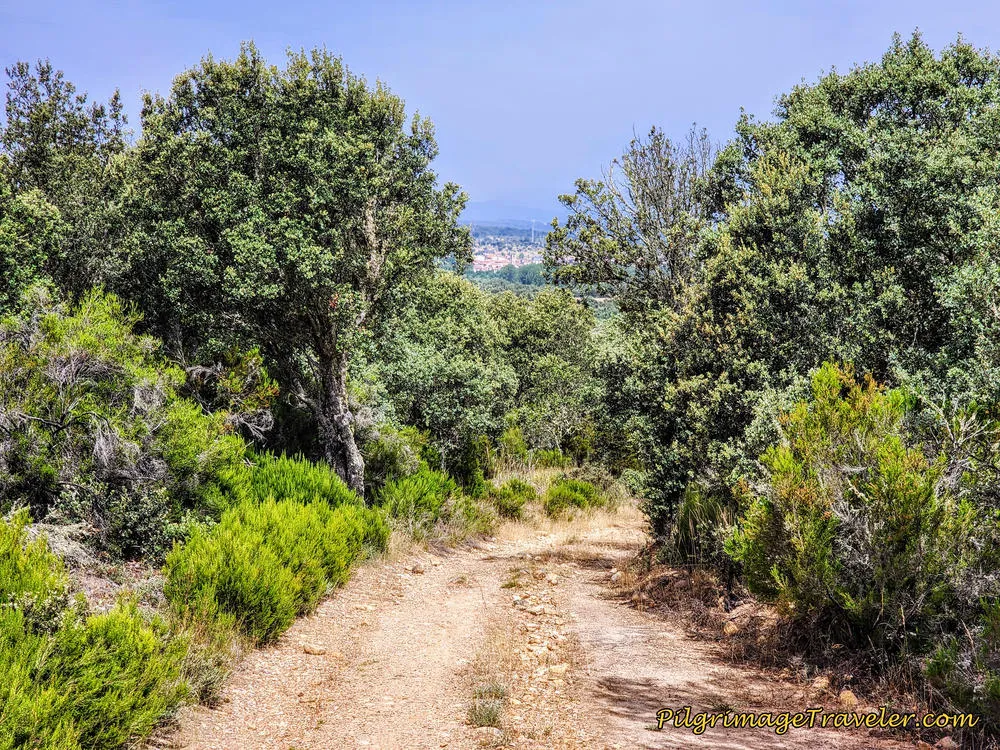
Jump to Camino Sanabrés Stages
Around 25 kilometers, the road merges with another lane and bends to the right, as you continue down the hill.
After another big bend, you cross an arroyo and the buildings of the town appear.
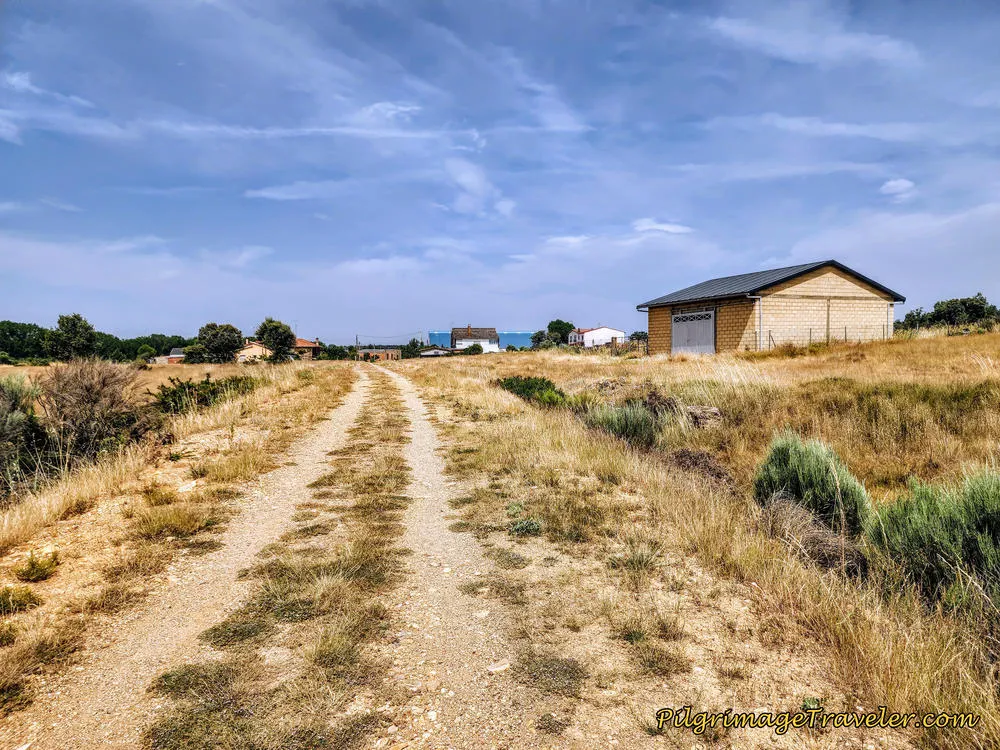 Rionegro del Puente Just Ahead
After around 26 kilometers as you are approaching town, you are walking on a parallel lane with the N-525. When it looks like the Camino will join the N-525 to the right, it takes the lane to the left instead.
We could see the steeple of the town church and the bridge across the river, as the lane led us down and away from the highway, to the placard shown below. Rich began to smell the barn and he literally picked up the pace to an almost run.
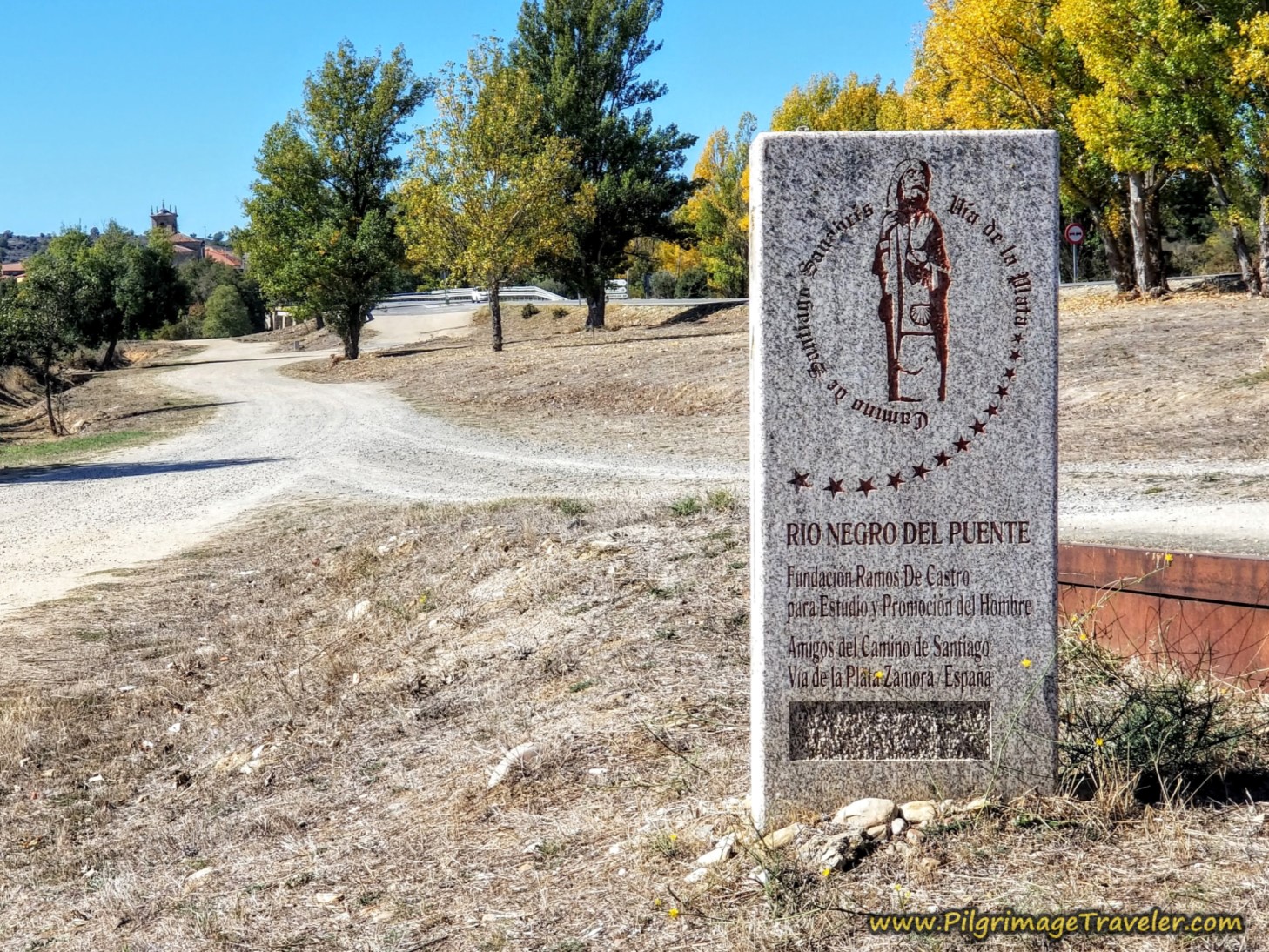
The placard above is the entrance to the park by the river, with nice picnic tables. Next, you come to a concrete footbridge and cross the Río Negro, parallel to the highway bridge above.
Turn right at the intersection after the footbridge and walk under the highway bridge. It is a really, really nice way to cross the river.
On the opposite side of the highway bridge, you turn left and up the lane shown below. Ahead is the Rionegro del Puente sign, and some old mining equipment that you will pass. The town church is looming above you.
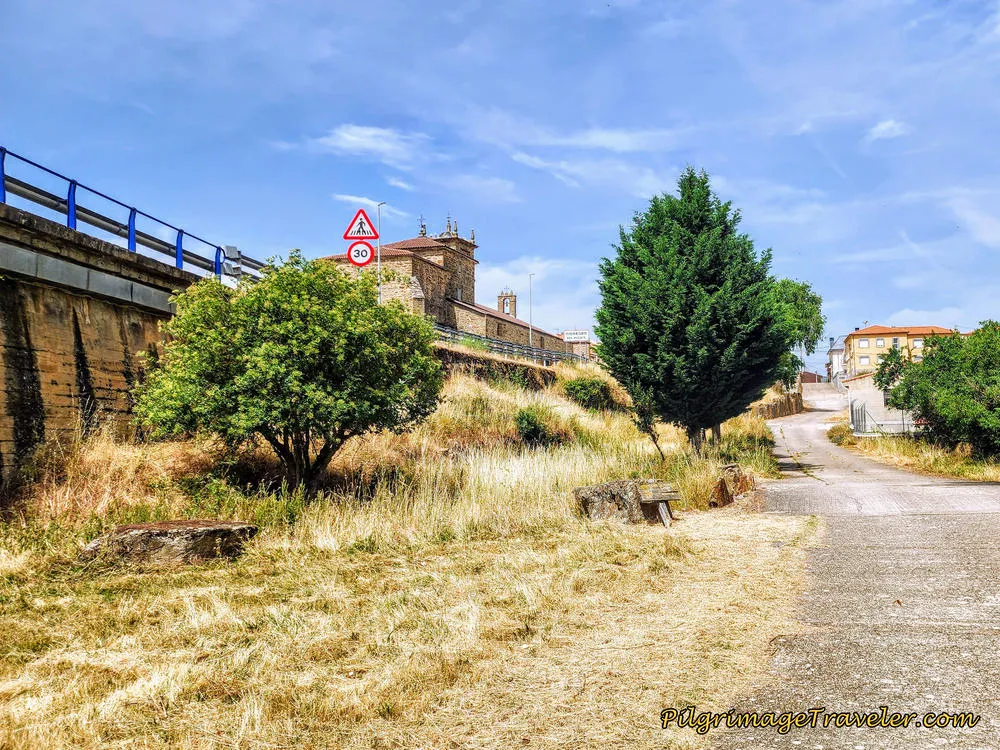 Walk Under the Highway N-525
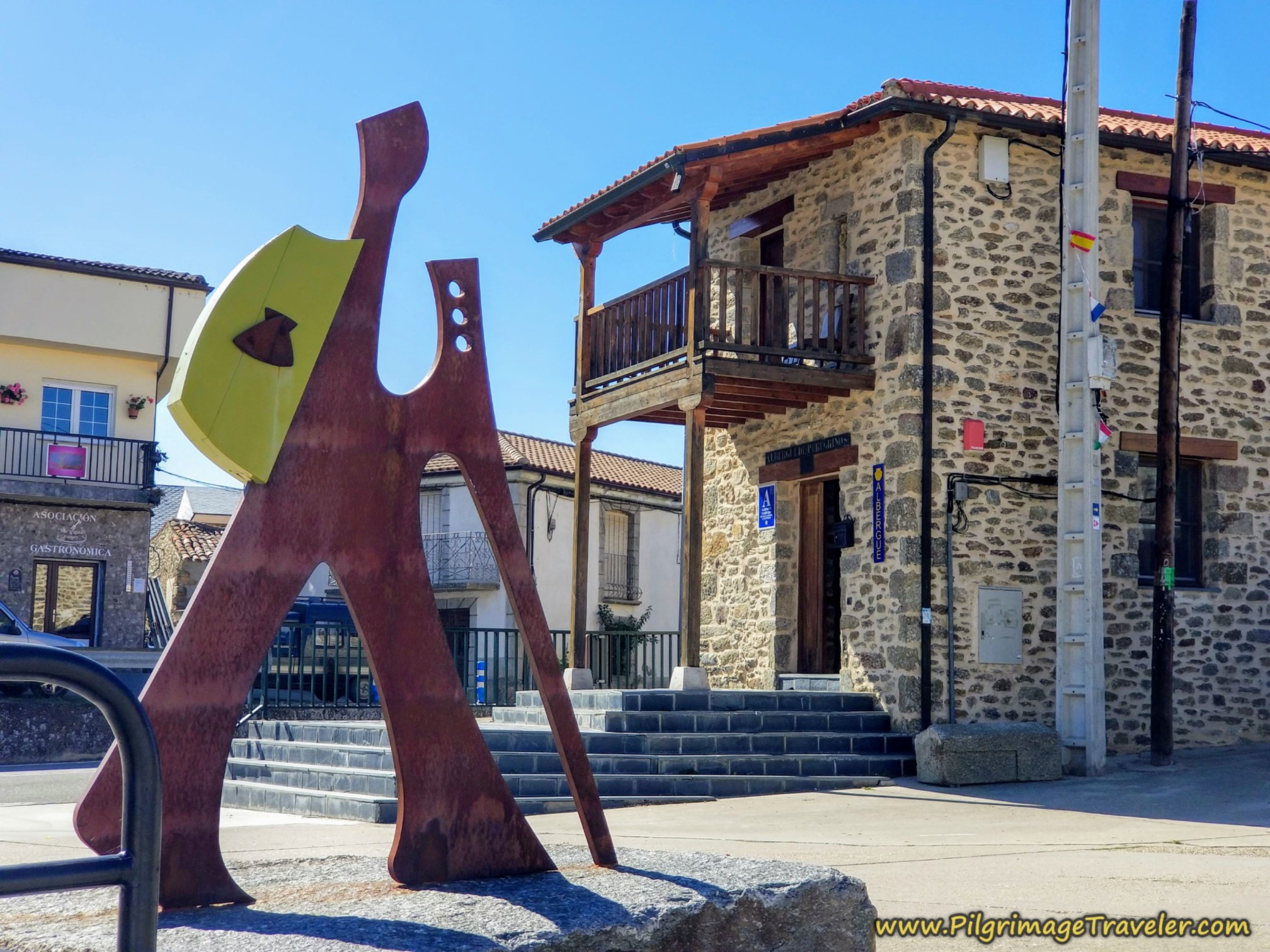
At the top of the hill, where the lane meets the street, a lovely pilgrim statue and the Albergue de Peregrinos Virgen de la Carballeda greet you, below photo. This wonderfully restored albergue has 32 beds by my count and is the only accommodation in town. It was actually an original hospital for pilgrims, so I was thrilled that it was still in use.
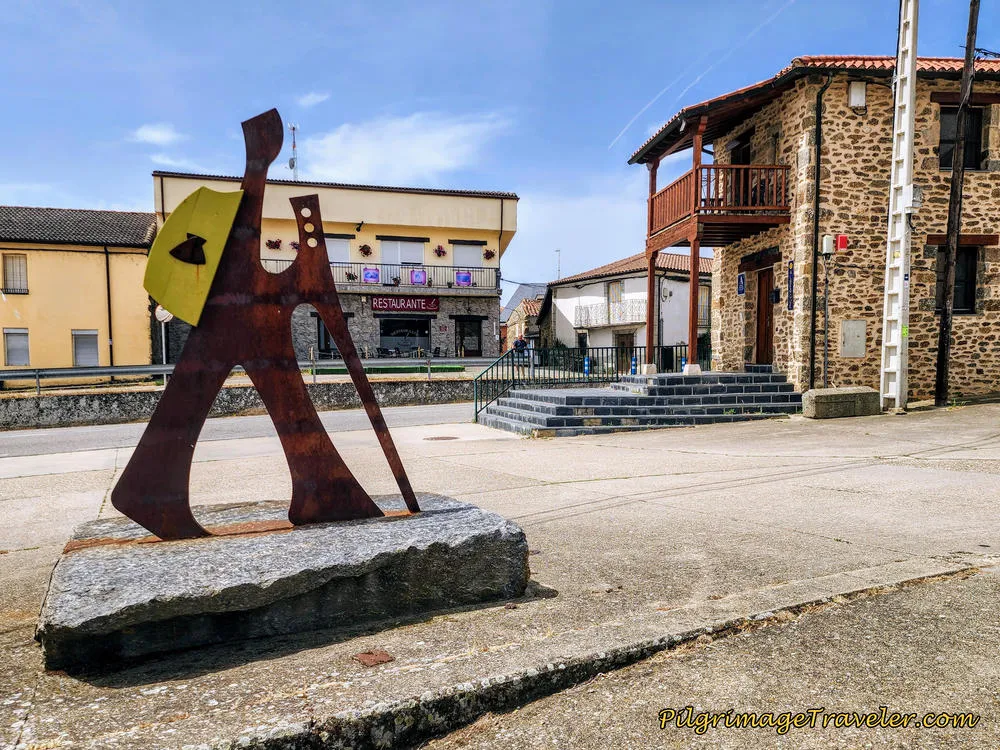
There are two floors of dormitories and bathrooms/showers on each floor, however, you must purchase the disposable sheets in the vending machine if you need them.
There is a washing machine and dryer, but they didn't really work well when we were there. Plus, instead of waiting in the long line to use them, we found it easier to just wash by hand and line dry as usual.
There is a kitchen with minimal features, like a hotplate only, but we didn't care as our plan was to go to the famous Me Gusta Comer Restaurante, just across the street that you can also see in the photo above. After cleaning up and doing our laundry, we first had a happy hour at the bar right next to the albergue.
The Restaurante Me Gusta Comer and Chef Teo's fame precedes himself, and I cannot say that we were disappointed. Everyone knows about it, it seems.
The five course meal was fantastic, starting with this paté and toast as the appetizer, followed by soup and then the entree, Pork La-Orange. Every plate was finely decorated as you can see.
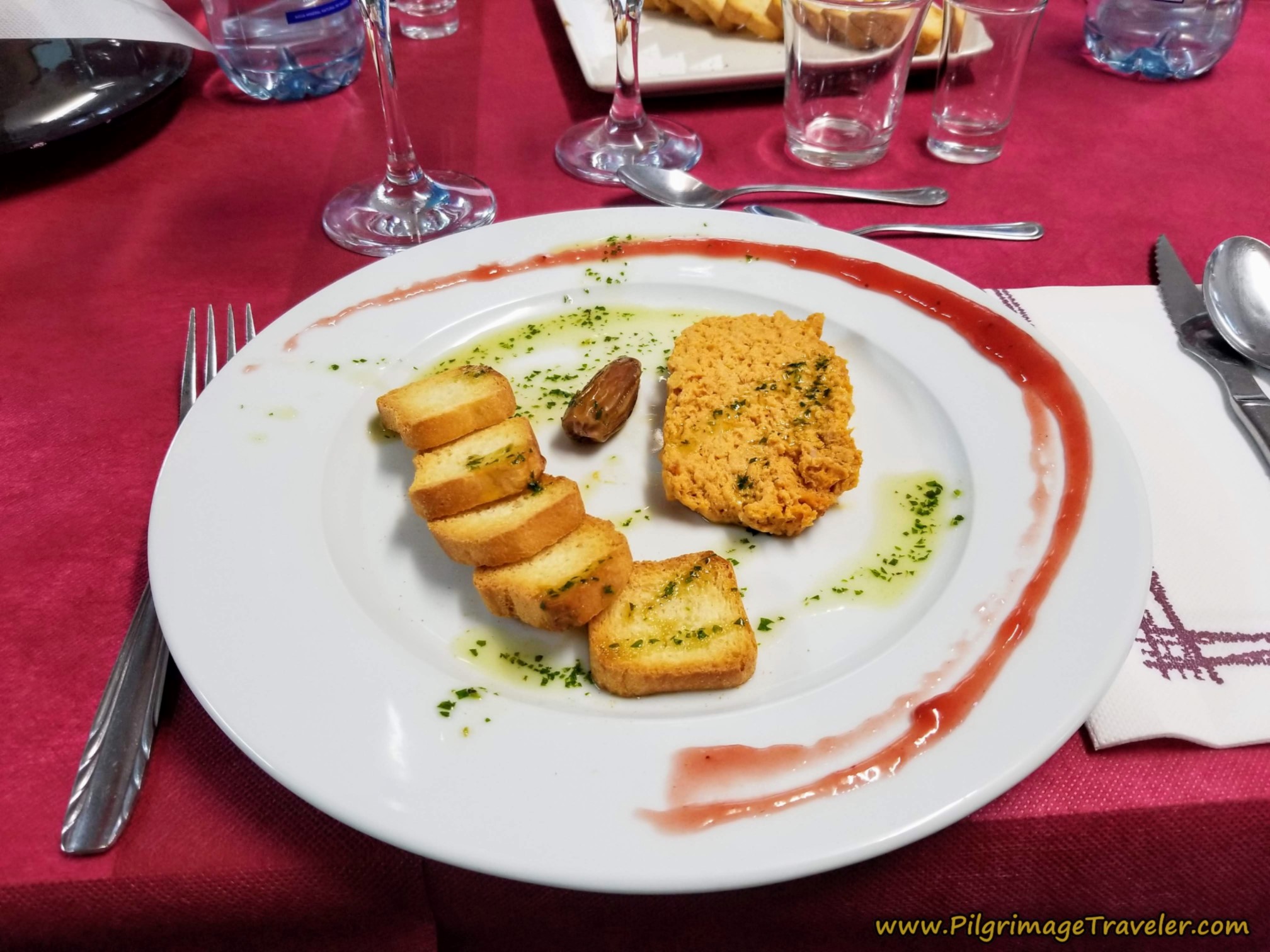 Me Gusta Comer Appetizer
The final food delight was the dessert, a torte with ice cream, hazelnuts and chocolate! Then we ended with shots of liquor. Mmm Mmm.
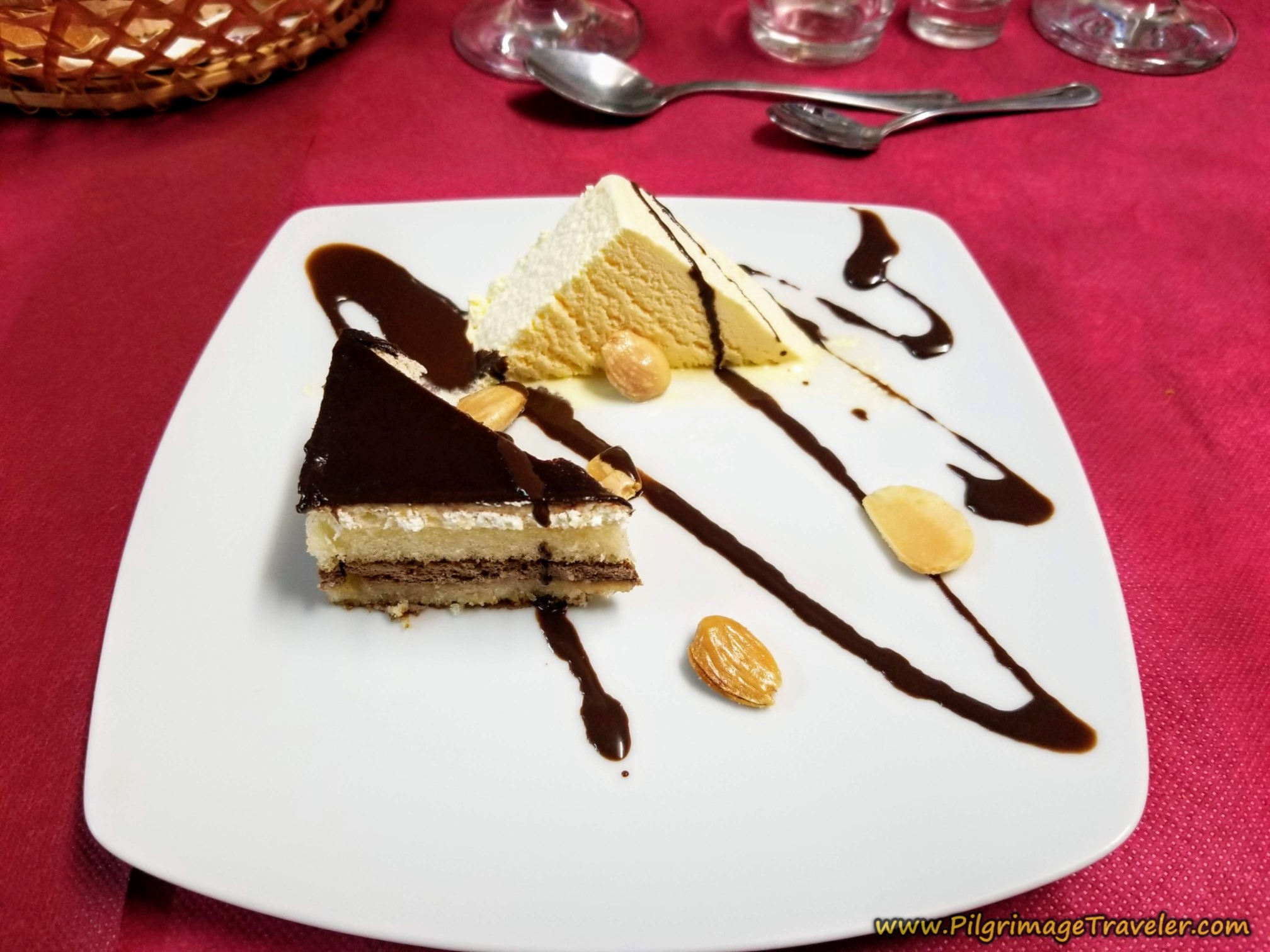 Me Gusta Comer Dessert
Here we are, Roque, Belén, yours truly, Vim, Ledi, Nadine, Norm, Catherine and Rich.
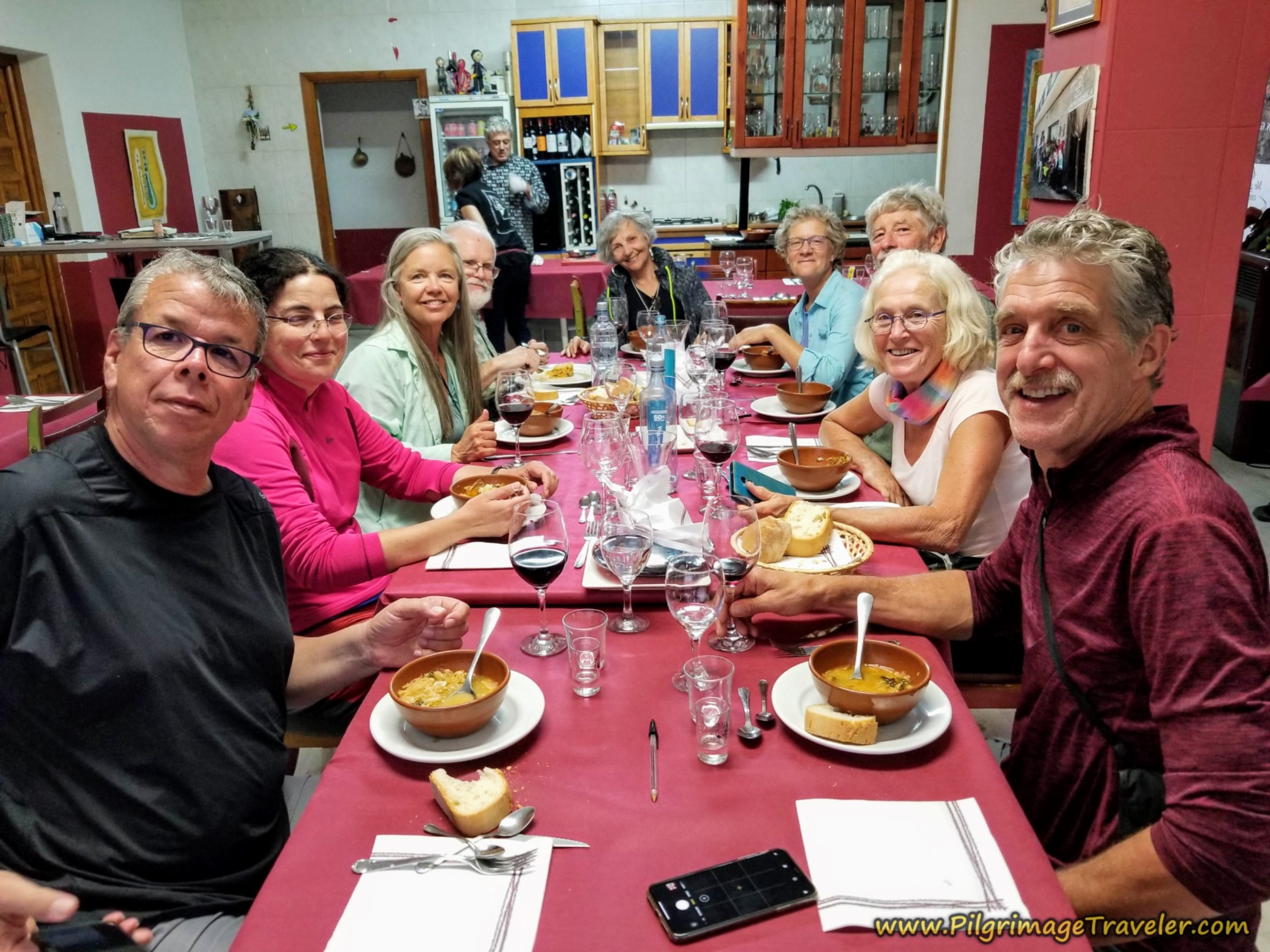 Pilgrim Gathering at Me Gusta Comer
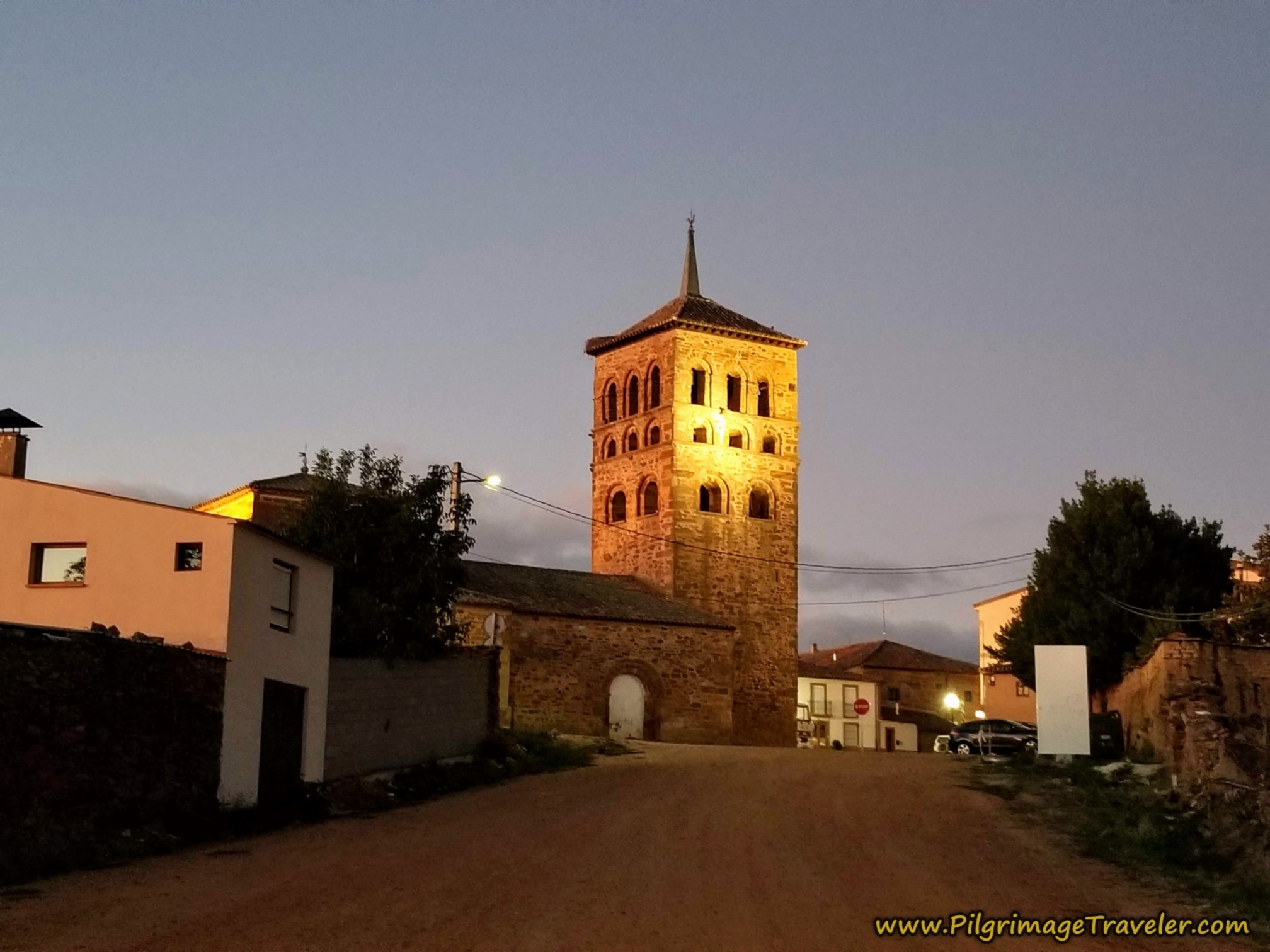
After we finished our amazing dinner, and walked to the albergue, the town church was lit and crowned with the moon above! It was a glorious evening.
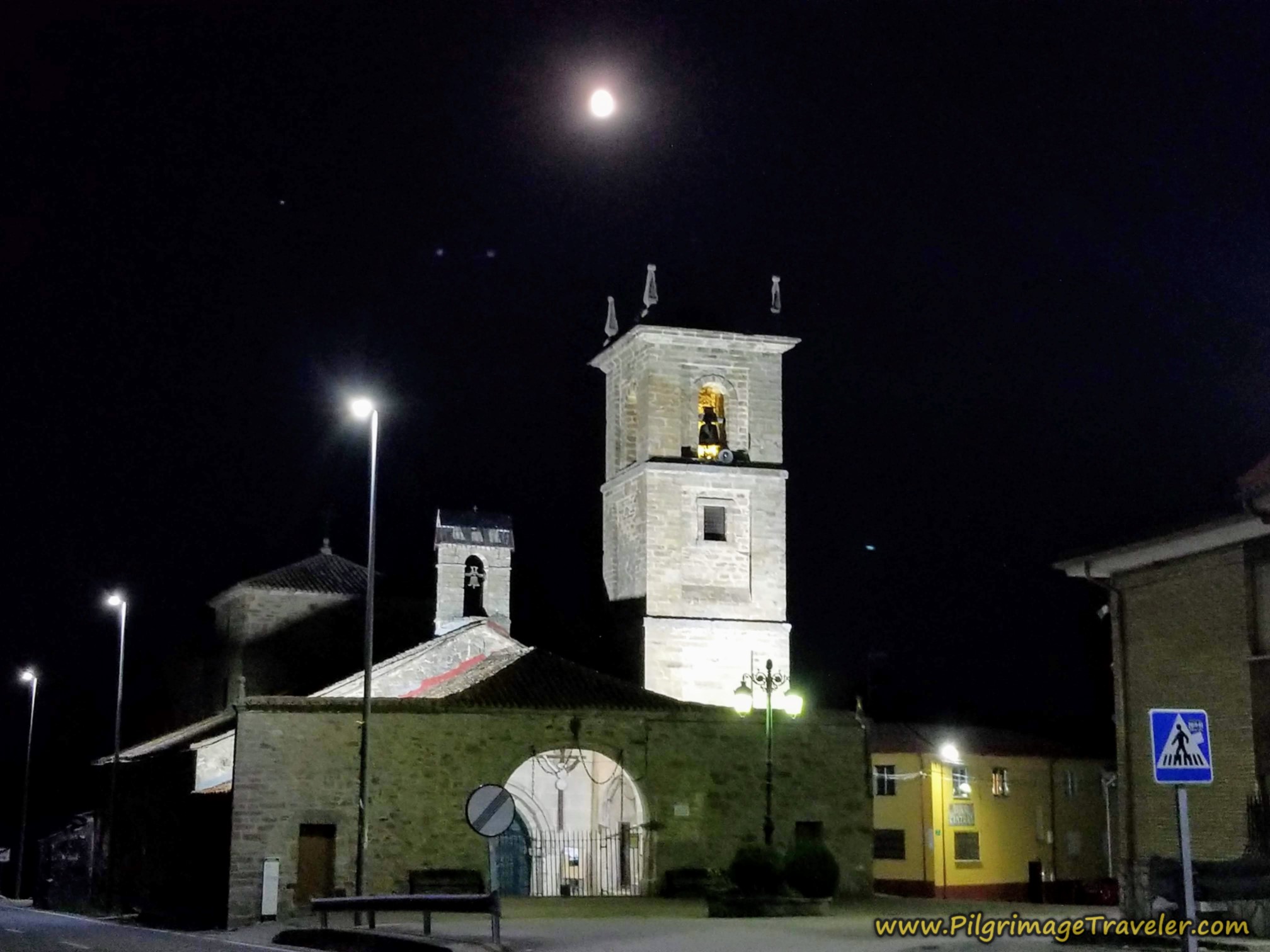
Reflections on Day Three on the Camino Sanabrés, Santa Marta de Tera to Rionegro del Puente
On this day, we had a typical pilgrimage day, moving one foot at a time to complete the course of the day. All went without a hitch through the changing and cooler terrain. AND, we had an amazing end to our day at the incredibly nice pilgrim's historic albergue and our fabulous meal at the Me Gusta Comer.
Salutation
May your own day three on the Camino Sanabrés from Santa Marta de Tera to Rionegro del Puente be moving for moving's sake. May you also travel for travel's sake. May you always put one foot in front of the other. Ultreia!
Camino Fonseca Stages
~ Vía de la Plata Stages from Salamanca


~ Camino Sanabrés Stages

Please Consider Showing Your Support
Many readers contact me, Elle, to thank me for all the time and care that I have spent creating this informative website. If you have been truly blessed by my efforts, have not purchased an eBook, yet wish to contribute, I am exeedingly grateful. Thank you!
Search This Website:
The Pilgrimage Traveler Digital Guides
Our Guides Help You:
~ Know what to expect each day!
~ Locate historic sites along the Way!
~ Know where you are in your journey!
~ Discover a quote from the sages, for your daily reflection on the journey!
Click on a Photo Below to Get Your Copy.
A most popular alternative on the Central Route of the Camino Portugués!👇

The Portuguese Routes are rapidly gaining in popularity, especially the section from Lisbon! Plan to walk this one soon, before it is no longer a quiet experience!👇
Our most popular Portuguese guide! 👇
The most historic of the Portuguese Caminos ~ not to be missed!👇
The spiritual adventure of a lifetime, following in the footsteps of St. Teresa of Ávila!👇

The amazing mountain route alternative, the Camino Sanabrés, from Granja de Moreruela on the Vía de la Plata!👇
The most incredible mountain scenery on this camino from Leon to Oviedo!👇
The shortest of the caminos, but not easy!👇
The very first, Original Way from Oviedo to Santiago!👇
The pilgrimage to the "End of the World" ~ The perfect add-on to your camino!👇
All Banners, Amazon, Roamless and Booking.com links on this website are affiliate links. As an associate of these companies, the Pilgrimage Traveler website will earn from qualifying purchases when you click on these links. We have used and love all of our product recommendations and believe you will too! We sincerely thank you!

🙋♀️ Why Trust Us at the Pilgrimage Traveler?
We’re not a travel agency ~ we’re fellow pilgrims! (See About Us)
We've trekked Pilgrimage Routes Across Europe since 2014!
💬 We’ve:
- Gotten lost so you don’t have to. 😉
- Followed waymarks in the glowing sunlight, the pouring rain and by moonlight. ☀️🌧️🌙
- Slept in albergues, hostels & casa rurals. Ate and drank in cafés along the way. 🛌 😴
- Created comprehensive and downloadable GPS maps and eBook Guides, full of must-have information based on real pilgrimage travels. 🧭 🗺️
- Shared our complete journeys, step by step to help YOU plan your ultimate pilgrimage and walk with your own Heart and Soul. 💙✨
Every detail is from our own experiences. Just fellow pilgrims sharing the Way. We have added a touch of spirituality, heartfelt insights and practical guidance from the road ~ offering a genuine connection to the spirit of pilgrimage. Tap into the wisdom of seasoned pilgrims!
Ultreia and Safe Pilgrimage Travels, Caminante! 💫 💚 🤍
Follow Me on Pinterest:
Find the Pilgrimage Traveler on Facebook:

Shroud Yourself in Mystery, along the Via de Francesco!
Walk in the Footsteps of St. Francis, and Connect Deeply with the Saint and to Nature in the Marvelous Italian Countryside!
Need suggestions on what to pack for your next pilgrimage? Click Here or on the photo below!



Carbon Trekking Poles ~ My Favorites!

Carbon fiber construction (not aluminum) in a trekking pole makes them ultra lightweight. We like the Z-Pole style from Black Diamond so we can hide our poles in our pack from potential thieves before getting to our albergue! There are many to choose from! (See more of our gear recommendations! )
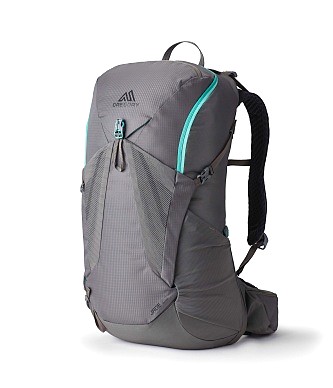
Gregory BackPack ~ My Favorite Brand

Do not forget your quick-dry microfiber towel!